The post Leading The Starbucks Way – Part 3; Challenge Your Legacy appeared first on BUILDING WHAT MATTERS.COM.
]]> Wow! This has been the longest stretch without posting here since I started this blog two years ago. Between travelling, trying to get my book published and moving into a new office, I just had to say NO to a few things. But now it’s back to business. Let’s start by wrapping up our discussion on Leading The Starbucks Way.
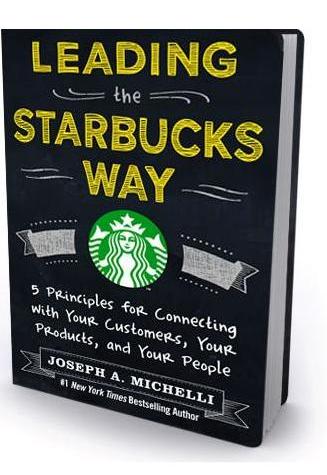
Last month in the Platform Builders Mastermind Group, we dove into “Leading The Starbucks Way: 5 Principles for Connecting with Your Customers, Your Products, and Your People” by Joseph A. Michelli.
Sure this book is about Starbucks, but it’s much bigger than that. Michelli shows why Starbucks has become the coffee bean superpower of the world. And it has nothing to do with the beans. I guess that’s not entirely true, but their success is built much more around who is serving rather than what is being served.
I will admit, I have invested my fair share in the Starbucks brand but I never gave a thought as to what goes on behind the grinder, so to speak. Michelli explores 5 Principles that give Starbucks the advantage over their competition and I for one, will pay much more attention to what is going on behind the counter next time I visit my local Starbucks.
Definitely a great look at what has made Starbucks so successful, but at the same time, the bar has been set very high for them to continue to live up to their reputation.
In this, the final of three posts, I will recap Michelli’s exploration of Principle 4 – Mobilize The Connection and Principle 5 – Cherish And Challenge Your Legacy
PRINCIPLE 4 – MOBILIZE THE CONNECTION
Nobody knows better than Starbucks that the power in any marketing strategy is going to depend greatly on social media. Michelli points out that Starbucks has identified 5 core elements in their digital strategy:
- commerce
- company-owned web and mobile channels
- loyalty/customer relationship management (CRM) targeted database
- social media and
- paid digital marketing
I have found it interesting how many ways there are to be a Starbuck’s customer while not even at the store. You seem to see the Starbuck’s name almost everywhere you go and it has all but become a household term anymore. I received a $5 Starbucks gift card through facebook a while back and when I used it this morning, the barista asked me where I got it. Made for a great conversation. Again, building relationships … the Starbucks way!
“By building social media connections through individualized experiences, unique preferences, thoughtful platform selection, and respect for the platform community, Starbucks pulls customers to its content, as opposed to pushing marketing materials to them.”
I love that quote. Many of us think of sales as more of a “push” process and even though we see Starbucks marketing everywhere, I don’t think I have ever felt like it was being pushed on me. Maybe I am just “pulled” to it because it’s a solid brand with great customer service. What do you think?
PRINCIPLE 5 – CHERISH AND CHALLENGE YOUR LEGACY
The final section of the book is worth the price of admission. Michelli takes an in-depth look at how Starbucks has considered all their decisions, both good and bad, as they move into the future. No doubt they fully understand that without a strong client base, they will not exist.
“For our purposes, we will look specifically at behaviors leadership demonstrates in the course of setting goals, taking action, and measuring progress in the areas of environmental stewardship, ethical sourcing, community development, and job creation.”
As they look into the future, they will depend greatly on their leadership to make sure that what is important, stays important. The bottom line is that their success is about the relationships they have built, both on the personal and corporate level. It’s no wonder that this business model is one that is being imitated on a daily basis. It works!
Responsibility is part of the Culture!
This is probably my favorite quote from this section of the book:
“True leadership requires a willingness to invest in the long-term health of one’s business and active collaboration with others, out of a genuine sense of responsibility.”
There is so much information in this book but my big takeaway is that Starbucks has created a culture that extends well beyond the people drinking their coffee. [Tweet This] Something to think about for all of us.
TODAY’S QUESTION: How much time do you spend thinking about your legacy? Does it end with the person right in front of you or have you considered that what you do might just impact someone you will never meet?
***********************************************************************
===> JOIN THE “LEADERSHIP BY INVITATION” LAUNCH TEAM <===
Click here to get a copy of my Kindle Book “The Manifesto Of An Influential Leader”
Don’t miss a single post from Building What Matters by subscribing at the top left of this page.
Help support us by clicking here and Liking our facebook page
Barry Smith 5/19/14 photo courtesy of amazon © Building What Matters 2014
The post Leading The Starbucks Way – Part 3; Challenge Your Legacy appeared first on BUILDING WHAT MATTERS.COM.
]]>The post Leading The Starbucks Way – Part 2; Connecting With Trust appeared first on BUILDING WHAT MATTERS.COM.
]]>This month in the Platform Builders Mastermind Group, we are diving into “Leading The Starbucks Way: 5 Principles for Connecting with Your Customers, Your Products, and Your People” by Joseph A. Michelli.
Sure this book is about Starbucks, but it’s much bigger than that. Michelli shows why Starbucks has become the coffee bean superpower of the world. And it has nothing to do with the beans. I guess that’s not entirely true, but their success is built much more around who is serving rather than what is being served.
I will admit, I have invested my fair share in the Starbucks brand but I never gave a thought as to what goes on behind the grinder, so to speak. Michelli explores 5 Principles that give Starbucks the advantage over their competition and I for one, will pay much more attention to what is going on behind the counter next time I visit my local Starbucks.
Definitely a great look at what has made Starbucks so successful, but at the same time, the bar has been set very high for them to continue to live up to their reputation.
In this, the second of three posts, I will recap Michelli’s exploration of Principle 2 – Love To Be Loved and Principle 3 – Reach For Common Ground
PRINCIPLE 2 – LOVE TO BE LOVED
In a word, this section is about trust. Both trust of the product and the service and more importantly, consistency in delivering them. It’s not surprising that there is more content about the people than the product in this book. That is where the trust is built.
Think about when you have purchased a product that you believed in but received less than stellar service. You might stick with the product, but if your are like me, you will look elsewhere to get it.
“If you select people with genuine talent for serving others, give them opportunities to become more knowledgeable and passionate about your products, and insist upon product and consumer experience excellence, you are well on the way to gaining the pride and passion of customers.”
While in construction, I often chose service over cost because at the end of the day, I needed someone that would deliver WHEN they say they would and make me feel like I was their most important client. I realize I probably wasn’t, but that doesn’t mean you can’t be treated like you are. Truth be told, I was pretty loyal to those vendors. Hmmmm!
PRINCIPLE 3 – REACH FOR COMMON GROUND
A deep look into the Starbucks way of connecting with their customers, explains much about the forward motion of the organization. It’s one thing to communicate with your customer, but are you really connecting? And I’m not just talking about words.
Starbucks looks at ALL aspects of the environment, the architecture of the store, the neighborhood, the customer base, and the competition. These all factor into the experience that we have when we enter a Starbucks.
“The goal of leadership is to create the right environment for human connection to occur and to help staff members manage the inevitable issues that surface.”
There is certainly risk when you bring the human condition into the business model, but then again, if you want to be the best at what you do, you better be willing to risk something to get there.
I don’t want to feel invisible!
This is probably my favorite quote from this section of the book; “The number one request or desire of every human around the world is to be seen and heard.” (Tweet This)
TODAY’S QUESTION: How effectively have you sought partnerships while building your business and have you positioned yourself to provide services or products that are relevant to your market?
***********************************************************************
===> JOIN THE “LEADERSHIP BY INVITATION” LAUNCH TEAM <===
Click here to get a copy of my Kindle Book “The Manifesto Of An Influential Leader”
Don’t miss a single post from Building What Matters by subscribing at the top left of this page.
Help support us by clicking here and Liking our facebook page
Barry Smith 4/17/14 photo courtesy of amazon © Building What Matters 2014
The post Leading The Starbucks Way – Part 2; Connecting With Trust appeared first on BUILDING WHAT MATTERS.COM.
]]>The post Leading The Starbucks Way – Part 1; Savor And Elevate appeared first on BUILDING WHAT MATTERS.COM.
]]>This month in the Platform Builders Mastermind Group, we are diving into “Leading The Starbucks Way: 5 Principles for Connecting with Your Customers, Your Products, and Your People” by Joseph A. Michelli.
Sure this book is about Starbucks, but it’s much bigger than that. Michelli shows why Starbucks has become the coffee bean superpower of the world. And it has nothing to do with the beans. I guess that’s not entirely true, but their success is built much more around who is serving rather than what is being served.
I will admit, I have invested my fair share in the Starbucks brand but I never gave a thought as to what goes on behind the grinder, so to speak. Michelli explores 5 Principles that give Starbucks the advantage over their competition and I for one, will pay much more attention to what is going on behind the counter next time I visit my local Starbucks.
Definitely a great look at what has made Starbucks so successful, but at the same time, the bar has been set very high for them to continue to live up to their reputation.
In this, the first of three posts, I will recap Michelli’s exploration of “The Starbucks Connection” and Principle 1 – Savor and Elevate.
THE STARBUCKS CONNECTION
The story starts with Howard Schultz stepping back into the role of Chief Executive Officer in 2008. Schultz introduced his “Transformation Agenda” establishing a forward-looking vision that enhanced the companies established mission. Michelli shares that:
“While the Starbuck mission was “to inspire and nurture the human spirit – one person, and one cup and one neighborhood at a time,” the transformation vision set an energizing and rallying objective, “to become an enduring, great company with one of the most recognized and respected brands in the world, known for inspiring and nurturing the human spirit.”
Whether you are a fan of the coffee or not, I guarantee you will look at the organization differently after giving this book a look. The investment that Starbuck makes in their people is impressive. Their commitment is to not only continually improve the product but the way they connect with the customer. It’s not too hard to figure out why your local Starbucks is always full.
PRINCIPLE 1 – SAVOR AND ELEVATE
There are many great quotes about the Starbucks philosophy throughout, but the message is consistent. Connect with your customer and create an experience that will be remembered long after that last sip from the cup.
This is done by being passionate about your product and the service provided to deliver it and do it in a way that inspires the customer to share the same passion. Here is a great quote that represents the Starbucks culture:
“We take the ordinary … and give it new life, believing that what we create has the potential to touch others’ lives because it touched ours.”
It is clear that Starbucks culture is built around both the customer and the product and it’s hard to tell which is top on the priority list but one thing is clear, they are completely committed to make both the best.
This is probably my favorite quote from this section of the book; “all business settings are a stage from which all experiences emerge.” (Tweet This) What if we all looked at our business that way? People are going to pay for your service or your product or both. The real question becomes, will they enjoy it? The answer to that will determine whether or not they come back.
TODAY’S QUESTION: Your brand is really a representation of who you. What are you doing to use that brand to create an experience that will get your customer or client to share in your passion?
***********************************************************************
===> JOIN THE “LEADERSHIP BY INVITATION” LAUNCH TEAM <===
Click here to get a copy of my Kindle Book “The Manifesto Of An Influential Leader”
Don’t miss a single post from Building What Matters by subscribing at the top left of this page.
Help support us by clicking here and Liking our facebook page
Barry Smith 4/10/14 photo courtesy of amazon © Building What Matters 2014
The post Leading The Starbucks Way – Part 1; Savor And Elevate appeared first on BUILDING WHAT MATTERS.COM.
]]>The post Raising The Bar For Generation Y- Part 2 appeared first on BUILDING WHAT MATTERS.COM.
]]> Last week I introduced you to Ben, a 22 year old working as a Hard Rock Cafe server in Las Vegas. Ben has a bright future in front of him, but he is not the only one. Today I want to introduce you to Stephanie.
Stephanie works as a Food and Beverage Supervisor at the World Marriott in Orlando, Florida. Hmm? 22 years old and a food and beverage supervisor already. Isn’t that interesting!
Through a connection with one of the chef’s at the World Marriott, we were able to set up a private catered dinner for myself and the event coordinator of the John Maxwell Team. The John Maxwell Team holds two large events there every year and we were excited at the opportunity to get a look “backstage” with food services.
The service we have received during our visits to the World Marriott has been nothing short of phenomenal, and after our peek at what goes on behind the scenes, it’s easy to understand why. I won’t pretend to understand what it takes to run a kitchen of this size, but what we saw appeared to be a well-oiled machine, running full throttle, and without a miss.
A big part of the experience was our private server, Stephanie. Just like with Ben in Las Vegas, I was intrigued by her attitude, professionalism, and self-confidence. All characteristics I only occasionally see in adults twice her age. A few of her comments really made me think …
“If you want another course, we will throw it in.”
Logic would suggest that the objective was to take care of a significant client, but the delivery was sincere. Right from the beginning Stephanie made us feel like the only people in the building.
This was something I have never experienced before. A specially constructed room built in the middle of the kitchen so we could see everything going on around us but from within an environment built exclusively for a fine dining experience. I think it’s fair to say that Stephanie really wanted us to enjoy the experience and her commitment to making that so, was authentic and intentional.
“Oh my gosh, I’m so sorry!”
Just as in everything we do, things don’t always go as planned. Upon a minor mishap, exclusive to our private venue, Stephanie immediately apologized, owned it and, most importantly diffused a situation that could have disrupted the entire evening.
In our opinion, it was no big deal, but it certainly could have changed the emotional state and attitude of any person providing service. I find it interesting how difficult it is sometimes to own our actions and simply say “I’m sorry.”
“I can talk through a brick wall.” (Tweet This)
What a great statement. My takeaway from this comment … how long could you speak “intelligently” about your profession? How about in a random conversation with clients or colleagues? Stephanie spent the entire time in the room with us that night and we spent a lot of time talking about all sorts of topics. I don’t remember any that went beyond her ability to add value to the conversation.
I am still amazed at the competence and confidence of someone her age and her ability to control the atmosphere of the room. I suppose you could say that education had it’s benefits.
“I don’t think I have ever said no.”
This was my favorite. We had been giving her a hard because everything was so amazing and it sort of became a challenge to see if they could actually deliver on “anything” we wanted. So naturally, a person of my intellect, came up with a great challenge. “Fresh chocolate chip cookies and vanilla gelato.” No way they could bust that out. Wrong! “No” was not an option.
As I custom desert request arrive, I asked her what they do when they get a request for something they can’t make happen. Her response, “I don’t think I have ever said no.” I guess that pretty much sums up the evening!
Do You Want To Be The Best?
It will be a meal I never forget, but something tells me that Stephanie does the same for other people everyday. I will not soon forget the attitude and effort that went into that dining experience and the real point of the story is that if you want to be the best, you need to act like it – and not just when you have to, but when you don’t. That’s what will set you apart from the rest.
Like Ben, Stephanie has big aspirations for her career. She eventually would like to end up in the California wine valley as a wine sommelier. I know she will make it and she just might be the youngest female to ever become one. I won’t be betting against her anytime soon.
THE QUESTION: Are you serving people in a way that represents your best?
THE CHALLENGE: Do something today that will take your quality of service to the next level.
Read part one by clicking here
***********************************************************************
Click here to get a copy of my Kindle Book “The Manifesto Of An Influential Leader”
Don’t miss a single post from Building What Matters by subscribing at the top left of this page.
Help support us by clicking here and Liking our facebook page
Barry Smith 3/17/14 photo courtesy of amazon © Building What Matters 2014
The post Raising The Bar For Generation Y- Part 2 appeared first on BUILDING WHAT MATTERS.COM.
]]>The post The Men Who Built America – JP Morgan appeared first on BUILDING WHAT MATTERS.COM.
]]> Well here we are, a new year and a new plan, right? I know this – the Platform Builders have some new plans for 2014 and this year we are starting our Mastermind study with a little twist.
This month we are masterminding through The Men Who Built America, a DVD produced by the History Channel along with Think and Grow Rich by Napoleon Hill to compliment the mini-series built around some of the great early leaders and entrepreneurs that help build the United States into a world power at the end of the 19th Century.
If you don’t know the back story on how these two connect together, Napoleon Hill was commissioned by Andrew Carnegie to study the most successful people and find out what resulted in their success. The men who built America were among many of the 20,000+ that Hill interviewed over the twenty year period it took him to write the book.
This month we are going take a look at Andrew Carnegie, Thomas Edison, JP Morgan and Henry Ford. In this, the second of four posts, we will take a look at JP Morgan.
Morgan, most recognized a revolutionizing the way America deals with finance never settled for “good enough.” He partnered with Edison and became a major player in the power industry and later became a master of consolidating organizations to create bigger profits and greater impact.
So why did a man who was born into wealth and never knew what it was like to be in need, risk it all and become “one of the men who built America?”
I Don’t Know Why, But It Just Doesn’t Feel Right.
THE SIXTH SENSE
“Go as far as you can see; when you get there, you will be able to see farther.” – JP Morgan
It would be hard to argue that Morgan “had it all” from day one, yet he was never satisfied. Driven by the success of Carnegie and Rockefeller, Morgan worked off what he believed could be done.
Even through great opposition from his father, he risked the family wealth to pursue the development of electrical power. Even when successful organizations already existed, Morgan’s sixth sense helped him to realize that by combining forces, an even greater business could be developed as seen in General Electric and US Steel.
You Don’t Know What You Don’t Know.
DECISION
“A man typically has two reasons for doing anything: a good reason and the real reason” – JP Morgan
Time and time again, Morgan was faced with difficult decisions. His father was against much of what he did and his vision often included the success of others such as Edison. That being said, he always stood behind his decisions and maintained a forward movement. Why? Because he made a decision. Right or wrong, a decision was made to move forward. If an adjustment needed to be made, he made it. The point is, that Morgan never let the details or fear hold him back. It was not a matter if it was going to be done, simply how.
Plan Your Work And Work Your Plan!
ORGANIZED PLANNING
“No problem can be solved until it is reduced to some simple form. The changing of a vague difficulty into a specific, concrete form is a very essential element in thinking.” – JP Morgan
No one better exemplified the art of organized planning than Morgan. Early on, he successfully planned many activities related to the family financial business. Some actually helped to keep America on it’s feet. Realizing that he could be more powerful by partnering with other individuals and corporations, Morgan put together the necessary plan to take both successful and struggling businesses to new levels of success. This was done by creating a plan that worked and then working that plan.
Tony Robbins said; “It is in your moments of decision that your destiny is shaped.” (Tweet This / Share on Facebook / Post to LinkedIn)
The men who build America made both good and bad decisions along their way to power and wealth. The difference – they always made a decision. They all realized that doing nothing would produce exactly that – nothing.
We are faced with decisions every day. Fear has a tendency to keep us from making the difficult ones. My challenge today – choose something you have been struggling with in making a decision and make one. No progress will be made by standing still. There is no neutral in life – you are either moving forwards or backwards. (Tweet This)
What difficult decision will you make today?
***********************************************************************
Click here to get a copy of my Kindle Book “The Manifesto Of An Influential Leader”
Don’t miss a single post from Building What Matters by subscribing at the top left of this page.
Help support us by clicking here and Liking our facebook page
Barry Smith 1/22/14 photo courtesy of Amazon © Building What Matters 2014
The post The Men Who Built America – JP Morgan appeared first on BUILDING WHAT MATTERS.COM.
]]>The post Discover Your Sweet Spot – Part 2: The Building Phase appeared first on BUILDING WHAT MATTERS.COM.
]]>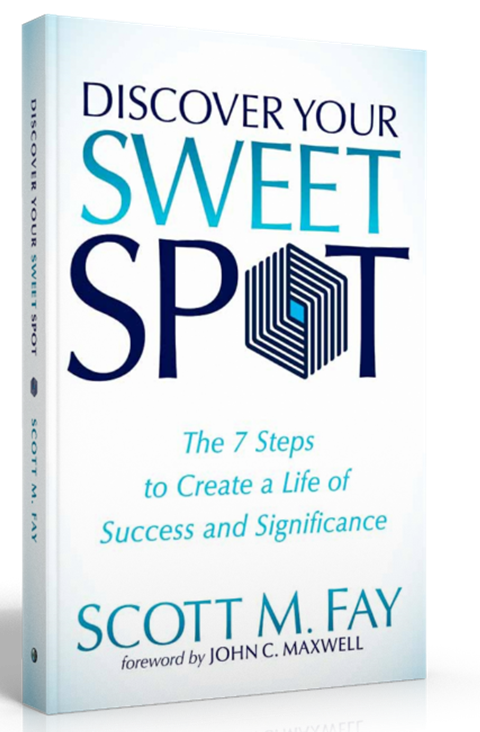 For more than two years Scott Fay has been my coach, mentor, and most importantly, my friend. When I was trying to separate who I was from what I did, and come up with a plan for the rest of my life, Scott believed in me and pushed me in the right direction.
Although the official release of Scott’s first book, Discover Your Sweet Spot – The 7 Steps to Create a Life of Success and Significance, is not scheduled until the first of the year, I have had the opportunity to be included in a group to receive an early release of the book.
Yes, this is another book that focuses a lot on leadership, but Scott provides 7 steps that will guide you along a path to success and significance in whatever lane you are travelling.
Scott is the Vice President of the John Maxwell Team and one of the team mentors. A very successful businessman in the Landscaping business, Scott parallels the ideas of DESIGN, BUILD and MAINTAIN into whatever environment we find ourselves.
This will be the second of three posts taking us through the 7 steps that will teach us how to Design, Build and Maintain a life of success and significance.
PHASE 2: BUILD YOUR LEADERSHIP ENVIRONMENT
STEP 3 – Tear Out, Then Build Up
Pulling from his landscape background again, Scott creates a picture of pulling weeds when entering the building phase. He presents a very thought provoking question – “Do your excuses serve your dream?” In other words, the excuses that you use in life are the weeds preventing you from building your dream.
He provides a great three step process to eradicate these weeds, or “excuses,” that are in the way of construction. This is crucial. If the weeds are not removed during the build phase to allow the new “roots” to take hold, you will will be focusing on pulling weeds the rest of your life.
- Identify your weeds. Review your construction site, “your life,” and remove the weeds that will prevent you from building the life you desire.
- Own your weeds. You know what they are and no one is going to remove them but you. You have to own those weeds and take responsibility in making sure that they are gone as you get ready to build.
- Eradicate the weeds. You have identified them. You have owned them. Now eradicate them. Don’t settle for some or most of them. You are building your foundation and the rest of the product will only be as good as the foundation you build upon.
STEP 4 – Build Midcourse Corrections
Things happen along the way that may require course corrections. You may run into some unforseen conditions – something you could not have predicted. Or maybe you simply want to change the design because you are beginning to see the finish product and can make it better. Scott gives us four things to consider regarding course corrections:
- Intersect the issue. When the issue is identified, take aggressive moves to address it. Don’t assume that it won’t be an important piece of the final product. Remember the design devils, the small details matter.
- Correct the problem. Fix it! Evaluate your options and choose the most logical correction moving forward.
- Protect the goal. Don’t lose sight of the desired outcome. All the details are important, but if you get stuck on one thing, the schedule will suffer. Course corrections are changes in direction but still provide forward motion.
- Reflect the outcome. Certainly you desire that masterpiece when complete. The end product will be a reflection of the process. The quality of effort you put in through the process, will determine the quality of the end product.
I have reviewed numerous books and many have had a specific topic or targeted audience. Discover Your Sweet Spot is for everyone. We all have a Sweet Spot, but very few are living in it. If you want to get there, do yourself a favor and pre-order this book.
Creating an environment that is conducive to success means confronting your current one. If you want to change the design, you must first be willing to change yourself. It starts from within.
Today’s question: “What are the weeds in your life that need to be pulled?” If you are serious about building a better life, your weeds need to be pulled!
Click here to read Part 1 – The Design Phase
***********************************************************************
Don’t miss a single post from Building What Matters by subscribing at the top left of this page.
Help support us by clicking here and Liking our facebook page
Barry Smith 9/18/13 photo courtesy of Scott M Fay © Building What Matters 2013
The post Discover Your Sweet Spot – Part 2: The Building Phase appeared first on BUILDING WHAT MATTERS.COM.
]]>The post The Collaboration Economy – Leadership On A Global Scale appeared first on BUILDING WHAT MATTERS.COM.
]]> I recently finished “The Collaboration Economy – How to meet Business, Social, and Environmental Needs and Gain Competitive Advantage” by Eric Lowitt. It focuses on how some of the major global players in business and industry have taken it upon themselves to LEAD the way into more environmentally friendly business practices.
Yes, the environmentally conscientious reader will probably connect on a higher level to the content but there are some significant leadership lessons to be found in this vision focused framework by Lowitt.
He describes the efforts being done on a global level by some of today’s industry leaders such as GE and Coca-Cola, to not only be more responsible in the way we are conducting our business but more importantly, how we can collaborate together to accomplish missions that can’t be achieved on an individual basis. In short, a new world economy based on collaboration.
Lowitt breaks the book down into three sections:
PART 1 – WELCOME TO THE COLLABORATION ECONOMY
Basically setting the stage, Lowitt describes the difference between “The Waste Economy,” where we are now and “The Collaboration Economy,” where we better be headed.
I won’t run you through the statistics, but basically we are on a short ride to running out of the natural resources that sustain us on a daily basis. Although focused on environmental issues, I would not consider this a “tree hugger” (for sake of a better term) book.
The real focus is on the collaboration between world business leaders that can lead to changes that simply could not be done by the individual corporations. This is a clear statement, backed up with logic and fact, that we is better than me.
PART 2 – BRINGING THE COLLABORATION ECONOMY TO LIFE AND SCALE
Part two is a series of chapters focused on specific topics such as energy, water and food, to name a few. Lowitt describes in detail, how industry leaders are partnering with competitors and leveraging suppliers to join the effort to make needed global changes.
Some may read into the specifics of the topic, but what really resonated to me were the leadership skills that were represented in the changes that have begun. Think about it – many of the examples that Lowitt explores requires business leaders to take tremendous risks, to their own reputation and position as well as to the bottom line of the business.
Significant financial investments had to be made in order to be the front-runners in these risky decisions. Many times, I found myself wondering what went through the minds of these leaders as they put the financial stability of their corporations on the line to do the right thing. Some big leadership lessons throughout!
Although I live in Oregon, a progressive state in their recycling and conservation efforts, I have never given much thought to what goes on behind the scenes. Yes we have come a long way in the last 40 years, but there is still a long way to go.
PART 3 – PUTTING IT ALL TOGETHER TO MOVE FORWARD
The final section really brings home the leadership concepts required to pull this major endeavor off.
Collaborative Leaders Do The Following:
- Think beyond their tenure
- Focus on collective and not individual success
- Are willing to accept someone else’s idea as better than theirs
- Are willing to make sacrifices for the good of the whole
- Understand their position is a privilege and not a right, and act accordingly
- Commit to a true purpose
- Promote and rely on partnerships
- Act with integrity, while guided by an ethical compass
- Have a “How Can We” mindset
Lowitt wraps up the book with this thought:
“Let’s not seek to sustain our current socioeconomic situation. Instead, let’s work together to create a new era of prosperity that benefits our lives today while enhancing future generations’ ability to meet their needs in perpetuity.”
I realize this is a lot to think about, but the reality is that if our generation doesn’t think about it, time will run out and none of us want our kids or their kids to end up in a world that can’t sustain itself.
My question for you today is this; “Are you willing to give today what is required to preserve tomorrow?” We can all do something – What will you do?
***********************************************************************
Don’t miss a single post from Building What Matters by subscribing at the top left of this page.
Help support us by clicking here and Liking our facebook page
Barry Smith 8/28/13 photo courtesy of Amazon © Building What Matters 2013
The post The Collaboration Economy – Leadership On A Global Scale appeared first on BUILDING WHAT MATTERS.COM.
]]>The post Quality: It’s How You Make Them Feel That Counts! appeared first on BUILDING WHAT MATTERS.COM.
]]> I heard John Maxwell once say that “People won’t remember what you did and they won’t remember what you said, but they will remember how you made them feel.” There is a lot to be said for that statement.
I believe it goes hand in hand with the statement that I have heard over and over from my mentors; “People do business with those that they know, like and trust.”
I remember when I was back in High School and making $4.17 and hour at a local grocery store bagging groceries. I think I was a pretty typical kid at the time. I wasn’t too concerned about saving money but wanted to get the most for what I spent it on. The cheaper the price, the more I would get for my dollar, right?
Somewhere between then and now I learned that this is not always right and the older I get, the more I understand that quality is what you are really paying for, not how big or fancy the box is.
So what is quality? Is it determined by how long something lasts? Or maybe, but how good it makes you look? I think when it really comes down to it, quality is defined by how that product or service makes you feel.
There are basically two different types of things we purchase with our money. Products and services. So see if you follow my logic here.
If you buy, for an example, a new vehicle. Sure you want it to look good and run good but what will really define the quality of that vehicle? I will suggest that the real lasting impression of the quality of that car will be how it made you feel.
Did it make you feel safe? Did it make you feel like you made a good investment? Did you feel like you could depend on that vehicle to get you around no matter what the conditions were?
I remember when our oldest son bought his first car. It was a used 4-door Mercedes Benz. Of course he thought it was cool because it was a black Mercedes and made him look like some type of intimidating mafia dude.
But Dad liked the car because it was safe. It drove really nice and was built with the safety of the passengers in mind. That car made me feel secure when the kids were out driving it. That was the quality as I saw it.
I think quality is a little more difficult to define when it comes to services. I love asking the question; “What do you want?” It amazes me how many people really don’t know. They think they know, but when you get the heart of it, they don’t.
Many times it starts with possessions, a new car, a bigger house and so on. But when you go a little deeper, it becomes about security and quality of life. A lot of people I have worked with start of believing that stuff is what will make them happy.
Sure, it might help, but it really comes down to finding that quality of life that most never find. To wake up in the morning and be excited about what will happen next, even if you don’t know what it is. To be able to do the things you want to do and not be consumed by the things that you have to do.
So what is quality? It will be different for everyone, but I challenge anyone to tell me that things will ever mean more that the experiences that came along with them. I believe quality is defined not by what you received but by who you became doing it or using it.
Stuff doesn’t make you feel good. What you do with it is what leave the lasting impression. So a question for you to ponder today to see if you can determine the quality of some of your most prized possessions. “What is the greatest memory you have from your most expensive possession? Whatever that memory is will determine the real quality of that possession.
***********************************************************************
Don’t miss a single post from Building What Matters by subscribing at the top left of this page.
Help support us by clicking here and Liking our facebook page
Barry Smith 8/26/13 photo by author © Building What Matters 2013
The post Quality: It’s How You Make Them Feel That Counts! appeared first on BUILDING WHAT MATTERS.COM.
]]>The post Give And Take – Part 1: Does Generosity Hold You Back? appeared first on BUILDING WHAT MATTERS.COM.
]]>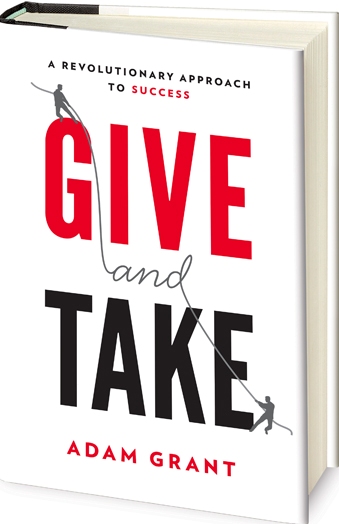 I am currently reading “Give And Take – A Revolutionary Approach To Success” by Adam Grant. I was not familiar with the book or the author but Give and Take came highly recommended by Jeremey Donovan who wrote “How To Give A TED Talk” that I reviewed earlier this year.
Rarely do I read a book in which I am not familiar with the author or the content. In the case of Give and Take, I’m glad I did. Grant has taken a very unique look at the difference between givers and takers and how different paths lead to different results.
This will be the first of three posts in which I will briefly summarize each of the nine chapters. Grant suggests that most people fall into one of two categories; givers and takers. Matchers are the in-between group and operate on the principal of fairness and strive to preserve an equal balance of giving and getting.
GOOD RETURNS – The Dangers and Rewards of Giving More Than You Get
In the first chapter Grant lays out the basic differences between givers and takers and sets up the entire concept with this:
“According to conventional wisdom, highly successful people have three things in common: motivation, ability and opportunity. If we want to succeed, we need a combination of hard work, talent, and luck.” Then he offers up the fourth ingredient – “success depends heavily on how we approach our interactions with other people.”
He goes on to define givers and takers but really get’s you hooked when he explains that it is givers who sit at both the bottom and the top of the success ladder. Only a third of the way into the book, this one is already hitting home. Givers do start out at the bottom, but there is a clear path to success that Grant spells out.
THE PEACOCK AND THE PANDA – How Givers, Takers, and Matchers Build Networks
In chapter two, Grant takes a look at how givers, takers, and matchers develop fundamentally distinct networks, and why their interactions within these networks have different characters and consequences.
Grant explores the idea that networks come with three major advantages: private information, diverse skills, and power. “By developing a strong network, people can gain invaluable access to knowledge, expertise, and influence.” Do those sound like important elements to success?
THE RIPPLE EFFECT – Collaboration and the Dynamics of Giving and Taking Credit
In chapter three we find Grant exploring how the differences between givers and takers affect individual and group success. Grant tells a few stories about some of the great influencers of our past and draws this conclusion:
“Americans see independence as a symbol of strength, viewing interdependence as a sign of weakness. This is particularly true of takers, who tend to see themselves as superior to and separate from others.”
“Givers reject the notion that interdependence is weak. Givers are more likely to see interdependence as a source of strength, a way to harness the skills of multiple people for a greater good.”
This book has pushed me to really take a hard look at my motives and actions regarding giving and taking and I think that there are two types of giving that we need to focus on. Grant suggests that if you have the opportunity to give to someone else and it will take five minutes or less – just do it. I have found that most of this type of giving falls into the “random acts of kindness” category.
The second type of giving is more strategic and planned out but still falls into the giving category. We all need to create and income to survive and I believe that to be successful, you need a strategy. There is nothing wrong with doing something “free of charge” or “paying it forward” as they say, but you can do these things with an end goal in sight.
So you probably already know the question for today; “Are you a Giver or a Taker?” If you are not sure, or want to see what Grant thinks, click here and take The Give And Take Assessment.
***********************************************************************
Don’t miss a single post from Building What Matters by subscribing at the top left of this page.
Help support us by clicking here and Liking our facebook page
Barry Smith 8/7/13 photo courtesy of Amazon © Building What Matters 2013
The post Give And Take – Part 1: Does Generosity Hold You Back? appeared first on BUILDING WHAT MATTERS.COM.
]]>The post How To Deliver A TED Talk – Part 1: Content, Story & Structure appeared first on BUILDING WHAT MATTERS.COM.
]]> I will assume that most of you are familiar with TED talks. If not, they are basically a forum for ordinary people to share their extra-ordinary stories on a public stage.
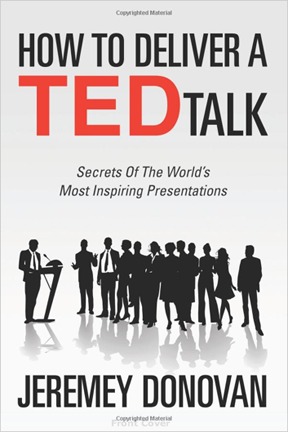
I am currently reading “How To Deliver A TED Talk” by Jeremy Donovan. Now before you quit reading just because you have no intention of ever giving a TED talk let me ask you a question. Have you ever wanted to share an idea with someone and actually have them buy into it? Keep reading.
Donovan, a long time spectator as well as participant in TED talks, has done an amazing job in laying out what it takes to deliver a TED talk. This is part 1 of a 2 post series on not just how to deliver a TED talk, but how to tell a story in a way that will move and influence others.
Part 1 will center on the content, story and structure. Part 2 will focus on delivery and design.
HOW TO SELECT YOUR TOPIC
When selecting your topic, Donovan makes the point that we need to make a connection with the audience at some level. He suggests using something within what he identifies as the “four deep rooted needs.”
- The need for love and belonging
- Desire and self-interest
- Accelerating personal development
- Hope and Change
HOW TO CRAFT YOUR CATCHPHRASE
Donovan points out that captivating the audience needs to be done early and with a short, but powerful catchphrase. He references Simon Sinek, who has one of the highest viewed TED talks, who started with the “why” by using “People don’t buy what you do, they buy why you do it.”
HOW TO BE INTRODUCED
Donovan makes it clear that people don’t want to know your resume, they want to know what they will take away from investing their time in listening to you. At least in the TED environement, the three tenets to focus on are:
- What is in it for them
- Maximize topical relevance
- Minimize biographical information
HOW TO OPEN YOUR TALK
The first ten or twenty seconds of your speech will determine the engagement of the audience. Donovan suggest his three best options for opening your speech:
- Tell a personal story
- Make a shocking statement
- Ask a powerful question
HOW TO BUILD YOUR SPEECH BODY AND TRANSITIONS
Donovan suggest using one of three frameworks to build the body of your speech. No one is better than the others but using one of them is critical.
- Situation-complication-resolution
- chronological narrative
- idea-concepts description
HOW TO CONCLUDE YOUR TALK
Simply, your closing should be to reinforce the benefit to your audience. Remember when we talked about the “why” of your talk? Your closing should be a clear and powerful description of your why and some type of call to action. “The consequences of failure are …”, “By doing this, you will …” and so on.
As a proponent of the coaching process and the power of open ended questions, I prefer to use a powerful question in closing my talks. Something the listener will ponder all the way home.
HOW TO TELL STORIES
The greatest power of telling a story is when it is told in such a way that the listener is able to put themselves in the same situation. Finding common ground with your listener is the ultimate way to connect with them. They have to care about what you are saying for it to influence a change.
Be passionate about your topic and tap the emotion of your listener and you will leave a lasting impression that will make a difference.
So a thought as we wrap up part 1. It doesn’t matter if you are on a stage in front of thousands or simply sitting in the car with your spouse, when you tell a story do it like you believe in what you are saying. Do it like you are telling the last person on earth.
Passion and emotion are contagious and if you want to make a difference or influence an outcome, start with why you want to do it.
***********************************************************************
Don’t miss a single post from Building What Matters by subscribing at the top left of this page.
Help support us by clicking here and Liking our facebook page
Barry Smith 6/5/13 photo courtesy of amazon.com © Building What Matters 2013
The post How To Deliver A TED Talk – Part 1: Content, Story & Structure appeared first on BUILDING WHAT MATTERS.COM.
]]>