The post Energize Your Leadership – The Why Will Produce The How appeared first on BUILDING WHAT MATTERS.COM.
]]>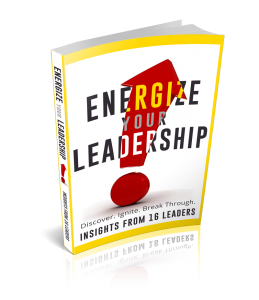 Do you ever feel like you just don’t have enough energy to do the things that you want to do because you are spending all of it on the things you have to do? Finding the energy to make it through everyday is hard enough and finding the energy to pour into others as a leader is even a greater challenge.
I recently had the privilege to partner with 15 other authors, from all over the world, in producing Energize Your Leadership: Discover, Ignite, Break Through. When we first started to explore the idea of a collaborative book project, we wanted to provide the reader with both a topic that would be relevant and content that would add value to them in their role as a leader.
We all deal with finding what it takes to find the energy, not only to fuel our own motor, but to fuel the leaders we are trying to develop around us. In my Chapter titled “Question Yourself” I share the story of my own journey in finding that fuel.
When my job description and responsibilities changed due to a leadership restructuring at the business I had worked at for 15 years, it changed the way I was able to lead. What I didn’t realize at the time was that my opportunity to lead was what was filling my bucket and providing the energy that led to my success. It was the fulfillment of adding value to others and working as a team to accomplish goals that inspired me to be the leader I was capable of being. When that changed, so did I.
So what did I learn from this experience?
- I now understand that I had found my identity in what I did and not in who I was. When what I did fell apart, so did I. The “why” that once fueled me had been lost and I was literally running on empty. [Tweet Now]
- I realized that as leaders we can sometimes become more concerned with protecting the why that fuels those around us and forget about filling up our own tank. As my mentor John Maxwell says, “You cannot give what you do not have.”
- I found out how empowering it is to empower others. I think at the end of the day, we all want to add value, make a difference, and be part of something bigger than we are alone. We need energy to do that!
I learned many things from that experience and now know that this is something that we need to keep in check and review often. I use three questions to make sure that I protect myself from running on empty.
- What would it take to increase my level of awareness?
- What intention have I set to create a change?
- Who will I ask to hold me accountable in making that change?
I encourage you to invest in yourself and invest in a copy of Energize Your Leadership. I think you will find the insights from myself and my 15 colleagues will add to your ability to keep the tank full and have some in reserve to share with those around you.
SEE YOU AT THE PUMP!
***********************************************************************
Don’t miss a single post from Building What Matters by subscribing at the top left of this page.
Help support us by clicking here and Liking our facebook page
Barry Smith 5/4/15 photo courtesy of Authors © Building What Matters 2015
The post Energize Your Leadership – The Why Will Produce The How appeared first on BUILDING WHAT MATTERS.COM.
]]>The post Leading The Starbucks Way – Part 2; Connecting With Trust appeared first on BUILDING WHAT MATTERS.COM.
]]>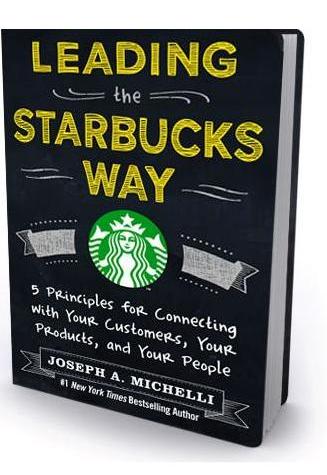 This month in the Platform Builders Mastermind Group, we are diving into “Leading The Starbucks Way: 5 Principles for Connecting with Your Customers, Your Products, and Your People” by Joseph A. Michelli.
Sure this book is about Starbucks, but it’s much bigger than that. Michelli shows why Starbucks has become the coffee bean superpower of the world. And it has nothing to do with the beans. I guess that’s not entirely true, but their success is built much more around who is serving rather than what is being served.
I will admit, I have invested my fair share in the Starbucks brand but I never gave a thought as to what goes on behind the grinder, so to speak. Michelli explores 5 Principles that give Starbucks the advantage over their competition and I for one, will pay much more attention to what is going on behind the counter next time I visit my local Starbucks.
Definitely a great look at what has made Starbucks so successful, but at the same time, the bar has been set very high for them to continue to live up to their reputation.
In this, the second of three posts, I will recap Michelli’s exploration of Principle 2 – Love To Be Loved and Principle 3 – Reach For Common Ground
PRINCIPLE 2 – LOVE TO BE LOVED
In a word, this section is about trust. Both trust of the product and the service and more importantly, consistency in delivering them. It’s not surprising that there is more content about the people than the product in this book. That is where the trust is built.
Think about when you have purchased a product that you believed in but received less than stellar service. You might stick with the product, but if your are like me, you will look elsewhere to get it.
“If you select people with genuine talent for serving others, give them opportunities to become more knowledgeable and passionate about your products, and insist upon product and consumer experience excellence, you are well on the way to gaining the pride and passion of customers.”
While in construction, I often chose service over cost because at the end of the day, I needed someone that would deliver WHEN they say they would and make me feel like I was their most important client. I realize I probably wasn’t, but that doesn’t mean you can’t be treated like you are. Truth be told, I was pretty loyal to those vendors. Hmmmm!
PRINCIPLE 3 – REACH FOR COMMON GROUND
A deep look into the Starbucks way of connecting with their customers, explains much about the forward motion of the organization. It’s one thing to communicate with your customer, but are you really connecting? And I’m not just talking about words.
Starbucks looks at ALL aspects of the environment, the architecture of the store, the neighborhood, the customer base, and the competition. These all factor into the experience that we have when we enter a Starbucks.
“The goal of leadership is to create the right environment for human connection to occur and to help staff members manage the inevitable issues that surface.”
There is certainly risk when you bring the human condition into the business model, but then again, if you want to be the best at what you do, you better be willing to risk something to get there.
I don’t want to feel invisible!
This is probably my favorite quote from this section of the book; “The number one request or desire of every human around the world is to be seen and heard.” (Tweet This)
TODAY’S QUESTION: How effectively have you sought partnerships while building your business and have you positioned yourself to provide services or products that are relevant to your market?
***********************************************************************
===> JOIN THE “LEADERSHIP BY INVITATION” LAUNCH TEAM <===
Click here to get a copy of my Kindle Book “The Manifesto Of An Influential Leader”
Don’t miss a single post from Building What Matters by subscribing at the top left of this page.
Help support us by clicking here and Liking our facebook page
Barry Smith 4/17/14 photo courtesy of amazon © Building What Matters 2014
The post Leading The Starbucks Way – Part 2; Connecting With Trust appeared first on BUILDING WHAT MATTERS.COM.
]]>The post Leading The Starbucks Way – Part 1; Savor And Elevate appeared first on BUILDING WHAT MATTERS.COM.
]]>This month in the Platform Builders Mastermind Group, we are diving into “Leading The Starbucks Way: 5 Principles for Connecting with Your Customers, Your Products, and Your People” by Joseph A. Michelli.
Sure this book is about Starbucks, but it’s much bigger than that. Michelli shows why Starbucks has become the coffee bean superpower of the world. And it has nothing to do with the beans. I guess that’s not entirely true, but their success is built much more around who is serving rather than what is being served.
I will admit, I have invested my fair share in the Starbucks brand but I never gave a thought as to what goes on behind the grinder, so to speak. Michelli explores 5 Principles that give Starbucks the advantage over their competition and I for one, will pay much more attention to what is going on behind the counter next time I visit my local Starbucks.
Definitely a great look at what has made Starbucks so successful, but at the same time, the bar has been set very high for them to continue to live up to their reputation.
In this, the first of three posts, I will recap Michelli’s exploration of “The Starbucks Connection” and Principle 1 – Savor and Elevate.
THE STARBUCKS CONNECTION
The story starts with Howard Schultz stepping back into the role of Chief Executive Officer in 2008. Schultz introduced his “Transformation Agenda” establishing a forward-looking vision that enhanced the companies established mission. Michelli shares that:
“While the Starbuck mission was “to inspire and nurture the human spirit – one person, and one cup and one neighborhood at a time,” the transformation vision set an energizing and rallying objective, “to become an enduring, great company with one of the most recognized and respected brands in the world, known for inspiring and nurturing the human spirit.”
Whether you are a fan of the coffee or not, I guarantee you will look at the organization differently after giving this book a look. The investment that Starbuck makes in their people is impressive. Their commitment is to not only continually improve the product but the way they connect with the customer. It’s not too hard to figure out why your local Starbucks is always full.
PRINCIPLE 1 – SAVOR AND ELEVATE
There are many great quotes about the Starbucks philosophy throughout, but the message is consistent. Connect with your customer and create an experience that will be remembered long after that last sip from the cup.
This is done by being passionate about your product and the service provided to deliver it and do it in a way that inspires the customer to share the same passion. Here is a great quote that represents the Starbucks culture:
“We take the ordinary … and give it new life, believing that what we create has the potential to touch others’ lives because it touched ours.”
It is clear that Starbucks culture is built around both the customer and the product and it’s hard to tell which is top on the priority list but one thing is clear, they are completely committed to make both the best.
This is probably my favorite quote from this section of the book; “all business settings are a stage from which all experiences emerge.” (Tweet This) What if we all looked at our business that way? People are going to pay for your service or your product or both. The real question becomes, will they enjoy it? The answer to that will determine whether or not they come back.
TODAY’S QUESTION: Your brand is really a representation of who you. What are you doing to use that brand to create an experience that will get your customer or client to share in your passion?
***********************************************************************
===> JOIN THE “LEADERSHIP BY INVITATION” LAUNCH TEAM <===
Click here to get a copy of my Kindle Book “The Manifesto Of An Influential Leader”
Don’t miss a single post from Building What Matters by subscribing at the top left of this page.
Help support us by clicking here and Liking our facebook page
Barry Smith 4/10/14 photo courtesy of amazon © Building What Matters 2014
The post Leading The Starbucks Way – Part 1; Savor And Elevate appeared first on BUILDING WHAT MATTERS.COM.
]]>The post Leaders Eat Last – Part 4; Serving Those That Serve Others appeared first on BUILDING WHAT MATTERS.COM.
]]>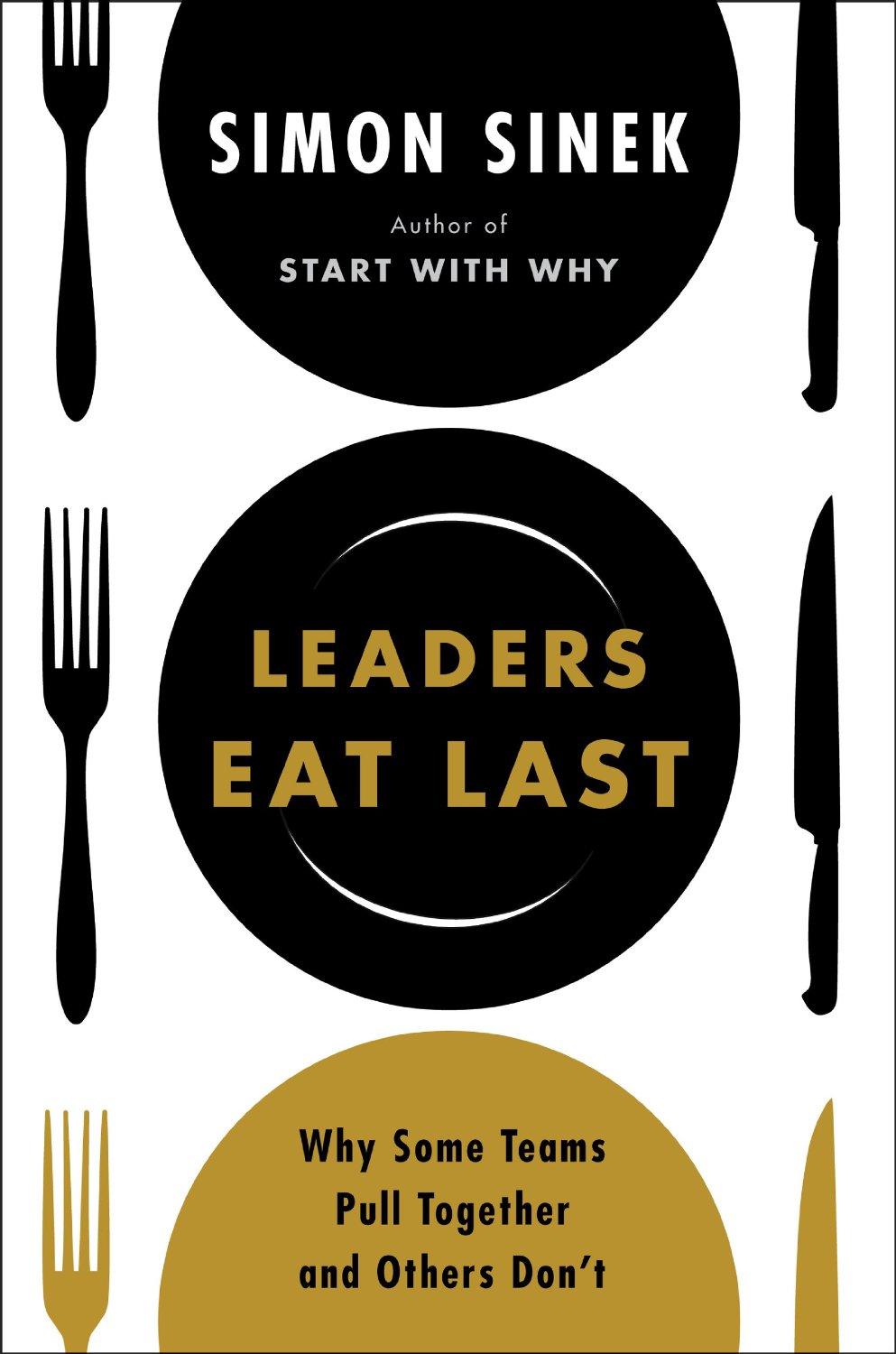 This month, in The Platform Builders Mastermind group, we are working our way through Simon Sinek’s recently released “Leaders Eat Last – Why Some Teams Pull Together and Others Don’t.”
Sinek, the author of Start With Why, provides a deep look into what creates the most effective teams and more importantly, what keeps them working together, even during the most difficult of times.
This is one of those books that will take you a little bit longer to read because so many thoughts require you to take another look, just to make sure you understood the power behind them. A phenomenal effort by Sinek, Leaders Eat Last not only looks at the dynamic of the team but of the individuals that make up that team.
What really sets this book apart is Sinek’s unique look at why some people make good leaders and others don’t and the “why” behind the results they get. In this post, the final of four, I will attempt to capture the basic thoughts of the eight parts of the book.
PART 7: A SOCIETY OF ADDICTS
AT THE CENTER OF ALL OUR PROBLEMS IS US – A very enlightening chapter that explains a lot about some of the cultural problems we are facing and how they translate into the way we lead. Our desire for immediate gratification has taken many of us off our A-game.
Sinek makes a great observation when he says, “Leadership is about taking responsibility for lives and not numbers. Managers look after our numbers and our results and leaders look after us.” Seems like we currently have a shortage of leaders.
AT ANY EXPENSE – The demand for results, and achieving them now, has thrown us completely out of balance. Dopamine is a good thing when taken in moderation. Unfortunately, the recognition for achievement had created an addiction that is as contagious as the plague.
I have to go back to one of the statements I made in an earlier post. We have moved from a collaborative to a competitive culture and the desire, and demand, to keep up with the Jones’ has resulted in a somewhat overlooked epidemic of dopamine addiction.
THE ABSTRACT GENERATION – This chapter really hit home for me. I have often described Generation Y as the entitlement generation. I don’t know that I would go back on that statement entirely, but I do have a very different perspective after listening to what “Simon says.”
Our culture of immediate gratification has created a generation that expects things to happen now – so why wouldn’t they expect that? The difference is that I understand more of the why behind their actions and attitude and realize that success will not come from changing them, but from embracing them and using the strengths they do bring to the table.
PART 8: BECOMING A LEADER
STEP 12 – An interesting comparison the the alcoholics anonymous 12 step approach to recovery. The great point made by Sinek here is that service is the key to breaking the dopamine addictions in our organizations. Serving puts the real focus back on the people and not on the numbers and the interesting thing is that focusing on the people has actually shown to produce the numbers.
SHARED STRUGGLE – This was a great chapter! The idea is that we ultimately perform our best when we are backed into a corner and have no other choice than to depend on those around us to get through the current challenge. The power of working collectively as a team, sharing in the struggle, has a special way of bringing out the best in us. Oxytocin anyone?
WE NEED MORE LEADERS – How about this gem from Sinek: “Leadership is not a license to do less; it is a responsibility to do more.” We have lots of “leaders” in our lives, unfortunately not all of them are leading.
Sinek continues to finish strong, suggesting that leadership is about “committing to the well-being of those in our care and having the willingness to make sacrifices to see their interests advanced so that they may carry our banner long after we are gone.” And then closes the book with what I consider a very powerful “call to action” for all of us …
LET US ALL BE THE LEADERS WE WISH WE HAD
– Simon Sinek (TWEET THIS)
We were honored to have Simon join The Platform Builders on a call this week as we wrapped up our mastermind study on the book. All I can say is WOW! He added so much value to our tribe in just a short while. One golden pearl of wisdom and inspiration after another. There will several takeaways but I will leave you today with this one, “True fulfillment comes from serving those that serve others.” (Tweet This)
That statement came along with the story of his trip home from Afghanistan on a Military flight in which he shared the back end of the plane for nine hours accompanied by only the flag draped casket of a fallen soldier. His reflection … “You want to talk about a life impacting experience that puts things in perspective!” We still have much to hear from Mr. Sinek and I for one, can’t wait!
***********************************************************************
===> JOIN THE “LEADERSHIP BY INVITATION” LAUNCH TEAM <===
Click here to get a copy of my Kindle Book “The Manifesto Of An Influential Leader”
Don’t miss a single post from Building What Matters by subscribing at the top left of this page.
Help support us by clicking here and Liking our facebook page
Barry Smith 3/28/14 photo courtesy of amazon © Building What Matters 2014
The post Leaders Eat Last – Part 4; Serving Those That Serve Others appeared first on BUILDING WHAT MATTERS.COM.
]]>The post Leaders Eat Last – Part 3; Culture Trumps Everything appeared first on BUILDING WHAT MATTERS.COM.
]]>This month, in The Platform Builders Mastermind group, we are working our way through Simon Sinek’s recently released “Leaders Eat Last – Why Some Teams Pull Together and Others Don’t.”
Sinek, the author of Start With Why, provides a deep look into what creates the most effective teams and more importantly, what keeps them working together, even during the most difficult of times.
This is one of those books that will take you a little bit longer to read because so many thoughts require you to take another look, just to make sure you understood the power behind them. A phenomenal effort by Sinek, Leaders Eat Last not only looks at the dynamic of the team but of the individuals that make up that team.
What really sets this book apart is Sinek’s unique look at why some people make good leaders and others don’t and the “why” behind the results they get. In this post, the third of four, I will attempt to capture the basic thoughts of the eight parts of the book.
PART 5: THE ABSTRACT CHALLENGE
ABSTRACTION KILLS – Interesting how much our behavior changes when we are not directly connected to the outcome. Sinek provides an interesting look at how what can happen when we simply follow orders or instructions and disconnect from the results of our actions when we don’t actually “see” the outcome of them.
MODERN ABSTRACTION – A great discussion on the impact of what happens when a employer or leader becomes more concerned about the numbers than the people. Caring about your people will produce the numbers. Never forget that!
MANAGING THE ABSTRACTION – A great quote from this chapter “We like to actually be around people who are like us. It makes us feel like we belong.” As good as the virtual world is becoming, it will never replace sharing the same physical space with like-minded individuals.
IMBALANCE – Simple but powerful thought here. No matter how good something may be, or appear to be, it still needs to remain in balance with everything else. Too much abundance can be a damaging as not enough – maybe even worse!
PART 6: DESTRUCTIVE ABUNDANCE
LEADERSHIP LESSON 1 – So Goes The Culture, So Goes The Company – Culture trumps everything. A leader must provide focus and intentionally keep the culture of the company as a priority. Sinek quotes a former Goldman Sachs employee who described the company as “an environement with no trust, no mutual respect, and above all, no accountability when things went wrong.”
LEADERSHIP LESSON 2 – So Goes The Leader, So Goes The Culture – Some great thoughts here about leaders that empower their people. Your people will act as you do and treat others as they are treated.
LEADERSHIP LESSON 3 – Integrity Matters – A great piece of wisdom here with this one, “Integrity is not about being honest when we agree with each other; it is also about being honest when we disagree, or even more important, when we make mistakes or missteps.”
LEADERSHIP LESSON 4 – Friends Matter – Sinek suggests that cooperation doesn’t mean agreement, it means working together to advance the greater good, to serve those who rely on our protection, not to rack up wins to serve our team or ourselves. We need friendly relationships and need to keep our agenda separate in order to work cooperatively. (Tweet This)
LEADERSHIP LESSON 5 – Lead The People, Not The Numbers – A great observation made here by Sinek, “When a leader has the humility to distribute power across the organization, the strength of the company becomes less dependent on one person and is thus better able to survive.” Building up your people and making sure that they have a path to success is leadership, not the bottom line. Lead well, and the bottom line will take care of itself.
HOLDING YOUR PEOPLE ACCOUNTABLE
My favorite take from this section of the book comes from Sinek’s summary of Captain David Marquet’s Turn the Ship Around. He says this, “It is a leader’s job instead to take responsibility for the success of each member of his crew. It is the leader’s job to ensure that they are all well trained and feel confident to perform their duties. To give them responsibility and hold them accountable to advance the mission.”
Read that again and just think about it for a minute. Does that describe your leadership style? How about the person that is leading you?
***********************************************************************
Click here to get a copy of my Kindle Book “The Manifesto Of An Influential Leader”
Don’t miss a single post from Building What Matters by subscribing at the top left of this page.
Help support us by clicking here and Liking our facebook page
Barry Smith 3/20/14 photo courtesy of amazon © Building What Matters 2014
The post Leaders Eat Last – Part 3; Culture Trumps Everything appeared first on BUILDING WHAT MATTERS.COM.
]]>The post Raising The Bar For Generation Y- Part 2 appeared first on BUILDING WHAT MATTERS.COM.
]]>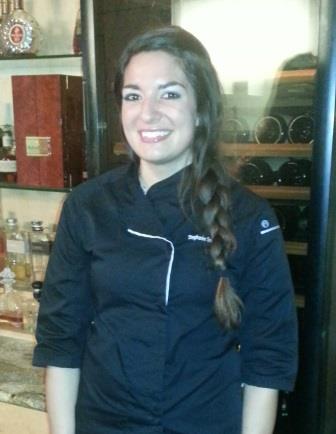 Last week I introduced you to Ben, a 22 year old working as a Hard Rock Cafe server in Las Vegas. Ben has a bright future in front of him, but he is not the only one. Today I want to introduce you to Stephanie.
Stephanie works as a Food and Beverage Supervisor at the World Marriott in Orlando, Florida. Hmm? 22 years old and a food and beverage supervisor already. Isn’t that interesting!
Through a connection with one of the chef’s at the World Marriott, we were able to set up a private catered dinner for myself and the event coordinator of the John Maxwell Team. The John Maxwell Team holds two large events there every year and we were excited at the opportunity to get a look “backstage” with food services.
The service we have received during our visits to the World Marriott has been nothing short of phenomenal, and after our peek at what goes on behind the scenes, it’s easy to understand why. I won’t pretend to understand what it takes to run a kitchen of this size, but what we saw appeared to be a well-oiled machine, running full throttle, and without a miss.
A big part of the experience was our private server, Stephanie. Just like with Ben in Las Vegas, I was intrigued by her attitude, professionalism, and self-confidence. All characteristics I only occasionally see in adults twice her age. A few of her comments really made me think …
“If you want another course, we will throw it in.”
Logic would suggest that the objective was to take care of a significant client, but the delivery was sincere. Right from the beginning Stephanie made us feel like the only people in the building.
This was something I have never experienced before. A specially constructed room built in the middle of the kitchen so we could see everything going on around us but from within an environment built exclusively for a fine dining experience. I think it’s fair to say that Stephanie really wanted us to enjoy the experience and her commitment to making that so, was authentic and intentional.
“Oh my gosh, I’m so sorry!”
Just as in everything we do, things don’t always go as planned. Upon a minor mishap, exclusive to our private venue, Stephanie immediately apologized, owned it and, most importantly diffused a situation that could have disrupted the entire evening.
In our opinion, it was no big deal, but it certainly could have changed the emotional state and attitude of any person providing service. I find it interesting how difficult it is sometimes to own our actions and simply say “I’m sorry.”
“I can talk through a brick wall.” (Tweet This)
What a great statement. My takeaway from this comment … how long could you speak “intelligently” about your profession? How about in a random conversation with clients or colleagues? Stephanie spent the entire time in the room with us that night and we spent a lot of time talking about all sorts of topics. I don’t remember any that went beyond her ability to add value to the conversation.
I am still amazed at the competence and confidence of someone her age and her ability to control the atmosphere of the room. I suppose you could say that education had it’s benefits.
“I don’t think I have ever said no.”
This was my favorite. We had been giving her a hard because everything was so amazing and it sort of became a challenge to see if they could actually deliver on “anything” we wanted. So naturally, a person of my intellect, came up with a great challenge. “Fresh chocolate chip cookies and vanilla gelato.” No way they could bust that out. Wrong! “No” was not an option.
As I custom desert request arrive, I asked her what they do when they get a request for something they can’t make happen. Her response, “I don’t think I have ever said no.” I guess that pretty much sums up the evening!
Do You Want To Be The Best?
It will be a meal I never forget, but something tells me that Stephanie does the same for other people everyday. I will not soon forget the attitude and effort that went into that dining experience and the real point of the story is that if you want to be the best, you need to act like it – and not just when you have to, but when you don’t. That’s what will set you apart from the rest.
Like Ben, Stephanie has big aspirations for her career. She eventually would like to end up in the California wine valley as a wine sommelier. I know she will make it and she just might be the youngest female to ever become one. I won’t be betting against her anytime soon.
THE QUESTION: Are you serving people in a way that represents your best?
THE CHALLENGE: Do something today that will take your quality of service to the next level.
Read part one by clicking here
***********************************************************************
Click here to get a copy of my Kindle Book “The Manifesto Of An Influential Leader”
Don’t miss a single post from Building What Matters by subscribing at the top left of this page.
Help support us by clicking here and Liking our facebook page
Barry Smith 3/17/14 photo courtesy of amazon © Building What Matters 2014
The post Raising The Bar For Generation Y- Part 2 appeared first on BUILDING WHAT MATTERS.COM.
]]>The post Leaders Eat Last – Part 2; A Leader’s Environment appeared first on BUILDING WHAT MATTERS.COM.
]]>This month, in The Platform Builders Mastermind group, we are working our way through Simon Sinek’s recently released “Leaders Eat Last – Why Some Teams Pull Together and Others Don’t.”
Sinek, the author of Start With Why, provides a deep look into what creates the most effective teams and more importantly, what keeps them working together, even during the most difficult of times.
This is one of those books that will take you a little bit longer to read because so many thoughts require you to take another look, just to make sure you understood the power behind them. A phenomenal effort by Sinek, Leaders Eat Last not only looks at the dynamic of the team but of the individuals that make up that team.
What really sets this book apart is Sinek’s unique look at why some people make good leaders and others don’t and the “why” behind the results they get. In this post, the second of four, I will attempt to capture the basic thoughts of the eight parts of the book.
PART 3: REALITY
THE COURAGE TO DO THE RIGHT THING – Sinek tells the story of an air traffic controller that broke the rules and as a result, saved over a hundred lives. The point of the story is that sometimes it’s ok to break the rules, because it’s the right thing to do.
The bigger point of the story is that we have created a culture of non-thinking rule followers that use those very rules to justify making the wrong decision just because “that’s what they were told to do.” Sinek goes on to discuss the idea of trust and offers this great thought: “We don’t just trust people to obey the rules, we also trust that they will know when to break them.”
SNOWMOBILE IN THE DESERT – Another great chapter! We are the most advanced creature on the planet and yet, have the most difficult time working collaboratively towards common goals. Sinek suggests that people are not the problem in most cases when discussing our cooperative efforts.
Our culture is so competitive that in most of the environments that we work in, we are judged on personal performance. This creates a natural condition pushing us to do better than the next guy. Sound like looking our for #1 to me. Create an environment in which your people can thrive, and they will! (Tweet This)
PART 4: HOW WE GOT HERE
THE BOOM BEFORE THE BUST – This is Sinek’s look at how the economic health of the nation has impacted leadership. The roaring twenties were a time of prosperity and wealth never seen before. Then the stock market crash hit in 1929 beginning a depression lasting until nearly 1942. Going to war is widely accepted as the event that pulled us out of that depression.
The point he makes is that like in anything, there has to be balance. He makes a great comparison between the good times and the bad – at least from a leadership perspective. The generations that have produced great security and stability have focused on leadership and service, not excess and consumerism. Hmm, isn’t that interesting!
THE BOOMERS ALL GROWN UP – Sinek takes a look at the three stock market crashes we have endured since the baby boomers took over running government and business. There has clearly been a shift to the idea that people are as disposable as products. We have moved away from a strong sense of community and now focus on protecting “what is ours.”
This may be one of the strongest thoughts in the book – “There are smart executives running companies and managing systems, but there seems to be a distinct lack of strong leaders to lead the people.” I wonder if the leaders still exist but there no longer exists a job description that includes them. Just sayin’
Here is Sinek’s bottom line that I take away from this section of the book. “It’s not how smart the people in the organization are; it’s how well they work together that is the true indicator of future success or the ability to manage through struggle.”
Read that again and just think about it for a minute. Does it apply to your current environment?
***********************************************************************
Click here to get a copy of my Kindle Book “The Manifesto Of An Influential Leader”
Don’t miss a single post from Building What Matters by subscribing at the top left of this page.
Help support us by clicking here and Liking our facebook page
Barry Smith 3/13/14 photo courtesy of amazon © Building What Matters 2014
The post Leaders Eat Last – Part 2; A Leader’s Environment appeared first on BUILDING WHAT MATTERS.COM.
]]>The post Leaders Eat Last – Part 1; The Forces That Keep Us Safe appeared first on BUILDING WHAT MATTERS.COM.
]]>This month, in The Platform Builders Mastermind group, we are working our way through Simon Sinek’s recently released “Leaders Eat Last – Why Some Teams Pull Together and Others Don’t.”
Sinek, the author of Start With Why, provides a deep look into what creates the most effective teams and more importantly, what keeps them working together, even during the most difficult of times.
This is one of those books that will take you a little bit longer to read because so many thoughts require you to take another look, just to make sure you understood the power behind them. A phenomenal effort by Sinek, Leaders Eat Last not only looks at the dynamic of the team but of the individuals that make up that team.
What really sets this book apart is Sinek’s unique look at why some people make good leaders and others don’t and the “why” behind the results they get. In this post, the first of four, I will attempt to capture the basic thoughts of the eight parts of the book.
PART 1: OUR NEED TO FEEL SAFE
PROTECTION FROM ABOVE – Sinek starts out the book telling the story of pilot Johnny Bravo and about his courageous actions from the battlefield. When asked why he risked his own life to protect the lives of his fellow soldiers, he simply responded “Because they would have done it for me.” Are you willing to do for others what you would expect them to do for you?
EMPLOYEES ARE PEOPLE TOO – The second chapter is built around this great thought from Sinek: “The leaders of great organizations do not see people as a commodity to be managed to help grow the money. They see the money as the commodity to be managed to help grow the people.” Imagine that … focusing on people before profits. Isn’t that interesting?
BELONGING – Sinek introduces the concept of a “Circle Of Safety.” We all want to belong to something and when a culture is created that not only provides the opportunity to be part of it, but also provides security and stability, then engagement, fulfillment and productivity go up as well.
YEAH, BUT … – This is a great chapter. Sinek explores the idea that it is not extra work and long hours that stress people out, but rather the loss of control. When we are able to control our environment, we are much more inclined to remain engaged and loyal to our team.
PART 2: POWERFUL FORCES
WHEN ENOUGH WAS ENOUGH – If you are reading this, you probably already have more than enough. In other words, your basic needs have been met and you are living more abundantly than most of the people on this planet. Sinek begins to take a look at the physiological reasons that influence our thoughts and actions.
E.D.S.O. – Chapter 6 provides a clear picture of the four primary chemical incentives in our bodies and what happens when these chemicals are released.
- Endorphins – This chemical masks physical pain. This is what makes you feel good after strenuous physical activity.
- Dopamine – This is the chemical that makes us feel satisfied, a sense of achievement or accomplishment.
- Sarotonin – This chemical provides a feeling of pride, respect or value. This builds our self-esteem.
- Oxytocin – This is what enables us to form friendships, feel love, and build deep trust.
Sinek does a masterful job describing how all of these play into our role as a leader.
THE BIG C – No, not that one. Cortisol is responsible for the stress and anxiety that we feel when something goes bump in the night. It is our bodies way of telling us that something is not right. The problem is that although it is a defense mechanism, it also puts strain on our body. Using it to our advantage is the challenge.
WHY WE HAVE LEADERS – In order to function as a productive team, organization, or community, someone has to make the first move. Someone has to lead. Someone has to set a course in a new direction or we will simply exist where we are. Someone has to make the first sacrifice so others can follow.
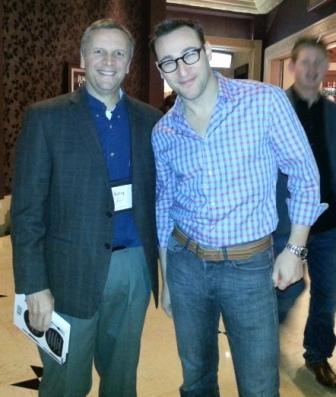 I know we are early in the year, but I have a pretty strong feeling that Leaders Eat Last will be one of my top books for 2014. I actually had to good fortune to meet Simon Sinek earlier this week and hear him speak from the stage.
I can tell you this much, Sinek is the real deal. In a crowded hotel lobby, he gave me his undivided attention and made me feel like the only one in the room. He practices what he preaches and is consistent with his message.
Pulling from his highly viewed TEDTalk video, “People don’t buy into what you do, they buy into why you do it,” (Tweet This / Post to LinkedIn) Leaders Eat Last will fill you in on the “why” that leaders use to lead.
***********************************************************************
Click here to get a copy of my Kindle Book “The Manifesto Of An Influential Leader”
Don’t miss a single post from Building What Matters by subscribing at the top left of this page.
Help support us by clicking here and Liking our facebook page
Barry Smith 3/6/14 photo courtesy of amazon © Building What Matters 2014
The post Leaders Eat Last – Part 1; The Forces That Keep Us Safe appeared first on BUILDING WHAT MATTERS.COM.
]]>The post Failure Won’t Ruin You, It Will Reveal You! appeared first on BUILDING WHAT MATTERS.COM.
]]> National Quit Day has come and gone. My hope is that the “why” behind your 2014 goals was strong enough to keep you on course and that you continue to productively pursue the goals that will make 2014 your most successful year yet.
If you are still on track with your goals – good on you. That being said, it takes about 30 days to start a new habit or become consistent in the transformation you are seeking. It will probably get a little tougher before it get’s easier.
I don’t want to jinx the future, but I believe this post will help you through the tough times as you take on these new challenges. One of my mentors taught me that failure won’t ruin you, it will reveal you. What does that mean? What I believe it means is that as you begin to slip from your commitment to heading to the gym, writing 500 words a day or whatever else it might be, challenge yourself to understand what is being revealed in that failure.
Sometimes You Win, Sometimes You Learn!
Remember what John Maxwell says; “Sometimes you win and sometimes you learn.” You see, failure won’t ruin you. You have attempted many goals in the past and like all of us, have failed almost as many times. That doesn’t have to be the end. But here is the deal – you won’t achieve every goal you set out to. Sorry – simply speaking the truth here. I am more concerned with why we fail. More specifically – what is revealed in the process.
It has been said that; “When you have a strong enough WHY, the how will take care of itself.” (Tweet This / Share on Facebook / Post to LinkedIn)
So put your why to the test. When you fall short you have two choices. You can look at it as failure or you can see what is revealed during the process.
Plan Your Work And Work Your Plan!
Maybe your why is strong enough, but you have failed to set yourself up for success and left out a key ingredient to success. Maybe the environment you are in is not conducive to your success. Achieving goals is much more than simply the desire to change or start something new. You need a game plan – and one that will work.
I think the biggest reason people don’t achieve their goals is because they don’t put enough thought into the way to achieve the goal. They simply write down on a piece of paper what they want to achieve, tape it to the refrigerator and hope that looking at it a few times a day will give them the motivation they need to achieve it.
The Fifteen Minute Miracle
I know many of you are killing it so far. On track and feeling strong. Some of you may be struggling or have already given up on one or more of the goals you set for 2014. There is nothing wrong with the idea of “don’t fix it if it’s not broke” but if there is an opportunity to get better, why not consider it? Don’t give up! There is still time to get back on track – maybe all you need is a little more clarity and a slight course correction.
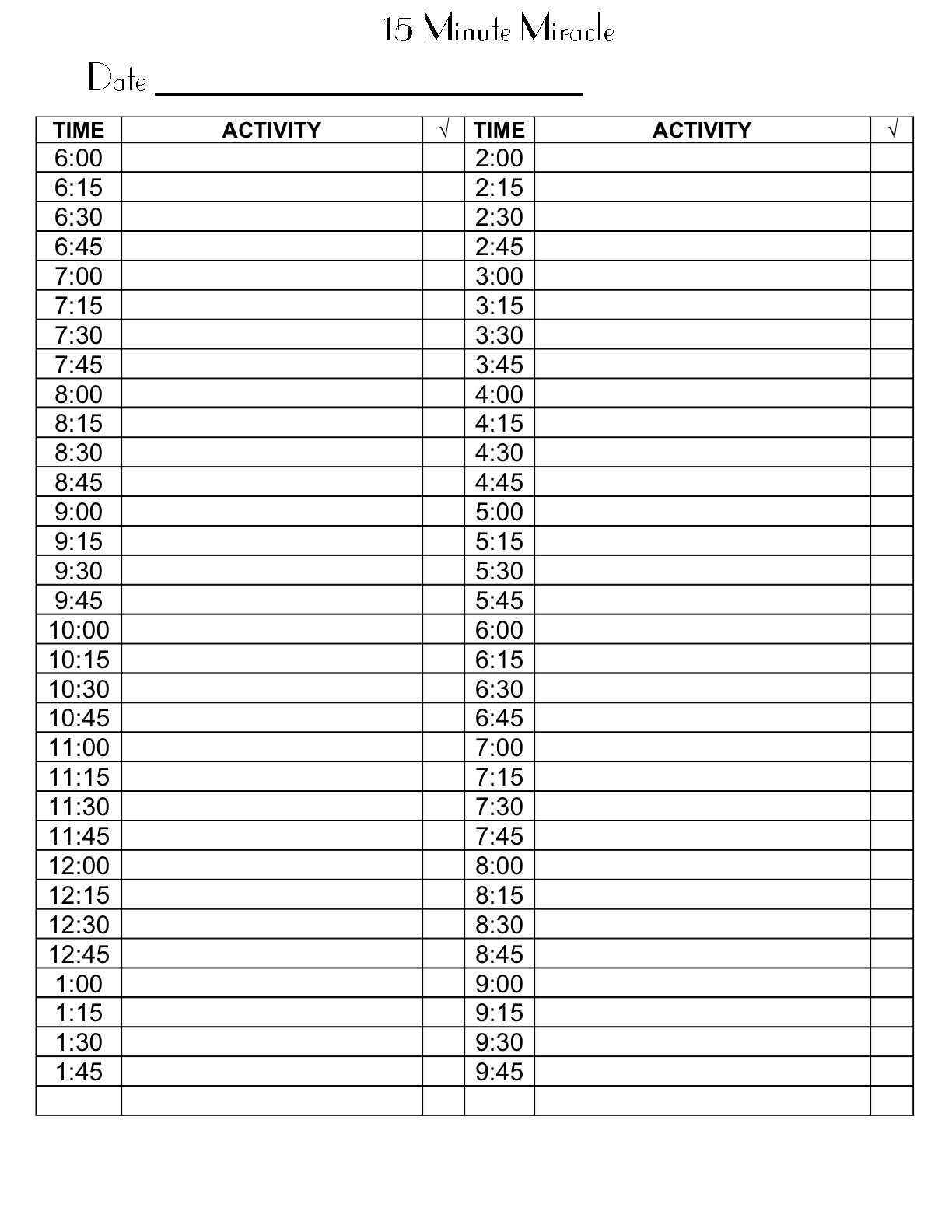
15 Minute Miracle
I lead a group of new members to the John Maxwell Team through a 90 Day Success Roadmap and one of the resources we use is called the 15 Minute Miracle. This very simple and highly powerful tool almost guarantees success – if you use it right – and will make you much more productive immediately.
All you have to do is break down your day into 15 minute increments. What? That’s it? Yes! I know what you’re thinking … it can’t be that easy. Well it’s not – it’s not because you have to actually do it and do it consistently. Give it a shot and tell me I’m wrong.
A simple but very important question for you today. Have you created the right plan to achieve your goals? Remember – set yourself up for success! When you face failure, ask yourself what is being revealed – what has contributed to the failure and how can I change it.
***********************************************************************
Click here to get a copy of my Kindle Book “The Manifesto Of An Influential Leader”
Don’t miss a single post from Building What Matters by subscribing at the top left of this page.
 Help support us by clicking here and Liking our facebook page
Barry Smith 1/13/14 photo by author © Building What Matters 2014
The post Failure Won’t Ruin You, It Will Reveal You! appeared first on BUILDING WHAT MATTERS.COM.
]]>The post The Men Who Built America – Andrew Carnegie appeared first on BUILDING WHAT MATTERS.COM.
]]>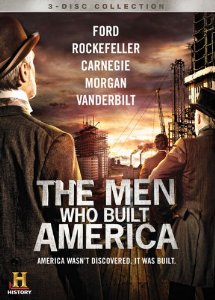 Well here we are, a new year and a new plan, right? I know this – the Platform Builders have some new plans for 2014 and this year we are starting our Mastermind study with a little twist.
This month we are masterminding through The Men Who Built America, a DVD produced by the History Channel along with Think and Grow Rich by Napoleon Hill to compliment the mini-series built around some of the great early leaders and entrepreneurs that help build the United States into a world power at the end of the 19th Century.
If you don’t know the back story on how these two connect together, Napoleon Hill was commissioned by Andrew Carnegie to study the most successful people and find out what resulted in their success. The men who built America were among many of the 20,000+ that Hill interviewed over the twenty year period it took him to write the book.
This month we are going take a look at Andrew Carnegie, Thomas Edison, JP Morgan and Henry Ford. In this, the first of four posts, we will take a look at Andrew Carnegie.
Carnegie is most recognized for the steel empire he built that would later become the U.S. Steel Company after being sold to J.P. Morgan in 1901 for the equivalent of 13.5 Billion Dollars in today’s economy. But there is much more to Carnegie’s story.
So what was it that took a boy born into poverty in the Country of Scotland to become one of the wealthiest men in the America? Lets take a look at three of the things that Napoleon Hill discovered:
Rags To Riches
DESIRE
“Every act you have ever performed since the day you were born was performed because you wanted something.” – Andrew Carnegie
Carnegie spent his early years in business watching men like Vanderbilt, Rockefeller and Thomas Scott. He watched them build their empires and when his opportunity came, he knew exactly what he wanted and that desire never left. From one venture to the next his desire empowered him to find a way to achieve it.
Is It Time To Get A Bigger Box?
IMAGINATION
“Think of yourself as on the threshold of unparalleled success. A whole, clear, glorious life lies before you. Achieve! Achieve!” – Andrew Carnegie
One of the events showcased in the mini-series is when Thomas Scott, Carnegie’s mentor and boss, asked Carnegie to build and oversee the design and construction of a bridge across the Mississippi River. Scott suggested a man who according to Scott, “could do anything”, to design it. As it turned out, the designer said it was impossible. Carnegie responded with a emphatic “Nothing is Impossible.” From there he imagined the construction of the bridge using steel and thus began the legacy of Carnegie Steel.
Just When You Think You’ve Had Enough …
PERSISTENCE
“People who are unable to motivate themselves must be content with mediocrity, no matter how impressive their other talents.” – Andrew Carnegie
All these men, including Carnegie, defined the spirit on entrepreneurship. I won’t suggest that they came up with entirely new ideas (except for possibly Edison) but they figured out entirely new ways to use what was already there, how to use it more efficiently, or how to produce it quicker and cheaper. None of these advances came with failure. 10,000 tries at the light bulb ring any bells for you? But all these men, especially Carnegie refused to quit. They persisted until they succeeded.
Most equate the success of these men to industry and the technological advances of their time. I believe what really made them more successful than anyone else of their time was their entrepreneurial spirit. They were visionaries. They saw what other didn’t and did what others couldn’t and achieved the impossible. (Tweet This / Share on Facebook / Post to LinkedIn)
This will be a great mastermind study. None of these men were angels, but one thing about them – they never let anyone else limit what they could do.
So I have a question for you to ponder today. What limits are holding you back for doing what you want to do and becoming who you want to be?
***********************************************************************
Click here to get a copy of my Kindle Book “The Manifesto Of An Influential Leader”
Don’t miss a single post from Building What Matters by subscribing at the top left of this page.
Help support us by clicking here and Liking our facebook page
Barry Smith 1/8/14 photo courtesy of Amazon © Building What Matters 2014
The post The Men Who Built America – Andrew Carnegie appeared first on BUILDING WHAT MATTERS.COM.
]]>