The post Closing The Gap Between What You Know And What You Do appeared first on BUILDING WHAT MATTERS.COM.
]]>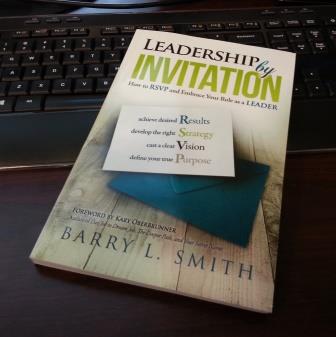 In the mail today, I received the author’s complimentary copy of my new book, Leadership by Invitation. I was being interviewed earlier in the week about the book and was asked the question; “What is the one thing you would tell someone who is writing a book to help them reach their goal of actually getting it published?” Great question!
Simple answer. START WRITING.
I spend a lot of time thinking about what I write. I blog multiple times every week, create content on a regular basis, and am already working on my next book project. You might find this hard to believe, but do you know that until I actually start writing, nothing gets written? I can spend all day thinking about it, I might even have a pretty good idea on what to write. But until I start pounding the keyboard, nothing gets done.
You have to Start before you can Finish!
I think there are a lot of similarities between this thought on writing and just about anything else you might want to achieve. We have to START. At some point in time, we need to decide that we are done getting ready and just go for it.
There are also similarities on what happens after you start. I have found that in writing, it is only after you start writing the words that the story really starts to come to life. One thought leads to another and “whaddayaknow” a few months later you have a book.
It’s no different in anything else. You want to lose 30 pounds? Well, you have to lose one before you can lose the other twenty-nine. You want to make a million dollars? You have to make one before you make the other … you get the picture!
The Power of Knowledge comes through Action.
The point is, you have to START. If you are reading this, I will make the assumption that you are fairly well educated and have acquired a significant amount of knowledge over the years. But what are you doing with that knowledge? I used to think knowledge was power. NOT! The power of knowledge does not come from simply possessing it, you must act upon it.
This gap between what we know and what we do is the gap that will lead us not only to success, but to significance. Everyday should be a day of closing that gap. But it takes action. Yoda said it best; “There is no try, there is only do and do not.” [Tweet This] So which is it going to be?
In order to close the gap we need to “DO.” The way we do anything is to START. I have found that it is much easier to start something small as compared to something big. It much less intimidating and much easier to achieve. I have seen so many people take on large tasks and fail because they did not identify the small steps along the way.
Every Great Accomplishment has been Achieved One Step at a Time.
Writing is a great example. The idea of writing a book may seem too much for you to ever accomplish. But how about a chapter, better yet a paragraph and if you still think it’s too much, just write out a sentence. To my knowledge, there are no books out there that were not written “one letter” at a time.
Today’s Challenge: Choose something in your life that you want to do but have been putting off because “it’s just to big” and break it down into small steps and START. That is how you will close the gap between what you know and what you do.
***********************************************************************
===> JOIN THE “LEADERSHIP BY INVITATION” LAUNCH TEAM <===
Click here to get a copy of my Kindle Book “The Manifesto Of An Influential Leader”
Don’t miss a single post from Building What Matters by subscribing at the top left of this page.
Help support us by clicking here and Liking our facebook page
Barry Smith 5/23/14 photo by author © Building What Matters 2014
The post Closing The Gap Between What You Know And What You Do appeared first on BUILDING WHAT MATTERS.COM.
]]>The post What If Plan “B” Could Become Plan “Better”? appeared first on BUILDING WHAT MATTERS.COM.
]]>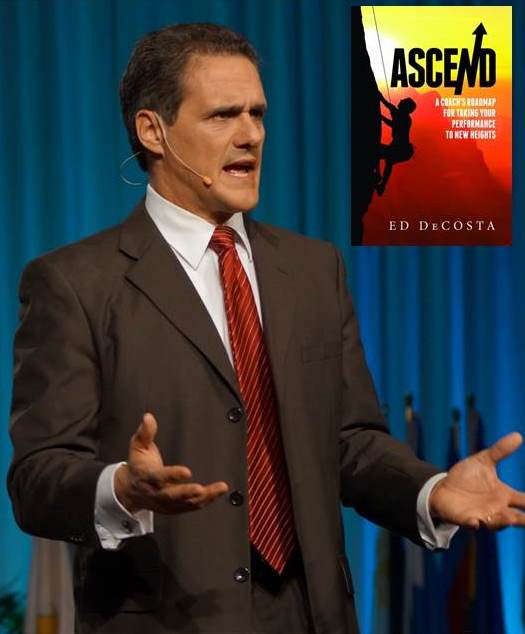 Last week on our Platform Builders Mastermind call. we spotlighted one of the Maxwell Team mentors, Ed DeCosta, who recently release his new book ASCEND: A Coach’s Roadmap For Taking Your Performance To New Heights.
If you want some “no-nonsense, get results” strategies for reaching new levels of achievement, you will find it in ASCEND. But it’s not the book that inspired this post, it was something Ed said on the call.
Ed made the statement that “Sometimes Plan B needs to be Plan Better.” [Tweet This]
I don’t think Ed even realized the genius in the statement when he made it, but genius it is. That comment changed my entire thought process on the idea of a “backup plan.” You see, that’s what I’ve always thought a Plan B was – the option when the desired one doesn’t work. Not any more!
If you have been settling for Plan B, Knock it off!
Maybe you are a lot smarter than me and have already figured this out, but for me, Plan B has always been the backup plan just in case Plan A didn’t work out. Right? Look, being smarter than me is not any kind of earth shattering accomplishment but changing your perspective on this just might be. If you have conceded that Plan B is always less desirable than Plan A, Knock it off!
What if we looked at Plan A failing not as a failure, but as an opportunity to learn and seize the opportunity to make Plan B – Plan Better. What if Plan Better doesn’t work? Well, you can call it whatever you want, but by learning lessons instead of conceding defeat, we can continue a path towards success.
Start learning lessons instead of conceding defeat!
Full transparency here, I just came into this awareness less than a week ago and although I have not had a chance to put it to the test yet, I do have some big “Plan A” activities that will be put to the test this week and this I know – if I have to go to the backup plan, it will be Plan Better.
I think our culture has conditioned us to believe that acceptance of thinking that our results are “good enough”, “better than than they use to be”, or “at least different than they were before” are reasonable outcomes. Nonsense!
Start setting yourself up for success!
The whole idea of setting goals and stretching outside our comfort zone are to produce what we have not achieved before. Why do we settle for less than we desired? Why is better OK when best is what we are shooting for? Why do words live “CAN’T”, “NEVER”, and “ALMOST” remain in our daily vocabulary?
I think it’s because we have lowered our standards. And by doing so, we have lowered our own self-image. Ed and the other Maxwell mentors all adhere to the belief that we will never out perform our own self-image.
When Plan A doesn’t work, we immediately jump to the next best choice instead of creating a BETTER one. Peter Drucker had some thoughts on this when he said:
“The best way to predict the future is to create it.” [Tweet This]
TODAY’S QUESTION: Are you following a downward progression in your decision making process that will ultimately net you less of a result than you originally desired?
TODAY’S CHALLENGE: Learn from the Plan A’s that didn’t work out and set yourself up for success by making Plan B – Plan Better!
***********************************************************************
===> JOIN THE “LEADERSHIP BY INVITATION” LAUNCH TEAM <===
Click here to get a copy of my Kindle Book “The Manifesto Of An Influential Leader”
Don’t miss a single post from Building What Matters by subscribing at the top left of this page.
Help support us by clicking here and Liking our facebook page
Barry Smith 4/14/14 photo by author © Building What Matters 2014
The post What If Plan “B” Could Become Plan “Better”? appeared first on BUILDING WHAT MATTERS.COM.
]]>The post Leaders Eat Last – Part 3; Culture Trumps Everything appeared first on BUILDING WHAT MATTERS.COM.
]]>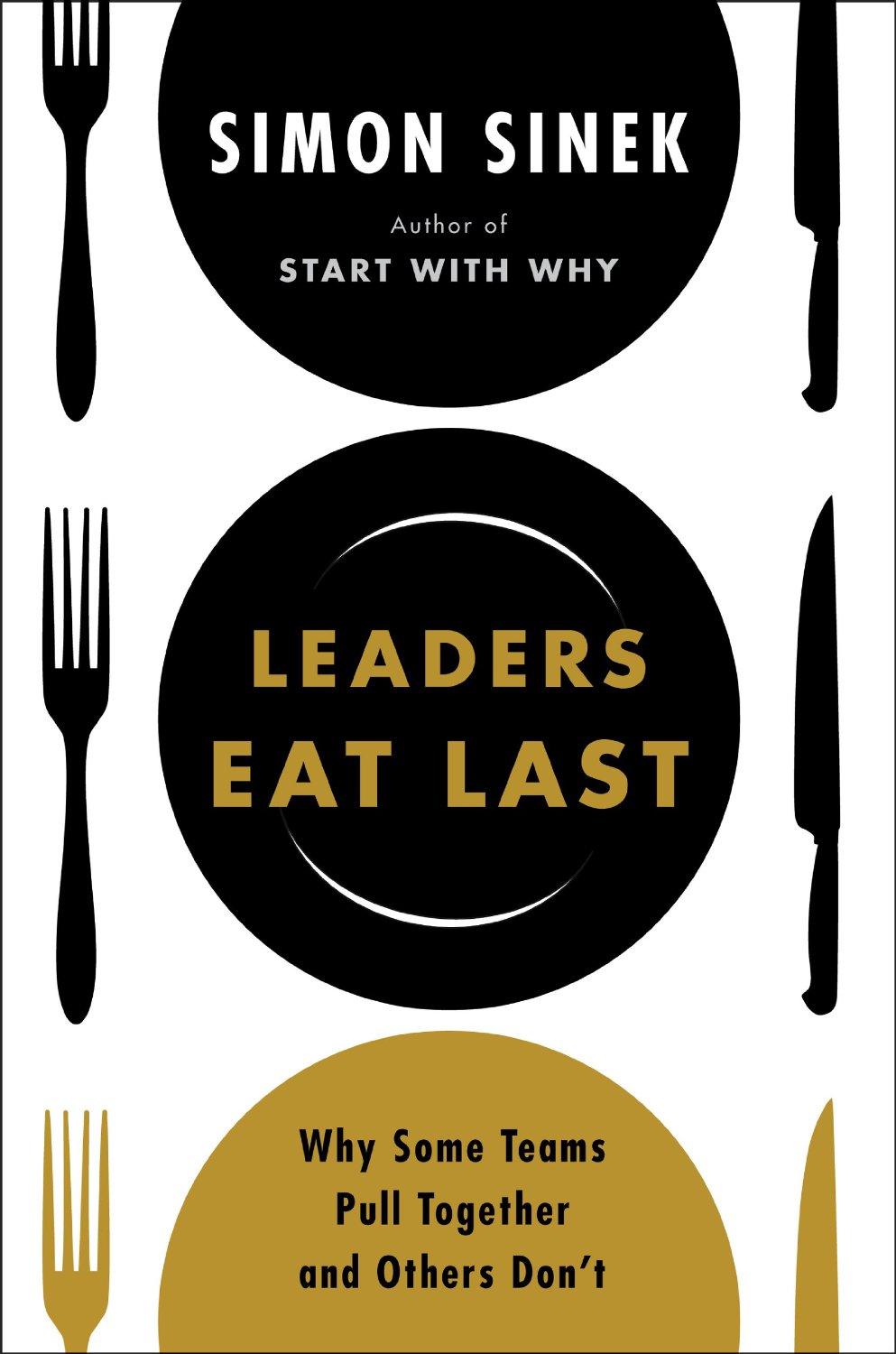 This month, in The Platform Builders Mastermind group, we are working our way through Simon Sinek’s recently released “Leaders Eat Last – Why Some Teams Pull Together and Others Don’t.”
Sinek, the author of Start With Why, provides a deep look into what creates the most effective teams and more importantly, what keeps them working together, even during the most difficult of times.
This is one of those books that will take you a little bit longer to read because so many thoughts require you to take another look, just to make sure you understood the power behind them. A phenomenal effort by Sinek, Leaders Eat Last not only looks at the dynamic of the team but of the individuals that make up that team.
What really sets this book apart is Sinek’s unique look at why some people make good leaders and others don’t and the “why” behind the results they get. In this post, the third of four, I will attempt to capture the basic thoughts of the eight parts of the book.
PART 5: THE ABSTRACT CHALLENGE
ABSTRACTION KILLS – Interesting how much our behavior changes when we are not directly connected to the outcome. Sinek provides an interesting look at how what can happen when we simply follow orders or instructions and disconnect from the results of our actions when we don’t actually “see” the outcome of them.
MODERN ABSTRACTION – A great discussion on the impact of what happens when a employer or leader becomes more concerned about the numbers than the people. Caring about your people will produce the numbers. Never forget that!
MANAGING THE ABSTRACTION – A great quote from this chapter “We like to actually be around people who are like us. It makes us feel like we belong.” As good as the virtual world is becoming, it will never replace sharing the same physical space with like-minded individuals.
IMBALANCE – Simple but powerful thought here. No matter how good something may be, or appear to be, it still needs to remain in balance with everything else. Too much abundance can be a damaging as not enough – maybe even worse!
PART 6: DESTRUCTIVE ABUNDANCE
LEADERSHIP LESSON 1 – So Goes The Culture, So Goes The Company – Culture trumps everything. A leader must provide focus and intentionally keep the culture of the company as a priority. Sinek quotes a former Goldman Sachs employee who described the company as “an environement with no trust, no mutual respect, and above all, no accountability when things went wrong.”
LEADERSHIP LESSON 2 – So Goes The Leader, So Goes The Culture – Some great thoughts here about leaders that empower their people. Your people will act as you do and treat others as they are treated.
LEADERSHIP LESSON 3 – Integrity Matters – A great piece of wisdom here with this one, “Integrity is not about being honest when we agree with each other; it is also about being honest when we disagree, or even more important, when we make mistakes or missteps.”
LEADERSHIP LESSON 4 – Friends Matter – Sinek suggests that cooperation doesn’t mean agreement, it means working together to advance the greater good, to serve those who rely on our protection, not to rack up wins to serve our team or ourselves. We need friendly relationships and need to keep our agenda separate in order to work cooperatively. (Tweet This)
LEADERSHIP LESSON 5 – Lead The People, Not The Numbers – A great observation made here by Sinek, “When a leader has the humility to distribute power across the organization, the strength of the company becomes less dependent on one person and is thus better able to survive.” Building up your people and making sure that they have a path to success is leadership, not the bottom line. Lead well, and the bottom line will take care of itself.
HOLDING YOUR PEOPLE ACCOUNTABLE
My favorite take from this section of the book comes from Sinek’s summary of Captain David Marquet’s Turn the Ship Around. He says this, “It is a leader’s job instead to take responsibility for the success of each member of his crew. It is the leader’s job to ensure that they are all well trained and feel confident to perform their duties. To give them responsibility and hold them accountable to advance the mission.”
Read that again and just think about it for a minute. Does that describe your leadership style? How about the person that is leading you?
***********************************************************************
Click here to get a copy of my Kindle Book “The Manifesto Of An Influential Leader”
Don’t miss a single post from Building What Matters by subscribing at the top left of this page.
Help support us by clicking here and Liking our facebook page
Barry Smith 3/20/14 photo courtesy of amazon © Building What Matters 2014
The post Leaders Eat Last – Part 3; Culture Trumps Everything appeared first on BUILDING WHAT MATTERS.COM.
]]>The post Raising The Bar For Generation Y – Part 1 appeared first on BUILDING WHAT MATTERS.COM.
]]> One of the issues that concerns me about our future is the gap in leadership that has I have often seen in our next generation, otherwise known as Generation Y.
I’m not big into playing the blame game, but because I am in the group that I hold partially responsible for the predicament we are in, I will go ahead and bring it up. If you are in your 40’s or 50’s, you (we) may have dropped the ball when it comes to the influence we had on the 20 and 30 somethings.
Admittedly I am speaking in broad generalities here, but nonetheless, somebody fell short in teaching leadership skills to the millennials and seeing how we raised them, I guess that makes it us. Enough said on that, it’s time to look forward and not back.
In my travels to Orlando and Las Vegas over the last three weeks, I encountered two 22 year olds that really impressed me. This will be a two part post to introduce you to a couple of kids (I can say that because my own kids are 21 and 23) that proved to me that we will indeed, have some solid individuals taking care of us one day.
Sometimes I just walk and think.
Let me introduce you to Ben. Ben works as a server at the Hard Rock Cafe in Las Vegas. My wife Michelle, was in some classes so I decided to do what I sometimes do, go walk and think. If you ever have been on the Las Vegas strip, you know how hard it can be to think. I decided to stop and get some lunch and Hard Rock seemed to be as good of a choice as any.
I got seated and then this younger guy comes over to me and sits down at my table and says “Hi, I’m Ben, what can I get for you.” His demeanor alone, told me that he was an A game player. Very self confident and looked me right in the eye when he spoke to me. You don’t always see that anymore.
He made me feel like I was the only guy in the place.
He was busy, but made it a point to check in on me every time he went by my table. I was by myself and I am sure he knew that I was not going to be a big ticket item in his section, but he continued to treat me like I was the only guy sitting out on the patio. I am alwys intrigued by these young “go-getters” and I struck up a conversation with him. I wanted to know what made this guy tick.
Turns out that his family had a restaurant back in New York that he started working at when he was 16. Seven months ago he headed west in search of among other things, some nicer weather. I asked how he got such a good job so quickly being a newbie in town and his response told the whole story.
He had filled out the on-line application for Hard Rock but knew that a face-to-face meeting could make a bigger difference in getting the job. He intentionally wandered into Hard Rock one day and was able to speak with a manager. The manager was immediately impressed and he had his second interview during the same visit.
Shortly thereafter, he was invited for a third interview and a week later was going through orientation. So what is the point of all this? Well to me, it’s pretty simple. Ben decided to happen to life and not wait for life to happen to him. (Tweet This) I wonder how many other applications sat on a hard drive while the applicants sat on their couch waiting for a call.
I will never forget that meal.
Ben said he loves the interaction with his customers as much as any part of his job and his actions definitely supported that. I think most would agree that going out to eat is more about the experience than the meal and Ben made mine memorable.
At only 22, I asked him what he wanted to eventually do, what were his big aspirations? His response; he wants to eventually get into fine dining. I didn’t think about it at the time but I would guess it is partially because he will have the opportunity to make someone’s night out a memorable experience that won’t soon be forgotten.
My guess – Ben will be exceeding expectations in some really nice dining establishment someday and probably sooner than later. Ben was one of those individuals that you can just tell will achieve his dreams. Ben, at 22, was leading by example in his respective industry, and making a difference in the lives of those he serves.
THE QUESTION: Do you have clarity on what it is that you want to achieve?
THE CHALLENGE: Do something today that will get you one step closer to reaching that dream.
Later this week I will introduce you to Stephanie, who works in the world’s largest Marriott.
***********************************************************************
Click here to get a copy of my Kindle Book “The Manifesto Of An Influential Leader”
Don’t miss a single post from Building What Matters by subscribing at the top left of this page.
Help support us by clicking here and Liking our facebook page
Barry Smith 3/11/14 photo courtesy of amazon © Building What Matters 2014
The post Raising The Bar For Generation Y – Part 1 appeared first on BUILDING WHAT MATTERS.COM.
]]>The post The Power Of Urgency – The Time To Act Is Now appeared first on BUILDING WHAT MATTERS.COM.
]]> This month in The Platform Builders mastermind group we are working our way through “The Power Of Urgency – Playing to Win with Proactive Urgency” by William Keiper. John Maxwell teaches that the greatest gap is the gap between what we know and what we do. I believe the Proactive Urgency that Keiper is talking about can close that gap.
As soon as I write and publish this post, I will start on the final chapter of my new book, Leaderhip by Invitation – How to RSVP and Embrace Your Role as a LEADER, that will be available in April. I wish I would have practiced pro-urgency a little sooner in getting by draft completed.
Procrastination, or lack of pro-urgency as I understand more clearly, has plagued me all my life. Start a project and then start a project and then, you guessed it, start another project. But never getting any of them done. My greatest accomplishments always seem to come when I am under the gun.
I used to think that this was a strength, and I guess it can be at times, but the truth is that pro-urgency eliminates a lot of the “unknowns” that can creep up while attempting anything. Life happens fast, and sometimes what happens comes at us so fast we have to go on the defense just to protect our end of the field.
The recent Super Bowl was an example of a great defense resulting in victory. But that defense was calculated, well thought out and well planned. That defense used pro-urgency to prepare and produce.
The lack of pro-urgency results in a defense that is fighting for it’s life. This defense is reacting instead of responding and it shows. My experience has been that although this type of defense can function, and even function well, they forfeit the opportunity to make adjustments for the unknown and unplanned events that happen. Basically, it limits your ability to stay in control and be flexible.
“It is important that you get clear for yourself that your only access to impacting life is action.” – Werner Erhard (Tweet This / Post to LinkedIn)
In this, the second of three posts, I want to offer up Keiper’s thought provoking take on the idea of Proactive Urgency. Keiper ends each of the 17 chapters with an “Urgency Rule” and I want to highlight a few to set the frame for the rest of the book.
Urgency Rule #9 – There is power, clarity and efficiency in creating and consciously attending to distinctions. You can see what you need to see, when you need to see it.
The noise and clutter that we face everyday overwhelms our senses and numbs our ability to focus. Pro-urgency provides the clarity to cut through all that noise because we know what we want before we need it. That way, when the time comes that we need it, we already know what it is.
Urgency Rule #10 – The future of a moment ago has arrived. You bring it your perfection along with your uniqueness. Make it your mission to leverage your uniqueness starting immediately.
You should be using your uniqueness as an advantage over everyone else. The things that make you different are exactly the things that will let you stand out in the crowd. All you need to be is 1% better or faster than the next guy to have an advantage.
Urgency Rule #11 – Security is mainly illusory. Remember Helen Keller’s words: “Avoiding danger is typically no safer in the long run than outright exposure.” Practice leaving your comfort zone.
If you want to do something you’ve never done before, you need to become someone you’ve never been before. The only place you will find that is outside your comfort zone. And the time to leave is now!
The question: What is it that you know you need to do, but haven’t because it will require you to step outside your comfort zone?
The challenge: STEP!
***********************************************************************
Click here to get a copy of my Kindle Book “The Manifesto Of An Influential Leader”
Join me on the STOP CHALLENGE CHOOSE 12 week health transformation
Don’t miss a single post from Building What Matters by subscribing at the top left of this page.
Help support us by clicking here and Liking our facebook page
Barry Smith 2/12/14 photo courtesy of amazon © Building What Matters 2014
The post The Power Of Urgency – The Time To Act Is Now appeared first on BUILDING WHAT MATTERS.COM.
]]>The post The Power Of Urgency – Don’t Wait Until It’s Too Late! appeared first on BUILDING WHAT MATTERS.COM.
]]>This month in The Platform Builders mastermind group we are working our way through “The Power Of Urgency – Playing to Win with Proactive Urgency” by William Keiper. John Maxwell teaches that the greatest gap is the gap between what we know and what we do. I believe the Proactive Urgency that Keiper is talking about can close that gap.
I have to admit that, compared to the rest of the world, I have had it pretty easy during my 48+ years on this planet. I have always had my needs met and have had more than my share of wants. I used to take this for granted but after spending a week in Guatemala last June, I realized how blessed I have been.
As much as I appreciate my good fortune, my reflection on my life has helped me to understand that I allowed that blessing to be a crutch at the same time. I never really felt a sense of urgency growing up. I never got into that mental or emotional state of despair that some would consider a place of urgency.
Because of that, I have struggled to apply a sense of urgency to really, much of anything in my life. Don’t get me wrong, I have faced deadlines and situations where the pressure was on, but I always saw a path to the end. I never realized how this was setting me up for failure. Maybe failure is the wrong word here, but I have gone through most of my life assuming that things will simply work out and they usually did.
“We are more ready to try the untried when what we do is inconsequential.” – Eric Hoffer (Tweet This / Post to LinkedIn)
The real impact in this is that complacency and mediocrity, the status quo, became an acceptable outcome for me. If you know me, you know that I have always had a strong work ethic and have accomplished quite a bit in my lifetime. That being said, the idea of “Proactive Urgency” that Keiper describes in great detail was never part of my game plan and I realize now how much more I could have accomplished. Never too late to learn, right!
In this, the first of three posts, I want to offer up Keiper’s thought provoking take on the idea of Proactive Urgency. Keiper ends each of the 17 chapters with an “Urgency Rule” and I want to highlight a few to set the frame for the rest of the book.
Urgency Rule #1 – Proactive urgency is purposeful, insistent, committed action pursued with a passionate edge. It is an activist choice to access your deepest personal power for the creation of almost immediate transformation.
What would be on your list of items that you are purposeful in, insistent upon and committed to? All I can say is I need a bigger list!
Urgency Rule #4 – The world has changed. Our long-trusted external support systems are weakening. Self-reliance in thought and action is critical for reaching your most important objectives.
Based on current statistics, the things that we could once depend on – work, family, education and religion are becoming diluted in today’s cyber-world. Unfortunately, our ability to find strength in those items is becoming more difficult. These were once the foundation of our existence and now they have become, for many, simply things that fit in when we have time.
Urgency Rule #6 – Choosing to act with on-demand urgency yields continuous, incremental advantages. Think of pro-urgency as your edge in a competition – your life where winning by fractions always matters.
It’s true, the difference between winning and losing or success and failure in often found in the minor details. The smallest of details do matter. Just ask an Olympic swimmer or downhill racer. A sense of urgency might just give you the advantage that makes the difference.
The question: Who do you know that displays this “Proactive Urgency” in their life that has resulted in success?
The challenge: Go talk to them and find out how they use it and how you can apply the same principles in your life.
***********************************************************************
Click here to get a copy of my Kindle Book “The Manifesto Of An Influential Leader”
Join me on the STOP CHALLENGE CHOOSE 12 week health transformation
Don’t miss a single post from Building What Matters by subscribing at the top left of this page.
Help support us by clicking here and Liking our facebook page
Barry Smith 2/5/14 photo courtesy of amazon © Building What Matters 2014
The post The Power Of Urgency – Don’t Wait Until It’s Too Late! appeared first on BUILDING WHAT MATTERS.COM.
]]>The post The 3 “Must Have” Tools For Success – What’s In Your Toolbox? appeared first on BUILDING WHAT MATTERS.COM.
]]>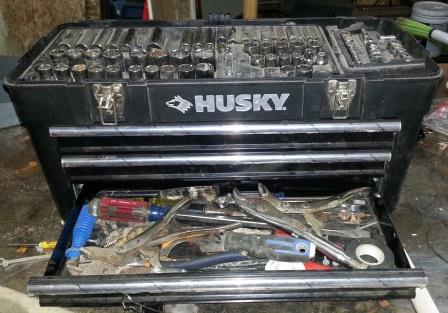 As a coach, speaker, trainer and author, I strive to get results for my clients. My biggest challenge – it’s not up to me to get them. It’s not up to me to choose the goals or achieve them. It’s not what I want, it’s what the client wants.
My role is to provide a path to get there. In other words, I bring the tool box and we collaboratively figure out which tools to use and how to use them. Any project will require tools to complete. So which tools do we need?
A conversation I had recently with a client pushed me to take a look at the toolbox I carry with me and figure out which tools are required for any effort. A few thoughts crossed my mind. Do I have the right tools? Do I have too many tools? Am I offering the right tools for the project?
After reflecting on this idea for a while, I came to the conclusion that there are 3 tools needed to achieve success in any project we take on. I am certainly not suggesting that these are the only tools you will need but these 3 tools are the ones you better take out of the toolbox before you even look at the blueprint.
You Can Only Get Here From There!
TOOL 1 – AWARENESS
When I speak to people and ask them about their goals, I get all kinds of responses. Some are simply the “one-liner conceptual type” and others are full of detail and very specific. I love to follow this up with a question. Where did you come up with that idea? This is where it get’s interesting. “I don’t know, I just think that would be real nice to achieve that.” Or, “Well I want more than what I have now and that is more.”
Most people set their goals upon only that which they know. They never even consider that there might be options that they have not even thought about. That conversation I had allowed that person to enter into the awareness of possibility she had never thought about before. All it took was a few curious questions she had never asked herself.
Stepping To The Line Of Intention Is Only The Beginning
TOOL 2 – INTENTIONALITY
Nothing happens without setting the intention for it. Sure, life happens but I’m not talking about life happening to you, I’m talking about “intentionally” happening to life. Peter Drucker said; “The best way to predict the future is to create it.” (Tweet This / Post to LinkedIn)
Drucker is spot on. If you want to achieve anything of significance in life, you need to be intentional about it. Do you think the Seattle Seahawk defense figured because they were the #1 rated defense this year, they could just show up to the Super Bowl and perform? Not hardly. I know enough about the game of football to know they were very intentional about everything that happened on the field in New Jersey on Sunday.
Who Are You When Someone Else “Is Watching?”
TOOL 3 – ACCOUNTABILITY
You need the awareness and you need to set the intention but without the tool of accountability you are simply rolling the dice on whether or not you will be successful. I am not saying you can’t accomplish great things on your own but let’s be real. If you could do it on your own, it would already be done and it wouldn’t be on your list anymore. Make sense?
The simple fact is we perform better when someone else is watching. If they are going to watch, they might as well call us out when we need it. Quit fooling yourself by saying “this time will be different.” The only way it will be different is if you make it different.
So I have a little different type of challenge for you today. Think about these 3 tools and then think about someone that you know that carries these with them. Go talk to that person and ask them how they use those tools to find success in their endeavors. You never know, they just might make a pretty good accountability partner as well!
***********************************************************************
Click here to get a copy of my Kindle Book “The Manifesto Of An Influential Leader”
Join me on the STOP CHALLENGE CHOOSE 12 week health transformation
Don’t miss a single post from Building What Matters by subscribing at the top left of this page.
Help support us by clicking here and Liking our facebook page
Barry Smith 2/3/14 photo by Author © Building What Matters 2014
The post The 3 “Must Have” Tools For Success – What’s In Your Toolbox? appeared first on BUILDING WHAT MATTERS.COM.
]]>The post WILTW – Doing Nothing Is Not A Result! appeared first on BUILDING WHAT MATTERS.COM.
]]> One of my mentors, Scott Fay, challenged me earlier this week to expand my thinking by focusing on one specific thing I learned throughout the week and take action upon it. This was a “double-dog-dare” so backing down was not really an option.
So here is the plan … Friday’s post will be dedicated to “What I Learned This Week” (WILTW). I hope you will join in with me on this. Friday’s I will deliver my take-a-way for the week and give a call to action as we head into the next.
As I look back on this week, there were several times when I was involved in some type of interaction – training, webinar, coaching, conference call and so on – that brought to light the “greatest gap.” The greatest gap is the gap between what we know and what we do.
It Takes Results To Get Results
Earlier today I was on a call with Paul Martinelli, President of the John Maxwell Team, and he made the comment “Doing Nothing Is Not A Result” and proceeded to explain, in detail, how we can’t expect any kind of result without taking action.
I made similar comments to two groups of John Maxwell Team members that I am leading through a 90 Day Success Program. We will finish this 90 Day journey next week and I told them all that after we attend one of the bi-annual Maxwell Certification events next month, I want to reconnect and discuss their “action plan” in moving forward. You know … that accountability thing!
Are You Still Getting Ready To Get Ready!
All too often, we get hung up on the “getting ready” piece of accomplishing goals and when you think about it – getting ready has everything to do with what we know and nothing to do with actually doing it. Don’t get me wrong here, preparation is a huge part of success, but you could be the most prepared person on the planet and if you don’t execute your plan, it’s all for not.
Here is where I think a lot of people get stuck in this. They set a date to accomplish something knowing that they need to prepare. The problem is that we assume that just because preparation comes before execution, the chronological order of things will take care of itself. The net result is that we hover in the “getting ready” phase and the deadline slips by because we are still getting ready.
Quit Doing Something That Get’s You Nothing!
So what did I learn this week? I learned that somewhere between knowing and doing there is an point where preparation stops and execution starts. Yes, I realize that most things in life continue to evolve and that we will always need to be preparing for what’s next, but that CAN’T be a reason to live in get ready world. I know that doing something that get’s you nothing is not the result you are looking for.
So here is what you need to do. There is something you are working on right now that has you getting ready and you probably have some idea of when you need to actually do it. Break up this omelette of activity into it’s original ingredients and put a date on each step. Write this down ==> On (fill in the date), no matter what state of readiness I am in, I am going to start. And them make any necessary course corrections needed along the way.
If nothing is what you are getting from your something, it’s time to make a change. (Tweet This / Share on Facebook / Post to LinkedIn)
C’mon people – It’s time to close the gap and start getting results!
***********************************************************************
Click here to get a copy of my Kindle Book “The Manifesto Of An Influential Leader”
Join me on the STOP CHALLENGE CHOOSE 12 week health transformation
Don’t miss a single post from Building What Matters by subscribing at the top left of this page.
Help support us by clicking here and Liking our facebook page
Barry Smith 1/31/14 photo by author © Building What Matters 2014
The post WILTW – Doing Nothing Is Not A Result! appeared first on BUILDING WHAT MATTERS.COM.
]]>The post The Men Who Built America – Andrew Carnegie appeared first on BUILDING WHAT MATTERS.COM.
]]>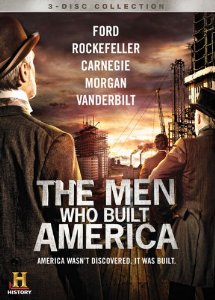 Well here we are, a new year and a new plan, right? I know this – the Platform Builders have some new plans for 2014 and this year we are starting our Mastermind study with a little twist.
This month we are masterminding through The Men Who Built America, a DVD produced by the History Channel along with Think and Grow Rich by Napoleon Hill to compliment the mini-series built around some of the great early leaders and entrepreneurs that help build the United States into a world power at the end of the 19th Century.
If you don’t know the back story on how these two connect together, Napoleon Hill was commissioned by Andrew Carnegie to study the most successful people and find out what resulted in their success. The men who built America were among many of the 20,000+ that Hill interviewed over the twenty year period it took him to write the book.
This month we are going take a look at Andrew Carnegie, Thomas Edison, JP Morgan and Henry Ford. In this, the first of four posts, we will take a look at Andrew Carnegie.
Carnegie is most recognized for the steel empire he built that would later become the U.S. Steel Company after being sold to J.P. Morgan in 1901 for the equivalent of 13.5 Billion Dollars in today’s economy. But there is much more to Carnegie’s story.
So what was it that took a boy born into poverty in the Country of Scotland to become one of the wealthiest men in the America? Lets take a look at three of the things that Napoleon Hill discovered:
Rags To Riches
DESIRE
“Every act you have ever performed since the day you were born was performed because you wanted something.” – Andrew Carnegie
Carnegie spent his early years in business watching men like Vanderbilt, Rockefeller and Thomas Scott. He watched them build their empires and when his opportunity came, he knew exactly what he wanted and that desire never left. From one venture to the next his desire empowered him to find a way to achieve it.
Is It Time To Get A Bigger Box?
IMAGINATION
“Think of yourself as on the threshold of unparalleled success. A whole, clear, glorious life lies before you. Achieve! Achieve!” – Andrew Carnegie
One of the events showcased in the mini-series is when Thomas Scott, Carnegie’s mentor and boss, asked Carnegie to build and oversee the design and construction of a bridge across the Mississippi River. Scott suggested a man who according to Scott, “could do anything”, to design it. As it turned out, the designer said it was impossible. Carnegie responded with a emphatic “Nothing is Impossible.” From there he imagined the construction of the bridge using steel and thus began the legacy of Carnegie Steel.
Just When You Think You’ve Had Enough …
PERSISTENCE
“People who are unable to motivate themselves must be content with mediocrity, no matter how impressive their other talents.” – Andrew Carnegie
All these men, including Carnegie, defined the spirit on entrepreneurship. I won’t suggest that they came up with entirely new ideas (except for possibly Edison) but they figured out entirely new ways to use what was already there, how to use it more efficiently, or how to produce it quicker and cheaper. None of these advances came with failure. 10,000 tries at the light bulb ring any bells for you? But all these men, especially Carnegie refused to quit. They persisted until they succeeded.
Most equate the success of these men to industry and the technological advances of their time. I believe what really made them more successful than anyone else of their time was their entrepreneurial spirit. They were visionaries. They saw what other didn’t and did what others couldn’t and achieved the impossible. (Tweet This / Share on Facebook / Post to LinkedIn)
This will be a great mastermind study. None of these men were angels, but one thing about them – they never let anyone else limit what they could do.
So I have a question for you to ponder today. What limits are holding you back for doing what you want to do and becoming who you want to be?
***********************************************************************
Click here to get a copy of my Kindle Book “The Manifesto Of An Influential Leader”
Don’t miss a single post from Building What Matters by subscribing at the top left of this page.
Help support us by clicking here and Liking our facebook page
Barry Smith 1/8/14 photo courtesy of Amazon © Building What Matters 2014
The post The Men Who Built America – Andrew Carnegie appeared first on BUILDING WHAT MATTERS.COM.
]]>The post Eliminating The Default Response To Personal Growth appeared first on BUILDING WHAT MATTERS.COM.
]]> I was recently on a teaching call with my coach, mentor and friend Kary Oberbrunner. He was discussing how we sometimes have a default of inaction when it comes to making decisions. He went on to suggest that it may be more beneficial to move forward and wait for doors to close rather than waiting for them to open.
As he described the results we get when choosing one over the other, I found myself wondering how often I choose to wait for the door to open instead of using the “action” option and reach down, turn the handle and open the door.
It’s sort of funny – walking through doors – when you know what’s on the other side, you throw that thing open and walk right in. But what happens when you don’t know what’s on the other side? If you can muster up enough courage to open the door, you turn the handle slowly so you don’t draw attention to yourself and open the door trying to get a quick peak, just in case you’re not supposed to be in there.
Why shouldn’t you be on there? There must have been some reason you wanted to open the door. I think the reason we hesitate to open the door is that we are simply unsure of what’s on the other side. It’s not something we are familiar with. It’s outside of our comfort zone.
So let’s look at the options. Well, I guess there are only two – open it or don’t. How much of our lives are spent “not opening doors?” If we desire to grow, we need to open doors. We need to be willing to do what we have not done before. We need to be willing to go places we have not been before.
I love it when John Maxwell tells the story of the man who said to him; “I want to do what you do.” In classic “John Maxwell” form, he responds; “But are you willing to do what I’ve done?” I love that! Growth, in any area, is a journey. That journey is going to require opening doors – lots of doors.
Here’s the deal. You have got to take action. If you spend your life waiting for doors to open for you, I hope there is a comfortable chair in the waiting room. I look back at my life and can only imagine what was behind the doors I never opened. But hey, no looking back – right!
Now I embrace the idea of opening doors, especially the ones that I have no idea what’s behind them. Why? For one reason, because I know there is much more to life that I ever imagined and I know, from lessons learned, that no one else is going to open them for me.
Now I must clarify – I believe there is a time when someone will open a door for you. But that only comes when they know that you would be willing to open it yourself. We can’t make it in life by ourselves. We need people to open doors for us. But if you are not willing to walk through, you might as well stay in the comfy chair.
Here’s the point. Don’t let your default be inaction. Make your default doing that thing you haven’t done before or going to that place you’ve never been before. That is where growth happens. Not sitting in the chair.
My challenge to you today is to identify just one door that you have been afraid to open … and OPEN IT! You won’t know what’s on the other side until you do.
***********************************************************************
Don’t miss a single post from Building What Matters by subscribing at the top left of this page.
Help support us by clicking here and Liking our facebook page
Barry Smith 10/21/13 photo by author © Building What Matters 2013
The post Eliminating The Default Response To Personal Growth appeared first on BUILDING WHAT MATTERS.COM.
]]>