The post Effectiveness Is A Path To Results – Not Productivity appeared first on BUILDING WHAT MATTERS.COM.
]]> This was one of those blog titles that I plugged in a few weeks ago because I thought it would be a good topic for one of my upcoming posts. As I opened up wordpress to start in on the post I had to laugh. This is a picture of my desk at the exact moment I logged in. Appropriate subject? Ya Think!
I have been very transparent about my “comfort zone” when it comes to my work space. Most of my life, I have had a million things going on, finishing very few of them in a timely manner, but feeling achievement by getting lots done. Right? I guess it’s a matter of perspective. Checking 30 items off your list in one day may appear to be a huge success. But if you had three hundred items when you started the day, maybe not so much.
Being Busy And Productive Is Not Enough
I have learned a lot about the difference between being busy and being productive over the past few years and it has helped. In my defense, I have been working diligently on getting the draft done for my new book, Leadership by Invitation, and earlier today, I was pulling quotes from several different sources (as you can tell) but my desk still ends up like this at least once a week. I guess old habits are hard to break.
For the most part, I have turned being busy into being productive, but with that success (if you can call it that) I have come to realize that there is a new level in achievement. That comes form moving from productivity to effectiveness. Now you might think that these two words mean relatively the same thing. Well, not in my world. And here is why.
Success Comes When We Move From Productive To Effective
As I have focused in on living out my purpose – “building what matters – people!” – I have realized that we can be very productive, while at the same time not be effective at all. Huh? In my book, I talk about strategies and vision that produce results. These results are based upon a specific purpose. Do you see where I’m going with this?
I can be very productive, take out the trash, wood on the fire, shovel the snow off the driveway and so on. All of these are productive, but really don’t connect back to my purpose. Based on my experience, many people out there are lost somewhere in this state of confusion. They get busy with a list, over time that list grows (with many items serving other people’s purpose rather than their own) and they lose sight of what they really want to accomplish.
So what can bring clarity to all of this and help you maintain focus on fulfilling your purpose? In a few months you will be able to read the long version when the book comes out, but here is a snapshot for you that might help you get headed in the right direction.
How To RSVP Your Way To Success
Be clear on your VISION. What do you really want? If you are in a leadership position, and you are, what vision are you casting to those around you? Are you even casting a vision?
Once you identify that vision, you need to determine your role in achieving it. That’s right, your purpose. Identifying and understanding your PURPOSE is what brings additional clarity to the big picture and helps you to stay on task. (Tweet This / Post to LinkedIn)
Now that you have a vision and understand your purpose in fulfilling that vision, you need a strategy to achieve that vision and fulfill your purpose. The right STRATEGY is what keeps your work not just productive, but effective.
Now that the strategy is in place and you are casting your vision and fulfilling your purpose, take a look at the RESULTS you are getting. If they are not what you identified within your strategy, make the necessary course corrections and stay at it.
There is a quick look at what’s coming up in much more detail, but I believe that even taking a little time right now to see how your current condition or circumstance fits into this framework, might just make a difference for you.
The Question: Are you being productive or effective?
The Challenge: Take a look at your activities and find something you are doing in which you can move from being not just productive, but effective.
***********************************************************************
Click here to get a copy of my Kindle Book “The Manifesto Of An Influential Leader”
Join me on the STOP CHALLENGE CHOOSE 12 week health transformation
Don’t miss a single post from Building What Matters by subscribing at the top left of this page.
Help support us by clicking here and Liking our facebook page
Barry Smith 2/10/14 photo by author © Building What Matters 2014
The post Effectiveness Is A Path To Results – Not Productivity appeared first on BUILDING WHAT MATTERS.COM.
]]>The post WILTW – Finding The Clarity You Need To Close The Gap appeared first on BUILDING WHAT MATTERS.COM.
]]> Here we are … “What I Learned This Week” Friday. Along with the usual stuff this week, I spoke with a handful of corporate executives, attended a few webinars and participated in a few mastermind groups. The theme this week in just about everything I did was CLARITY.
For me personally, clarity was the difference maker in my transition out of the construction industry. I mean it’s hard enough as it is to try and stay clear and focused when you only have one job. Going from one to another, and one that is completely different, produced a lot of fuzz in my vision for a really long time.
I think the most significant thing that was missing early on was guidance. I was trying to do it all myself and well, you can probably guess how that turned out. When I became part of the John Maxwell Team, I not only was connected to John himself and an incredible roster of teammates, but a mentorship team that has been invaluable in my successful transition.
One of my teammates, Kary Oberbrunner, who was coaching and mentoring in his own business took me a step further by introducing me to a framework that included an Overarching Vision, Purpose, Unifying Strategies and a Scorecard for Significance. If you want to know more about that framework, let me know, but the end result was gaining the clarity that I had been lacking that brought my world back into focus.
I said clarity was the theme this week, but it came in different forms and I offer these up to see if your world currently resonates with any of them.
I’m not sure where I am so how can I possibly know where I’m going?
You have to start somewhere, right? Well it only makes sense to start where you’re at. I have found that if you find yourself in this situation it’s because you’re lacking a benchmark, nothing to define your current condition. I love the idea of starting with the end in mind. Do you have a vision for your future?
Look, I will be honest, if you don’t know where you’re going then it doesn’t matter where you are. Knowing where you want to go allows you to establish what the difference is between the destination and where you currently are. A destination provides the clarity to map the course to get there.
I’m too busy to figure out where I want to go. I can barely take care of today.
I know some of you are in this category. I won’t pretend to minimize your current workload or responsibilities, but this I know – if you don’t know where your going, it really doesn’t matter where you end up. If you don’t have a plan, someone else will make one for you and if you didn’t know this already, they don’t have much planned for you.
Clarity doesn’t just happen. It comes from strategically planning out the steps you need to achieve a desired result. And it only starts there. Once you have that plan, you need to work it. Clarity is the glue that holds a plan together and makes it stick! (Tweet This / Post to LinkedIn)
I’m not quite ready for clarity, I need to take care of a few things first.
Really? Doesn’t that, in itself, suggest that clarity is needed? The time for clarity is now. Remember earlier when I said BEGIN with the end in mind. Last time I checked, the beginning is usually the first part. My point is that the next move is your most important because it sets the stage for the rest.
Don’t fool yourself into thinking that you need to take care of a few things before you create and implement a plan. Those “things” should be part of your plan. Start now with the plan you want to execute. Be strategic and specific with every move.
My guess is that you fit into at least one of these three scenarios, maybe more. This week I mentioned the gap between what we know and what we do. Clarity can close that gap.
The Question: Which of these scenarios are you currently in?
The Challenge: Before going back to whatever it was you were doing, take just 15 minutes and come up with one action item you can take immediately to improve your current condition or circumstance.
***********************************************************************
Click here to get a copy of my Kindle Book “The Manifesto Of An Influential Leader”
Join me on the STOP CHALLENGE CHOOSE 12 week health transformation
Don’t miss a single post from Building What Matters by subscribing at the top left of this page.
Help support us by clicking here and Liking our facebook page
Barry Smith 2/7/14 photo by author © Building What Matters 2014
//
The post WILTW – Finding The Clarity You Need To Close The Gap appeared first on BUILDING WHAT MATTERS.COM.
]]>The post The Wealthiest Place on Earth – The Graveyard appeared first on BUILDING WHAT MATTERS.COM.
]]> Alright everybody, I will let you know right now that this post is intended to call each and everyone of you out, including me! I first heard this geographical lesson from Les Brown, and it went something like this:
“The graveyard is the richest place on earth, because it is here that you will find all the hopes and dreams that were never fulfilled, the books that were never written, the songs that were never sung, the inventions that were never shared, the cures that were never discovered, all because someone was too afraid to take that first step, keep with the problem, or determined to carry out their dream.”
So how about it? If the bell rang for you tomorrow, what would you take with you? Seriously – does this hit home for you at all? Back in February of 2012, I was at a John Maxwell event and John introduced his father Melvin to the stage and said this; “I want to introduce you to the most important man to me here on earth, some time ago my father decided he was going to live until he died.”
I’m Gonna Live Until I Die
Well at 80+ years of age, Melvin Maxwell showed us what it meant to live as he ignited the crowd of over 500 with the energy and enthusiasm rarely displayed by men half his age. That experience challenged me to take a hard look at what I was doing in my own life.
I can honestly say that at the time, I was not living, I was merely existing. Can anyone relate to that? I changed a lot of things in my life after that day. I was determined that I would live until I died. I was no longer going to let life happen to me, I was going to start to happen to life.
I made the decision to start chasing after my dreams. To believe that I could accomplish things that I had never done before – many that I had not even thought about trying. A new identity built around who I was instead of what I did. A new job that got me up in the morning instead of keeping me up at night. I was achieving my dreams!
Defining Moment In A Foreign Country
Last June, I was part of a team that impacted the Country of Guatemala. I found out what it’s like to feel like you’ve never felt before, doing something you’ve never done before, in a place you’ve never been before, with people you’ve never met before. The three greatest defining moments in my life were the day I said “I do” and the two times I heard “It’s a boy.” The fourth came in Guatemala City on June 15th, 2013, when I discovered my purpose and clarified my mission to leave nothing behind.
I have an author page on Amazon and later this spring I will publish my first book. I collaborate everyday with like-minded leaders all over the world. I am making a difference in the lives of others that want to achieve the same thing. This is the 250th blog post by someone who barely made it out of English class.
Getting Outside My Comfort Zone
I don’t say any of these things to impress you. Trust me, I had many people pushing and pulling me along the way. I do say them to impress upon you that there is no reason you can’t do the same. I would not been able to achieve any of these things if I was not willing to stretch outside my comfort zone and do what I never thought possible, heck, I didn’t even think about them period!
So that is my challenge for you today. Start removing the limits you have put on yourself. Start believing that the impossible is possible and that the only thing holding you back is the fear of taking that first step – just like Les said.
Whoever said “You can’t take it with you” was wrong. (Tweet This / Share on Facebook / Post to LinkedIn)
There are all kinds of things you can take with you – the question is WILL YOU?
***********************************************************************
If that’s not enough, check out this thought provoking video ==>
***********************************************************************
Click here to get a copy of my Kindle Book “The Manifesto Of An Influential Leader”
Don’t miss a single post from Building What Matters by subscribing at the top left of this page.
 Help support us by clicking here and Liking our facebook page
Barry Smith 1/17/14 photo by author © Building What Matters 2014
The post The Wealthiest Place on Earth – The Graveyard appeared first on BUILDING WHAT MATTERS.COM.
]]>The post The Men Who Built America – Thomas Edison appeared first on BUILDING WHAT MATTERS.COM.
]]>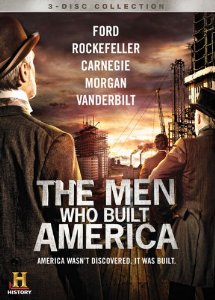 Well here we are, a new year and a new plan, right? I know this – the Platform Builders have some new plans for 2014 and this year we are starting our Mastermind study with a little twist.
This month we are masterminding through The Men Who Built America, a DVD produced by the History Channel along with Think and Grow Rich by Napoleon Hill to compliment the mini-series built around some of the great early leaders and entrepreneurs that help build the United States into a world power at the end of the 19th Century.
If you don’t know the back story on how these two connect together, Napoleon Hill was commissioned by Andrew Carnegie to study the most successful people and find out what resulted in their success. The men who built America were among many of the 20,000+ that Hill interviewed over the twenty year period it took him to write the book.
This month we are going take a look at Andrew Carnegie, Thomas Edison, JP Morgan and Henry Ford. In this, the second of four posts, we will take a look at Thomas Edison.
Edison, the holder of 1,093 U.S. patents, is most recognized as the inventor of the light bulb. Also credited for the phonograph and motion-picture camera, Edison was much more than an inventor. His inventions set the world on the pathway to modern electricity and global communications.
So how did a man with only three months of formal education and whose hearing was impaired at an early age become “one of the men who built America?”
You Don’t Need Ears To Hear!
THOUGHTS ARE THINGS
“The value of an idea lies in the using of it.” – Thomas Edison
What if Edison never imagined his thoughts and ideas as things. Ideas are great, but as Hill shows in the story of how Edwin C. Barnes partnered with Edison, you have to treat them as such. An idea will not become reality until it is brought to life by the hand of the one who conceived it. How many ideas do you have that never come to life? Have you considered the power you hold within you to manifest your thoughts into reality? Here lies the great opportunity to ask; How can I?”
So what if nobody ever did it before!
FAITH
“Be courageous. I have seen many depressions in business. Always America has emerged from these stronger and more prosperous. Be brave as your fathers before you. Have faith! Go forward!” – Thomas Edison
Hill provides a very interesting definition of faith. “A state of mind which may be induced, or created, by affirmation or repeated instructions to the subconscious mind, through the principle of autosuggestion.” Edison simply refused to believe that something could not be done. He had the faith that with enough perseverance and effort, anything could be accomplished – even when “common sense” might suggest otherwise.
Mach 3 with your hair on fire!
THE BRAIN
“It is astonishing what an effort it seems to be for many people to put their brains definitely and systematically to work.” – Thomas Edison
The brain continues to be one of the most studied and least understood parts of the human body. But even in Hill’s time, it was accepted that the brain was a powerful machine that could actually create it’s own energy. Edison was continually pushing his thinking to new levels. He constantly tapped his own awareness of what he knew and filled in the blanks with what he pulled from others. Viewed as a curse by many, part of Edison’s genius is that his mind never quit working. Turning though into action, over and over, produced more inventions than anyone else in history.
Most equate the success of these men to industry and the technological advances of their time. I think the simple truth is that these men just thought better than everyone else. Edison makes a simple but powerful statement when he said; “Everything comes to him who hustles while he waits.” (Tweet This / Share on Facebook / Post to LinkedIn) The men who build America were always hustling – at least mentally.
This will be a great mastermind study. None of these men were angels, but one thing about them – they never let anyone else limit what they could do.
Your brain is constantly producing new thoughts. So I have a few question for you to ponder today. What are you doing with your ideas? How many times do you thing the words “that’s never been done before” described something that had just been done?
***********************************************************************
Click here to get a copy of my Kindle Book “The Manifesto Of An Influential Leader”
Don’t miss a single post from Building What Matters by subscribing at the top left of this page.
Help support us by clicking here and Liking our facebook page
Barry Smith 1/15/14 photo courtesy of Amazon © Building What Matters 2014
The post The Men Who Built America – Thomas Edison appeared first on BUILDING WHAT MATTERS.COM.
]]>The post Isn’t It About Time You Start Living In Your Sweet Spot? appeared first on BUILDING WHAT MATTERS.COM.
]]>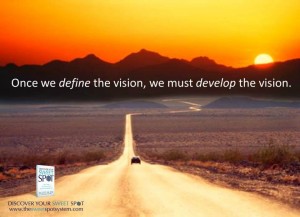 I posted a series on Discover Your Sweet Spot – The 7 Steps to Create a Life of Success and Significance back in October but I wanted to offer up the abridged version today and invite you to a special call this Wednesday, January 8th celebrating the official launch of the book. (click here to register for the call)
For more than two years Scott Fay has been my coach, mentor, and most importantly, my friend. When I was trying to separate who I was from what I did, and come up with a plan for the rest of my life, Scott believed in me and pushed me in the right direction.
Yes, this is another book that focuses a lot on leadership, but Scott provides 7 steps, built around the idea of Design, Build & Maintain, that will guide you along a path to success and significance in whatever lane you are travelling.
PHASE 1: DESIGN YOUR LEADERSHIP ENVIRONMENT
STEP 1 – Discover Your Sweet Spot – Design with the End in Mind
That design, when done correctly, will land in your Sweet Spot. Scott breaks down your sweet spot like this; “The convergence of three things: Purpose, Passion, and Plan.”
- Purpose is who you are designed to be.
- Passion is what you love to do.
- Plan is the strategic convergence of being and doing.
STEP 2 – Sweat the Small Stuff – The Devils are in the Design
This is a great step. Scott describes the importance of ALL the details, especially the small ones because they really represent the minor adjustments that can make a major difference. Scott gives us the infamous five that seem to show up the most often.
- Poor Drainage
- Context Confusion
- High Traffic
- Aesthetic Misfit
- Short-Sighted Plan
PHASE 2: BUILD YOUR LEADERSHIP ENVIRONMENT
STEP 3 – Tear Out, Then Build Up
He provides a great three step process to eradicate these weeds, or “excuses,” that are in the way of construction. This is crucial. If the weeds are not removed during the build phase to allow the new “roots” to take hold, you will will be focusing on pulling weeds the rest of your life.
- Identify your weeds.
- Own your weeds.
- Eradicate the weeds.
STEP 4 – Build Midcourse Corrections
Scott gives us four things to consider regarding course corrections:
- Intersect the issue.
- Correct the problem.
- Protect the goal.
- Reflect the outcome.
PHASE 3: MAINTAIN YOUR LEADERSHIP ENVIRONMENT
STEP 5 – PROTECT YOUR INVESTMENT: Poor Maintenance Costs You More In The Long Run
To maintain the success, or significance, that we have achieved will not sustain itself unless we commit to continual growth. Scott suggests asking questions to keep us on top of our game. Here are his Elite 8:
- What do I do best?
- How can I do it better?
- Who can I best serve doing it?
- Of the things I currently do, what should I do more?
- Of the things I currently do, what should I do less?
- Of the things I currently do, what should I stop?
- What should I start doing?
- What am I missing?
STEP 6 – MAINTAIN THE MAIN THING: Keep Your Vision within Sight at All Times
Scott describes the importance of vision and how, unless we keep it on the forefront, it will soon be lost. Here are his “Five Lenses of Maintaining Vision”:
- Define The Vision
- Develop the Vision
- Drill the Vision
- Distinguish the Vision
- Demonstrate the Vision
STEP 7 – GIVE WHAT YOU CAN’T KEEP: Legacies are Maintained by Investing in Others
Investing in others and believing in them is the way we can leave our fingerprint on generations to come. We can’t take anything with us, but we can clearly leave something behind. (Tweet This / Share on Facebook / Post to LinkedIn)
I have reviewed numerous books and many have had a specific topic or targeted audience. Discover Your Sweet Spot is for everyone. We all have a Sweet Spot, but very few are living in it.
Today’s challenge: Click Here and join us on a call that will help you on your way to living in your Sweet Spot
***********************************************************************
Don’t miss a single post from Building What Matters by subscribing at the top left of this page.
Help support us by clicking here and Liking our facebook page
Barry Smith 1/6/14 photo courtesy of Scott M Fay © Building What Matters 2014
The post Isn’t It About Time You Start Living In Your Sweet Spot? appeared first on BUILDING WHAT MATTERS.COM.
]]>The post How Does Someone Who Hated English Class End Up A Writer? appeared first on BUILDING WHAT MATTERS.COM.
]]> Most of my High School years were spent trying to stay out of trouble. The only subjects I ever really did any good in were shop, gym and math. English? Not even close. In fact, the only good memory I have of English class was my freshman teacher, Mrs. Miller. It really didn’t even have anything to do with english, it was just that she was pretty cool!
You remember high school? How many cool english teachers do you remember? (No offense if you are an english teacher, remember – this was from the mindset of a teenage male.)
High School english class must have been a traumatic experience!
I honestly don’t even remember what we did in english class. Maybe I have formed one of those mental blocks that keeps you safe from traumatic experiences. So how does someone like that become a writer? I have no idea! It just sort of happened.
As a project manager in the construction world, I often needed to write letters. Usually they were because I wanted something that the person the letter was addressed to probably did not want to give me. Man, as I look back, I wrote some good ones. So I guess I became a writer by way of necessity but I never enjoyed it.
Somewhere around 250 blogs in less than two years, one kindle book and a hard copy due out later this spring. You know what? I like writing now. So what happened? I think it comes down to WHY you write. Just so happens that those in the Jeff Goins community were recently challenged with that question – Why do you write? Additionally there are many of us committing to 500 words or more every day this month. (Interested in joining in? Click here)
Isn’t about time you share your story?
I pondered this question for a while and I think it comes down to this – I write because it is a way for me to share my story and add value to others that I would not be able to otherwise. People all over the world read and comment on my thoughts and I think that’s pretty cool.
I used to live in a pretty small world with lots of walls but a few years back my world opened up, or maybe it was really my mind that did, but I realized that there are people that believe what you believe but think different thoughts everywhere.
Now I get to collaborate and connect with these people every day. I got to tell you – it has made a huge difference in my quality of life. It feels good to help other people and have them help you. I guess that’s why I write – it makes me feel good.
There are a couple of other reasons that I think are important. I believe everyone has a story, and their story needs to be told. What better way to do it than put it out there and share it. The other thing that I think results from writing – it empowers the reader to change the way they think. Some of you already know what’s coming next … my favorite quote by Dr. Wayne Dyer:
“When you change the way you look at things, the things you look at change.”
Could you use a little change in your life? What if your words could change the life of someone else? What if your story might just be what someone else needs to hear?
Obvious question today: What are you writing? Uh oh! I think I heard someone say they’re not writing? WHY NOT?
***********************************************************************
Click here to get a copy of my Kindle Book “The Manifesto Of An Influential Leader”
Don’t miss a single post from Building What Matters by subscribing at the top left of this page.
Help support us by clicking here and Liking our facebook page
Barry Smith 1/4/14 photo by author © Building What Matters 2014
The post How Does Someone Who Hated English Class End Up A Writer? appeared first on BUILDING WHAT MATTERS.COM.
]]>The post Perseverance Pays Off – When You Know What You Want! appeared first on BUILDING WHAT MATTERS.COM.
]]> Have you ever heard the phrase “if you want it bad enough, you will find a way?” How about, “With a strong enough why, you will find a way.” I am sure there are plenty more that mean basically the same thing. OK, so what? What’s the point?
That is exactly the point. If you don’t know what I mean, then you have missed the entire point. Look at the successful people that you know. How bad did they want it? If you don’t know, ask them. When I say success, I don’t necessarily mean financial success. It could be anything – but that anything is going to be the thing that they really wanted, that they wanted bad enough.
I have been able to talk with a lot of people over the last few years. Many very successful and many still looking. I believe the difference is in being clear on what they want, not how hard they are willing to work. I know numerous people that work very hard and are not even close to having what they want. So what is the difference?
When I was younger and our boys were growing up, I knew exactly what I wanted. I wanted to provide for my family and provide for all their needs and even mix in a few “wants” to provide some added stability and security. Then something happened.
Our oldest headed off to college and my wife, a career stay at home mom to that point, started a career as a real estate broker. Over the next few years, with the added income and the empty nest soon to be upon us, I started to lose the why behind what I was doing. I started losing focus on what I really wanted.
Most of you know this part of this story. I started a new career as a coach, speaker and trainer. As I created this new identity and crafted the trade, I began to once again, find the driving force, the reason to persevere to make it in this new world. Now that I am fully engaged in this new profession and have added the label author to the mix as well, I once again can honestly say that I have the drive to do whatever it takes to reach my goals.
It has not been easy and it has taken time to complete the transformation, but now I see how the ability to persevere through the difficult times is really the one thing that will empower you to get there.
So what does all this mean? Simple, now that I have learned from the heartache and the struggle. Being clear on your why, will provide a way. It is crystal clear to me when I examine those individuals I would consider “successful.” If you don’t believe me, take a look around.
I spent too many years “in-between” and quite honestly, I never even knew it. Hindsight is 20/20 but I don’t want you to have to learn the hard way like I did. So a few questions and a challenge and these ones really count.
What do you really want in life? And why do you want it? Be careful how you answer that second question – remember what I said earlier – a strong enough why will produce a way [tweet this]. Another way to look at it courtesy of John Maxwell; “If you have lost your why, you will lose your way.” So here is the challenge; take some time and figure out the answer to those questions and put it to the test. If you are not finding the success you are looking for, you may not have a strong enough why to persevere through the difficult times.
***********************************************************************
Click here to get a copy of my Kindle Book “The Manifesto Of An Influential Leader”
Don’t miss a single post from Building What Matters by subscribing at the top left of this page.
Help support us by clicking here and Liking our facebook page
Barry Smith 11/16/13 photo by author © Building What Matters 2013
The post Perseverance Pays Off – When You Know What You Want! appeared first on BUILDING WHAT MATTERS.COM.
]]>The post Help Them Grow, Or Watch Them Go – What People Really Want appeared first on BUILDING WHAT MATTERS.COM.
]]>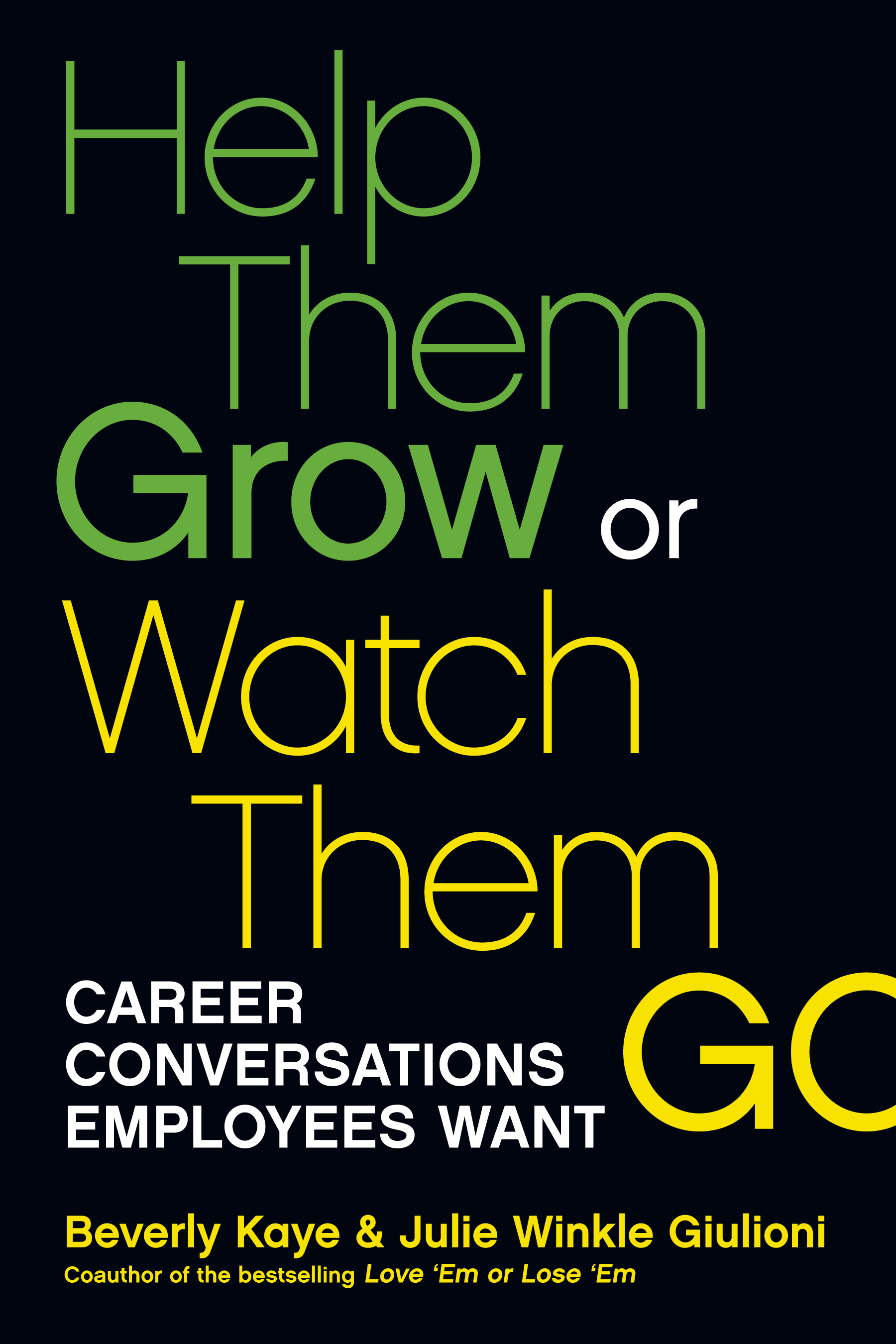 Employee engagement has been a subject that has intrigued me for quite some time. I recently finished reading Help Them Grow or Watch Them Go by Beverly Kaye and Julie Winkle Giulioni. I must say that I now have much more clarity on what employees want and why they want it.
Kaye and Giulioni are the first authors that I have seen write completely from the “coaching” perspective. The coaching philosophy I believe in suggests that results are brought about by answering the curious question. This book is full of questions, and excellent questions at that.
Kaye and Giulioni do an outstanding job of mixing quotes, questions and action items to provide a must read for any leader or manager. Below is a quick summary of the nine chapters that paint a beautiful picture of what your employees are really thinking.
1. Develop Me or I’m History
Whether they have the awareness or not, employees want to know what is next, more specifically, what is next for them. The simple fact is that without a way to grow, they will be unable to grow. Remaining in the same place, doing the same thing, with the same skills is not sustainable.
2. Can We Talk?
How often do you check in with your employees? No, I am not talking about saying hello and goodbye at either end of each day, I am talking about really checking in. How are they doing? What is going well? What needs improvement? Taking the time to sit down with the people that are generating your income tells them they are important and they are valued and that you care about their future.
3. Let Hindsight Light the Way
Looking back and evaluating what worked and what didn’t allows your employees to gain the clarity and focus needed to move forward in a positive way. This type of analysis allows them to use the past to build their future and remember, help them grow or watch them go!
4. Feed Me
I love this one. Employees want feedback. Why? Because it tells them if they are meeting up to expectations. I don’t know how many times I have heard “If only someone would have told me where I was falling short, then I could have done something about it.”
5. What’s Happening?
There is nothing more frustrating than feeling left in the dark. As an owner or employer, you don’t have to tell them everything, but how about enough to keep them engaged. Enough to keep them interested. Do they even know what they are working towards. Give them some ownership and watch them take a little more pride in what they produce.
6. If Not Up … Then What?
It used to be that everyone thought the road to success was a vertical climb. Not so much anymore. Employees are more willing, in fact I believe more wanting, of a balanced career. One that gives them time for their family and personal interests. If more pay comes with more time commitment and stress, you might rethink the job description.
7. Same Seat, New View
If someone has mastered their role, you don’t have to send them up the ladder. They may already be in their sweet spot. But don’t assume this will last forever. Allow them to be creative in their role. Give them more responsibility to use their gifts and talents. This will keep their job fresh and interesting.
8. Advancing Action
This is a big one. As the “boss,” your responsibility is to give the employee a way to grow. It will be their responsibility to do something about it, but you need to create the opportunity. Set a clear course for them moving forward and watch them navigate it successfully.
9. Grow with the Flow
Keep growth in the forefront. Providing a plan and then following up six months later is simply rolling the dice. Keep in constant contact, even if for only a few minutes. This is a way to keep everything in check and provide an opportunity to change course if needed.
As the authors put it; “Grow for it!” Simply put, career development in important. Continual communication and opportunities will result in continual growth and continual success.
A couple of questions for you today. “Have you achieved everything you want for yourself and those working for you? Maybe the more important question is; “What are you doing about it?”
***********************************************************************
Click here to get a copy of my Kindle Book “The Manifesto Of An Influential Leader”
Don’t miss a single post from Building What Matters by subscribing at the top left of this page.
Help support us by clicking here and Liking our facebook page
Barry Smith 11/14/13 photo courtesy of Amazon © Building What Matters 2013
The post Help Them Grow, Or Watch Them Go – What People Really Want appeared first on BUILDING WHAT MATTERS.COM.
]]>The post Real Magic – Breaking Through The Illusion Of Success appeared first on BUILDING WHAT MATTERS.COM.
]]>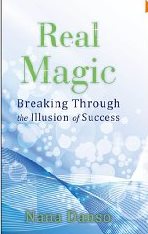 OK, I’ll admit, I have always enjoyed a good magic show but have never been a fan of the word “magic.” Magician’s create illusions – they make us see something different than really what has taken place through crafting their art.
The reason I don’t care for the word magic is because to some, it represents some type of special power to make things disappear or transform from one thing to another. In reality, magic is the perfection of one of the oldest professions on the planet. Slight of hand, misdirection and so on. Few talents impress me more than a magician who has mastered their craft.
I now have a new appreciation for the word. I recently read “Real Magic – Breaking Through the Illusion of Success” by Nana Danso. Danso, as a magician and motivational speaker, spins a whole new perspective on magic, and this magic has nothing to do with tricks or illusions. This magic is real.
The keys to Danso’s Magic Formula are simple and if followed, will help you to break through the Illusion of Success. Here are the five keys to living a MAGIC life.
MOTIVATION
We all perform better when we are motivated but motivation is a short term condition. There has to be a driving force behind that motivation, something that drives you, something simply described as your “why.” As Les Brown says; “You’ve got to be hungry!” Your why will provide the motivation to continue to achieve over the long run. Your why connects you to your purpose and your purpose is what you have been created to fulfill.
ASPIRATIONS
Can you answer the questions; What do you want? or What do you aspire to do or be? What are your goals? As a coach, it amazes me how many people lack clarity on what they really want. I think this is the reason that so many people feel “stuck.” Danso provides a great question in this chapter. Do you know what the richest place in the world is? Answer – the graveyard. Why? Because this is where are the unfulfilled goals, dream and songs that never happened have been laid to rest.
GIFTS
Danso makes a great observation here. He suggests that if three people tell you that you are good at something, that you have a gift. It is an indication that there is really something there. I can totally relate to this. I never pictured myself as a writer, but when several people took notice of the message in my words, I realized that just maybe there was something there. Now, several thousands words leave my keyboard each week.
INSPIRATION
I could not agree with the author more when he makes the following statement; “The most rewarding part of life is helping others achieve their goals. This begins with believing in people.” Danso is right. When you believe is someone and let them know that you do, not only do you inspire them, but you empower them to do and be more.
CONFIDENCE
Danso points out that when we expect a positive outcome then the outcome will be positive. This only comes when we have the self-confidence to move out of our comfort zone and go places we have not been before. It is really that simple – confidence is the catalyst to achievement. When we believe in ourselves, we can accomplish whatever we set our intentions on accomplishing.
Danso sums it up well with this statement; “Creating magic requires deliberate practice, effort, and dedication, but most importantly, it requires that you believe in yourself.”
A couple of questions for you today: Is your life full of tricks and illusions? Do other people see something that is not real when they look at you? If you want to put some magic back in your life, check out Real Magic and find out how to break through the illusions holding you back.
***********************************************************************
Don’t miss a single post from Building What Matters by subscribing at the top left of this page.
Help support us by clicking here and Liking our facebook page
Barry Smith 10/31/13 photo courtesy of Amazon © Building What Matters 2013
The post Real Magic – Breaking Through The Illusion Of Success appeared first on BUILDING WHAT MATTERS.COM.
]]>The post The Myths Of Creativity – Who’s Idea Is It Anyway? appeared first on BUILDING WHAT MATTERS.COM.
]]>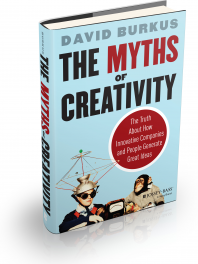 I have been having a lot of fun being part of the launch team for “The Myths of Creativity – The Truth About How Innovative Companies And People Really Generate Great Ideas” by David Burkus. I never really put much thought into the idea of innovation and creativity … or did I?
Burkus has totally changed the way I think about the topic of creativity. He does an outstanding job of describing ten myths that I believe clearly demonstrate that there is creativity within all of us. Most of us just don’t know it.
Many of you know that I am constantly reading. One of the reasons I read is that I think being constantly subjected to the ideas of others helps me to expand my own thinking. Burkus takes this same thought process and shows how our collaboration with others is the real key behind innovative creativity.
I found one of his myths, the Originality Myth, quite interesting. He uses two stories, one about Alexander Graham Bell and the telephone and the other about Steve Jobs and Bill Gates regarding “windows” and the graphical user interface (GUI). If asked “who invented the telephone or the “windows” on your computer, most people would answer with one of the names above. If you want to know the truth – order the book!
But here is the point. All creativity, innovation and all good ideas are really the product of what someone did before them. Bell simply refined what had already been discovered in the telegraph. Gates and Jobs merely expanded on what Xerox had done years before.
In all honesty, I knew there was more to these stories before reading the book, however, my understanding of what creativity really is and how we get creative has changed considerably.
Burkus discusses these ten myths that are really limiting beliefs that keep us from innovation at both the personal and organizational levels. Not only does he reveal these myths, but he provides clear direction on how to overcome the challenges that hold us back. You know I love anyone who battles against limiting beliefs!
I look at myself and the things I have been doing over the last few years. I have been doing things that I never dreamed I would be doing. Creating my own content, developing an entire new career and identity and even constructing this website. I know – nothing special – but it’s mine; I created it.
But here is the point that Burkus makes. None of this was my idea. It is simply a combination of watching, learning, and applying what other people know into what I do. Now here is the sweet stuff – if creativity is really the organization of what other people have already done, in a new way, there is no limit to what we can do.
I have only really pulled the thoughts from one of the myths that Burkus offers in this book. If you have any desire to expand your ability to come up with good ideas and how to turn that into major achievement, grab a copy of The Myths Of Creativity.
My challenge for you today; Don’t be afraid to share your ideas with others. Even if it does not make sense or seem possible, it may spur some similar thinking in someone else and who knows what you might collectively come up with. After reading this book, I realize that no good idea was the product of one thought by one individual. Be that catalyst to the next major breakthrough that comes along. What do you have to lose?
***********************************************************************
Don’t miss a single post from Building What Matters by subscribing at the top left of this page.
Help support us by clicking here and Liking our facebook page
Barry Smith 10/17/13 photo courtesy of Amazon © Building What Matters 2013
The post The Myths Of Creativity – Who’s Idea Is It Anyway? appeared first on BUILDING WHAT MATTERS.COM.
]]>