The post It Is Character That Defines “The Heart Of Leadership” appeared first on BUILDING WHAT MATTERS.COM.
]]>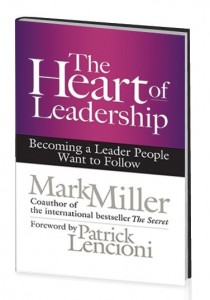 I have long been a fan of Mark Miller‘s work and when I found out I had the opportunity to be on the launch team for his new book “The Heart of Leadership” I couldn’t wait to write this review.
If you have read any of Miller’s recent work, you know that he has a unique way of building a story around the premise of the book and in effect, brings the lessons and the story itself to life. The Heart of Leadership is a follow up, at least as the story goes, to “Great Leaders Grow” (read my review of Great Leaders Grow).
Blake, who got off to a great start as a young leader now finds himself stuck. Stuck in his job and stuck as a leader. He turns back to his mentor Debbie, who had previously been mentored by Blake’s father before he passed away.
Debbie introduces Blake to 5 professionals that take Blake on a journey to find what he has been missing to take his leadership to the next level. He has been missing The HEART of Leadership.
So let’s take a look at just what it is that makes up The Heart of Leadership.
HUNGER FOR WISDOM
Leaders recognize that if they want to be effective over the long haul, they need to be life long learners. They need to commit to not only increasing their knowledge but their relational skills as well. Be self confident and consistent in your beliefs and values but always be open to input, new ideas and the views and opinions of others. We can always learn, even in our failures and difficult times.
EXPECT THE BEST
Miller states it very well; “To expect the best is an attitude, a belief, a choice, a lifestyle and a trait that virtually every successful leader possesses. We believe the best about others and about ourselves.” What a powerful statement. Expecting the best is about attitude and as we all know, attitudes are contagious. Leadership character is about having a positive attitude and creating a culture that expects and produces the best.
ACCEPT RESPONSIBILITY
There may be no greater leadership character trait than owning your actions, and not only your actions, but the actions of the entire team. John Maxwell says that “everything rises and falls on leadership.” Miller makes it clear that accepting responsibility, for both the good and the bad, needs to fall on the leader. Along with that, praise needs to be shared whenever possible. Leaders with heart give the credit to others and find their success in the success of their team.
RESPOND WITH COURAGE
Miller pulls a quote from Dr. Henry Cloud; “Leaders get what they create and what they allow.” [Tweet This] It takes courage to create. Often times, leaders are faced with making difficult decisions. Responding with courage, and doing it consistently, will shape your leadership character and help to build trust. Courage is a product of confidence and confidence comes from believing in yourself.
THINK OTHERS FIRST
Leaders need followers and a leader’s responsibility is to turn those followers into other leaders. This only happens when the leader focuses on the success of those he is leading. Miller puts it like this; “It’s about who is responsible for what, and how can I, as the leader, help people to be successful?” Miller makes a valuable point that if we are to become servant leaders, we need to spend time with other servant leaders and learn how they think and understand the real reasons why they do what they do.
I think the biggest takeaway for me from this fine work was the example of an iceberg that Miller uses to describe leadership. The 10 percent above water represents your leadership skills – What you know. The 90 percent underwater represents your character – Who you are. We often judge people for what they know but the true heart of leadership comes from your character – this is the heart of leadership.
I love this quote from the author; “It is ultimately leadership character that determines our opportunity for influence and impact.“ So today I have a challenging question for you: What is included in the 90 percent of your iceberg?
***********************************************************************
Click here for a 3-Video Series from John Maxwell and Les Brown being “Authentic and Transparent”
Click here to listen in on October 30th as John Maxwell shares how to “Influence through Connecting”
Don’t miss a single post from Building What Matters by subscribing at the top left of this page.
Help support us by clicking here and Liking our facebook page
Barry Smith 10/24/13 photo courtesy of Amazon © Building What Matters 2013
The post It Is Character That Defines “The Heart Of Leadership” appeared first on BUILDING WHAT MATTERS.COM.
]]>The post The 5 Pillars Of Influential Leadership – Part 15: Our Leadership appeared first on BUILDING WHAT MATTERS.COM.
]]>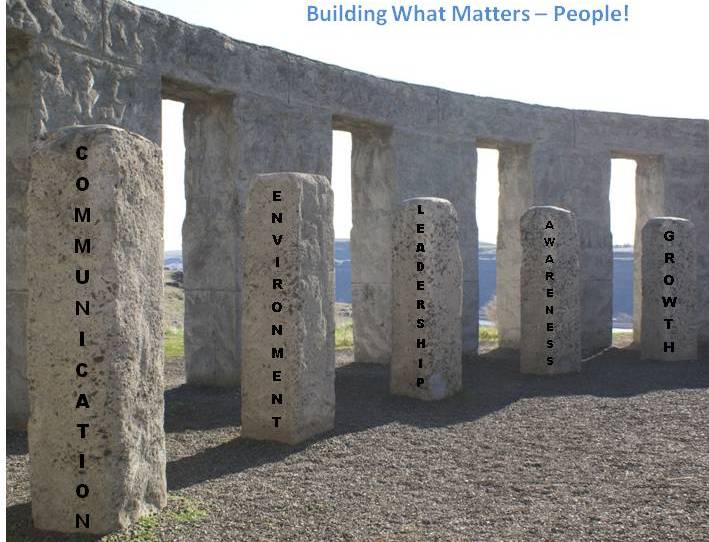 This is the 15th of 16 weekly installments on The 5 Pillars of Influential Leadership. Every Thursday, I will break down the 5 Pillars and show you how becoming and influential leader will not only improve your job skills but your personal life as well.
The 5 Pillars is a project that I have been working on for almost two years and had a great time with the official launch of “The 5 Pillars of Influential Leadership” Coaching program on May 23th.
Why the 5 Pillars? I have spent more than 30 years in the business world and although it has been primarily in the Construction world, the 5 Pillars philosophy works across all industries. In fact, while developing this program I realized that it can have a significant impact on your personal life as well.
I will break down each Pillar into three sections, personal, business and community. Any growth or improvement needs to start within, with the end goal of influencing the community you live in. In this post we will take a look at BUSINESS LEADERSHIP.
Here we are, the final Pillar – Leadership. For 14 weeks we have been discussing the skills and values that help form an influential leader. For the final three weeks, we will look at what influential leaders do, and how they do it.
VISION
Influential leaders not only have a vision, they share that vision with those that they lead. A vision is only as good as the way it is communicated to those that are part of it. We is always better than me!
AUTHORITY
Authority is not a right, it is a responsibility. Influential leaders use authority to make the tough decisions that have to be made for the good of the whole. Authority has to be used responsibly to work effectively.
COMPENSATION
Compensation is almost as difficult a topic to deal with as politics or religion. There is always an issue of playing the comparison game along with issues such as tenure. When possible, consider an adequate compensation package to be equal to what it would take to replace that person.
DELEGATION
Delegation is one of the most difficult things that a leader is challenged to do. Influential leaders delegate the things that others can do at least 80% as well as they can to save time to invest in the things that only they can do.
CRISIS-MANAGEMENT
The most important thing to do during any crisis is to provide stability and a sense of control. Influential leaders recognize that at the heart of every crisis is the loss of control. A realistic plan forward will help reduce the impact of any crisis. Communicating honestly and openly is a great way to bring any difficult situation under control.
EMPLOYEE REVIEW
I believe there are two key elements to any review process. Honest feedback, positive and negative, and clearly communicating expectations. Influential leaders clearly express what is expected which takes much of the personal element out of the equation.
NAVIGATION
Anyone can steer a ship but only influential leaders can chart the course. In almost every walk of life, we run into roadblocks and unplanned detours. Influential leaders are able to navigate through virtually any obstacle that gets in the way.
INNER CIRCLE
Your inner circle should be made up of people that can pull you up. Equal or lessor, and you will stay the same at best. The ideal inner circle is made up of a group of individuals that all bring different expertise to the group, thus collectively pulling each other in an upward direction.
EMPLOYEE RETENTION
Good help is hard to find. It is even harder to keep. Influential leaders invest as much into those that they want to retain as they expect from them in return. This win-win type of relationship is what builds strong teams that last.
The 5 Pillars coaching program will take each topic to a much deeper level. We will explore open ended questions and how they are directly impacting your life and more specifically in this segment, will allow you to evaluate and understand your role in growing your business.
In the mean time, start asking the type of questions that will result in better answers. When you ask “How can I” you get an answer that will move the needle. “What can I do today to increase my ability to be an influential leader at work?” Answer that question, act on it, and you will succeed.
RELATED:
- Click here to see Part 1
- Click here to see Part 2
- Click here to see Part 3
- Click here to see Part 4
- Click here to see Part 5
- Click here to see Part 6
- Click here to see Part 7
- Click here to see Part 8
- Click here to see Part 9
- Click here to see Part 10
- Click here to see Part 11
- Click here to see Part 12
- Click here to see Part 13
- Click here to see Part 14
- For more on The 5 Pillars of Influential Leadership and to view my video click here
- To view my guest post in the 2013 International Leadership Blogathon click here
***********************************************************************
Don’t miss a single post from Building What Matters by subscribing at the top left of this page.
Help support us by clicking here and Liking our facebook page
Barry Smith 8/8/13 photo by author © Building What Matters 2013
//
The post The 5 Pillars Of Influential Leadership – Part 15: Our Leadership appeared first on BUILDING WHAT MATTERS.COM.
]]>The post Everything Rises And Falls On LEADERSHIP! appeared first on BUILDING WHAT MATTERS.COM.
]]>It is with a heavy heart that I draft this post today. Several lives have been lost as a result of the devastating tornado in Oklahoma yesterday. Along with the tragedy, come many stories of survival and perseverance.
Every time mother nature throws something at us, I am reminded of the leadership that is needed to pick up the pieces in an effort to bring back some type of order within the chaos. I recognize that lives have been changed forever, but in reality, we are forced to move on. Not forget about those lost, but move forward in honor of their lives and their memories.
 The interesting thing to me is how so many step up to the plate when there are no other options. The need is there, and countless people simply step to the plate and do what needs to be done with no expectation of anything in return.
I think John Maxwell is right when he says “Everything Rises and Falls on Leadership.” The community impacted by this latest event will recover. They will recover because leaders will step to the plate and lead them forward.
The lives that were impacted by the tornado will be changed forever and I won’t pretend to understand the challenges that they face. But this I know, as a community they will pull together. They will encourage each other and lift each other up when the memories of those lost are pulling them down.
 They will find strength in each other knowing that they must go on because they need to be there for each other. They will rise again and they will do it on the leadership of those within the community that understand and believe that to do so is the only option.
SERVANT LEADERS provide WISDOM and COURAGE to MENTOR, DEVELOP and INFLUENCE others.
Leaders use their VISION and AUTHORITY to deal with CRISIS MANAGEMENT. They depend on their INNER CIRCLE to NAVIGATE challenging times and MANAGE the resources they have available.
When there is ABUNDANCE, leaders give GENEROUSLY. PRIDE will be put aside and STRATEGY will result in building TRUST and creating a LEGACY that will make a difference.
No question or challenge today, but a request: Please keep those impacted by the events in Oklahoma on Monday in your thoughts and prayers as they deal with the challenges they face in recovering from this tragic event.
***********************************************************************
On May 23rd, at 8:00 pm ET, I will be hosting a free call introducing “The 5 Pillars Of Influential Leadership” Coaching Program.
This will be a content filled call that will not only teach you about influential leadership but also about leading an intentional and successful life. The words in capitals above are topics within Pillar #5 – LEADERSHIP.
This is the final of five posts related to the 5 Pillars that will go out prior to the call on the 23rd.
For more information and to register for the free call CLICK HERE.
To see the first video on Pillar #1 – AWARENESS click here
To see the second video on Pillar #2 – ENVIRONMENT click here
To see the third video on Pillar #3 – GROWTH click here
To see the fourth video on Pillar #4 – COMMUNICATION click here
***********************************************************************
Don’t miss a single post from Building What Matters by subscribing at the top left of this page.
Help support us by clicking here and Liking our facebook page
Barry Smith 5/21/13 photo by author © Building What Matters 2013
The post Everything Rises And Falls On LEADERSHIP! appeared first on BUILDING WHAT MATTERS.COM.
]]>The post Performance: What Happens When The A-Team Is Not Available? appeared first on BUILDING WHAT MATTERS.COM.
]]> When faced with an important or difficult task, we typically call on the best of our best, those whose performance carries a track record of success. We have all used the phrase “A-Team” to describe this group. But what happens when the A-Team is not available?
If you didn’t see it, the blown call at the end of last night’s Monday Night Football game was apparently the final straw. I suppose we can try and look at the glass half full and recognize that this may have been what was needed to end the contract battle between the NFL and the referees and get the A-Team back on the field.
The mistakes and errors of the “replacement refs” had reached the point where the NFL had to make a decision. Continue on with an inferior product or come to a resolution with the seasoned referees. The B-Team, in over their heads, simply did not have the experience to do the job. They did not have respect or credibility to accomplish the mission.
Several thoughts crossed my mind related to what happens when the A-Team is not available and what we can do to make the best out of what we have to work with. Here are 4 things to consider when dealing with the second or third choice for the task at hand:
1. Authority
If your team knows that they are not the first choice, their natural tendency will be to believe that expectations are not as high. As a leader, we need to empower anyone and everyone on our team. Give them the authority to make decisions and hold them accountable for them. Ownership of the decisions will facilitate more effort and more success.
2. Credibility
Just because they are not the first choice does not mean that they are not capable to do the job. Make it know to everyone that you believe in the team to accomplish the task successfully. Credibility will breed confidence and engagement. When others know that you believe in them, they will believe in themselves.
3. Respect
With respect comes trust and trust is a huge part of letting a team operate successfully as a cohesive unit. If your team feels like they are being micro-managed, they will be less likely to make decisions and will most likely look to you or someone else to decide for them. The original idea was to have them handle the project, so let them.
4. Recognition
Any chance for this team to become an A-Team will come from recognizing their success. Regardless of the process, we must recognize the success of the team. This may not be easy and in all honesty, some help may be required along the way. The bottom line is that they will either fail or succeed. If the success is not recognized then you will eventually be faced with the same challenge again.
The replacement referees were treated exactly like that – replacements. If they were viewed a little different, I wonder if there would have been a different outcome. So what do we do when our only choice is the B-Team? Treat them like the A-Team and pretty soon they will be.
***********************************************************************
Don’t miss a single post from Building What Matters by subscribing at the top left of this page.
Help support us by clicking here and Liking our facebook page
Barry Smith www.buildingwhatmatters.com 10/2/12 photo by author
The post Performance: What Happens When The A-Team Is Not Available? appeared first on BUILDING WHAT MATTERS.COM.
]]>The post No Pain No Gain – Sometimes Leadership Hurts appeared first on BUILDING WHAT MATTERS.COM.
]]> Leadership has many responsibilities and many of these involve pain and frustration. Not necessarily the type of pain that requires medical attention, but the type of pain that comes with growth.
A good friend of mine recently had knee replacement surgery. Over the last few years, I have seen his ability to move around, without pain, deteriorate significantly. I think that sometimes leadership is like that. When we face a challenge as a leader, sometimes the right decision will be painful. If we don’t address it properly, our ability to lead in a productive manner will deteriorate and our influence will be compromised.
Many times we need to tell a co-worker or subordinate something that we know needs to be said, but at the same time realize that it will be hard for them to hear. Sometimes our decisions as leaders will impact relationships that we have.
So what do we do when faced with these difficult decisions? Here are six things that need to be considered when faced with making a difficult decision.
1. Accountability
As leaders, we are accountable to everyone. Not always by position, but because we are expected to do the right thing. Being accountable in making tough decisions, means that we will own that decision and stand behind it. If you haven’t bought into the decision, how can you expect others to.
2. Adversity
Adversity is part of many difficult decisions. It may already exist, thus the need to make the decision or it may be that you recognize the decision will result in some adverse conditions. As a leader, it is important to create a culture that will excel in the face of adversity and move forward productively as a team.
3. Attitude
Difficult decisions will result in difficult circumstances. Leading with a positive attitude is the best way to keep those around you in the same mind set. Remember, leadership is influence and if your attitude is bad, don’t expect any different behavior from those around you.
4. Authority
All leaders have some amount of authority. Sometimes we use our authority to make the decision that works the best for us. Authority is a powerful tool we use as leaders but it can also be a weapon of mass destruction. When making a difficult decision, it is crucial that your authority is used to make the right decision at the right time in the right way.
5. Awareness
This may be the most important consideration of all. Our awareness needs to stretch to all levels of the issue. We need to look at both sides of the decision and evaluate how that decision will impact everyone involved. I would suggest getting the opinions of others if the situation allows. Even our best leaders don’t see the entire picture from their perspective and additional insight from your inner circle is almost always beneficial.
6. Assessment
Finally, after all the information has been gathered, it’s time to assess the best move. This is the final step before making the decision, but unfortunately the step that often get’s looked over. My suggestion is to go through the exercise of writing down all the options and one-by-one, look at the pros and cons of each. This will not only provide clarity but may add some additional insight that you would not have previously experienced.
Sometimes decision that we have to make will be painful. There is no way around it. The best way to succeed in making the right decision is to evaluate it properly.
My friend had to make the decision to go through the pain of the surgical procedure and the ensuing rehabilitation process, but the decision was the right one and the pain will eventually be replaced with the freedom to function pain free.
The next time you are faced with a difficult decision, view it like it is the most important decision you will ever make. Understand the pain that it might cause but make it based on the right reasons.
***********************************************************************
Don’t miss a single post from Building What Matters by subscribing at the top left of this page.
Help support us by clicking here and Liking our facebook page
Barry Smith www.buildingwhatmatters.com 9/28/12 photo by author
The post No Pain No Gain – Sometimes Leadership Hurts appeared first on BUILDING WHAT MATTERS.COM.
]]>The post The Law Of Explosive Growth – Developing Leaders appeared first on BUILDING WHAT MATTERS.COM.
]]> Nothing is more important in my reading and writing than Leadership Development and the growth that results from it. Why? Because just like John Maxwell says, “Everything Rises and Falls on Leadership.”
Now that I am in my mid-forties, I can see a major gap between the leadership skills in my generation as compared to the skills of the next generation. The fact is, my generation is responsible for developing the next generation and based on what I have seen, we are failing.
I know that is a farily broad generalization and there are some great leaders out there in their twenties but it seems to me that the majority of our future generation is more concerned with what they get instead of what they give.
I have experienced many leaders that use their position primarily to create a group of people that will do what they want and basically do the majority of the work. The more followers, the more power and the more work that can be done. I have also seen leaders that are more concerned with developing their followers into leaders. Leaders that will carry positive momentum and eventually develop those that they influence into leaders themselves.
Maxwell does a great job comparing the FOCUS of leaders who attract followers and leaders who develop leaders. Here are six differences in comparing the two types of leaders.
1. A strong leader will develop leaders around him so that his team can successfully continue with, or without him.
- Leaders Who Attract Followers … Want to Be Needed
- Leaders Who Develop Leaders … Want to Be Succeeded
2. A strong leader will invest the time and effort in developing the leaders around him. These will be the leaders of the future.
- Leaders Who Attract Followers … Develop the Bottom 20 Percent
- Leaders Who Develop Leaders … Develop the Top 20 Percent
3. A strong leader will build on the strengths of his followers. He realizes that we all have a different skill set and that it is better to enhance the gifts we already have and utilize them accordingly.
- Leaders Who Attract Followers … Focus on Weakness
- Leaders Who Develop Leaders … Focus on Strengths
4. A strong leader will recognize potential and will make sure that those willing to invest in themselves will receive the opportunities to do so.
- Leaders Who Attract Followers … Treat Individuals the Same
- Leaders Who Develop Leaders … Treat Individuals Differently
5. A strong leader will make every minute count. Time spent with his followers will focus on personal and professional growth.
- Leaders Who Attract Followers … Spend Time with Others
- Leaders Who Develop Leaders … Invest Time in Others
6. A strong leader recognizes that developing leaders around him will exponentially create a larger group of leaders. Leaders will develop more leaders and followers will simply continue to follow.
- Leaders Who Attract Followers … Grow by Addition
- Leaders Who Develop Leaders … Grow by Multiplication
In order to create the type of explosive growth that Maxwell describes can only be done by multiplying the amount of leaders that we have on our team. All of us is better than one of us and when all of us are influencing others in a positive way that facilitates growth, our team will continue to grow and produce positive results.
The clear question then becomes, “What kind of Leader do you want to be?”
***********************************************************************
Next Up: Law # 21 – The Law of Legacy
Don’t miss any of the remaining Laws by subscribing at the upper left of this page.
Help support us by clicking here and Liking our facebook page
Barry Smith www.buildingwhatmatters.com 9/26/12 photo by author
The post The Law Of Explosive Growth – Developing Leaders appeared first on BUILDING WHAT MATTERS.COM.
]]>The post Are You Just Playing “Father The Leader”? appeared first on BUILDING WHAT MATTERS.COM.
]]>
Father’s Day is almost over as I write this, at least the “official” one day a year on the calendar that we dedicate to fathers. As a father’s day gift, my wife Michelle, made reservations at at one of our favorite locations in the Columbia River Gorge. On Saturday afternoon the two of us, along with our oldest son Scott, went on an afternoon hike along the Pacific Coast Trail (PCT) on the Washington side of the Columbia River. The picture’s in this post are actual pictures of Scott and I taken by Michelle along the way.
Sometimes when Michelle and I hike – no, I better say most of the time, I drive her crazy because I continually stop for various reasons that include looking at the view, taking pictures, listening to the wind blow or basically anything else that will prolong our arrival to the destination. Saturday was no different, although there was a new twist on my daydreaming. You see, I had several opportunities to watch my son (now 21) walk along the trail with no idea where he was going. Not unlike most of his life, dad had planned the journey for the hike today and he knew he would simply follow the leader and eventually arrive at the destination.
This is what got me really thinking. Are we just playing “Father the Leader” or are we legitimately being a leader as a father? As a father, how much do we invest in planning the journey? What is the destination? Do we simply tell our kids the destination and let them figure out how to get their?
Today is the day in which all over the nation, fathers are honored for what … have we really done something honorable by producing an offspring? I suggest that Father’s Day should be a day in which we honor those father’s who have invested time and energy in the growth of their kids and those that have provided a positive influence in helping them to grow up into responsible members our our communities.
Maybe you think I am being a little harsh, but in all seriousness, this nation is starving for positive role models for our kids and to be quite honest and in many cases, the father is the last person these kid’s need to be influencing them. Gentlemen, (I am speaking to all fathers here) I believe we all need to step our game up related to leading our kids. It is time to quit playing “Father the Leader” and become one.

If you are a Dad and are reading this, ask yourselves these questions:
- Do I give my kids enough of my time?
- Do my kids know that I believe in them?
- Have I given my kids a reason to believe in me?
- Do my kids know that I love them and have I verbally told them this?
- Have I honored their mother in my actions to set an example of how they should act?
- Are my actions those of a positive role model?
- Is the influence that I have on my kids making a positive difference in their life?
Father’s Day should not only be a day to celebrate fathers for being fathers but also a reminder of what our role as a father is. For our sons, we need to teach them how to be fathers and husbands themselves someday and what it means to be a father by action and not by definition. For our daughters, we need to give them a legitimate example of what they should look for in their future relationships with the male gender. We should demonstrate respect and be men of integrity and character.
I do not profess to have been the perfect father by any stretch of the imagination, but I have learned this as the father of two young men. The picture we paint for them during their developmental years, is one that they will use as the framework in creating their own identity as a father and husband. What kind of picture are you painting?
I do not typically request that you forward my posts, but I would ask that if you know a father that might benefit from the ideas represented above, that you would consider sharing this with them. This may be your opportunity to make a difference.
Barry Smith www.buildingwhatmatters.com 6/17/12
The post Are You Just Playing “Father The Leader”? appeared first on BUILDING WHAT MATTERS.COM.
]]>The post The Law of Addition – A Leaders Legacy appeared first on BUILDING WHAT MATTERS.COM.
]]>
How would you respond to the question “Why is it important to be a leader?” Many people view leadership the same way they view success. We want to go as far as we can, climbing the corporate ladder, trying to achieve the highest position possible in the business we work in. John Maxwell in his The 21 Irrefutable Laws of Leadership says-
“I believe the bottom line in leadership isn’t how far we advance ourselves but how far we advance others. That is achieved by serving others and adding value to their lives.”
There are many responsibilities of a leader; encouragement, direction, vision and communication to name a few but ask yourself this question – Am I making things better for the people who follow me?
The Law of Addition, when implemented, will allow your people to achieve more, become more loyal, and will allow them to be more successful at getting things done than they ever thought possible. Consider it this way, you as a leader have a specific set of goals, either personally or professionally. Likewise, those that follow you have their own set of goals. When we combine efforts to help each other reach our goals, not only do we achieve them quicker but the compound effect of collaboration will generally result in achieving things that were not even part of the original picture.
As a leader, we need to be willing to invest in others to help them achieve their goals. Zig Zigler says this-
“If you first help people get what they want, they will help you get what you want.”
By helping others develop the skills needed for advancement and fulfillment, we not only help them to better themselves, but increase the strength of the circle around us. Look at any successful person and you will most likely find a strong support staff around them.
So what is it that we need to do to add value to others in their desire to achieve more? I would suggest that we need to shift the focus off ourselves and onto them. This may not be easy or comfortable at first, but when we see the results of our influence on those around us and feel the effect of their improvements in self-confidence, competence and desire to improve themselves we are developing a leader for the future and at the same time, improve the strength of our own network.
The legacy we leave will be represented by the difference we made in the lives of others. I would encourage you to start thinking about the people you care about most or spend the most time with and intentionally make an effort to add value to their lives in helping them reach their potential as a person and as a leader. Speaking for myself, I want to be remembered as someone who made a difference. How will you be remembered?
Next Up: Law #6 – The Law Of Solid Ground
Barry Smith www.buildingwhatmatters.com 6/13/12
The post The Law of Addition – A Leaders Legacy appeared first on BUILDING WHAT MATTERS.COM.
]]>The post Developing The Leaders Around You – The Influence Of A Leader appeared first on BUILDING WHAT MATTERS.COM.
]]>
I recently had a conversation with the President of a very successful General Contractor and part of the conversation revolved around developing leaders to replace upper management in the future. The jest of the statement was “I have another ten or fifteen years doing this but then what – who is going to step up to the plate?” This is a topic that many business owners and managers consider every day. So the question is, what are we doing to prepare others to be capable and competent to sit in that chair in the future? Additionally, what happens if for some unfortunate reason, that ten to fifteen years is shortened? What are you, as a business owner or leader doing today to plan for tomorrow?
Typically leaders fail to develop other leaders for two reasons:
- They lack the training to do so, or
- They posses the wrong attitudes about allowing or encouraging them to come alongside of them.
As a leader, it is important to identify those around you that are capable and willing to pay the price to become the type of leader that will be required to meet the specific needs of the organization.
John Maxwell in his Developing The Leaders Around You, suggests five things to keep in mind when we examine potential leaders in determining what each needs:
- Expose the potential leader to people successful in his field.
- Provide a secure environment where the potential leader is free to take risks.
- Provide the potential leader with an experienced mentor.
- Provide the potential leader wit the tools and resources she needs.
- Spend the time and money to train the potential leader in his areas of need.
In the current economy, we are all challenged with spending time and resources on items that do not necessarily show up on a profit/loss spreadsheet. The challenge today is to take the time to look beyond the responsibilities and demands of now and to look at the bigger picture of what lies ahead.
If you are a successful business owner or leader, you probably care not only about the bottom line, but about the people that account for your success and their future. Longevity of the business and an adequate succession plan are critical to the long term health of the business. Future leader development is a critical element of any succession plan and that planning needs to start now.
General George S. Patton once remarked,
“Never tell people how to do things. Tell them what to do and they will surprise you with their ingenuity.”
I am not suggesting that you simply turn people loose, but you want to give them enough freedom to be creative. Give them opportunities to be responsible, authoritative and accountable and see how they perform.
Consider the people that you influence and then consider the people they influence. If their is a consistent connection of success downstream, I would suggest you have identified a potential leader. It may be a good time to invest in them and in your future.
Barry Smith www.buildingwhatmatters.com 6/10/12
The post Developing The Leaders Around You – The Influence Of A Leader appeared first on BUILDING WHAT MATTERS.COM.
]]>The post Leaders, What Are You Doing With What You Have? appeared first on BUILDING WHAT MATTERS.COM.
]]> I recently heard a sermon in church and one of the thoughts was that it is not a bad goal or objective to be financially successful but you really need to consider what you will do with that success. This got me thinking about what we do as leaders with what we have. There are many empowering resources that come with any leadership position and I pose the question “What are you doing with what you have been given as a leader?”
- Authority – As a leader, we have the authority to make many unilateral decisions every day. We must ask ourselves if this decision will impact the entire team or is it more self-serving. For example, will we use resources to provide benefits to upper management such as an executive office remodel or out of town seminar at a nice location or do we use these same resources to improve the working conditions for our blue collar sector. Neither choice is necessarily wrong but we need to evaluate which choice will provide the greatest reward and balance the benefits to all. A leader needs to respect the authority he has been given and use it intentionally if he wants to increase his influence as a leader.
- Responsibility – As a leader we have many responsibilities. Our greatest asset and our greatest liability are the same thing – our people. As a leader, we have the responsibility to reduce risk and protect our assets. Each and every decision should be based on the impact that the decision will have on your people. How much responsibility do you have? Are you making responsible decisions that will benefit the people that allow you to keep your job and make the business profitable or are you only looking at a small part of the big picture when making decisions.
- Influence – You have heard before that Leadership is Influence. If you are an effective leader, then you no doubt have influence on those around you. What are you doing with that influence? Are you a person of high character? Are you building trust? Are you engaged with those you are working with? All these are part of the influence that you have on those around you.
The bottom line is this – As a leader, you have been given many resources. What you do with what you have been given will directly affect your success as a leader. What are you doing with what you have been given as a leader?
Barry Smith 5/20/12 www.buildingwhatmatters.com
The post Leaders, What Are You Doing With What You Have? appeared first on BUILDING WHAT MATTERS.COM.
]]>