The post Boundaries For Leaders – Part 3: High Performance Teams appeared first on BUILDING WHAT MATTERS.COM.
]]>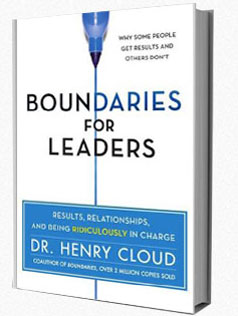 I recently finished reading Boundaries For Leaders – Results, Relationships and Being Ridiculously In Charge by Dr. Henry Cloud. Twenty years after he co-authored “Boundaries – When to Say Yes, How to Say No to Take Control of Your Life” Dr. Cloud brings a fresh look to how boundaries relate more specifically to leadership.
Dr. Cloud does an incredible job providing insight on why some people get results and others don’t. Simply stated, when we invest time beyond the boundaries “we should have” we reduce the results we achieve along the way.
Dr. Cloud has taken a complex issue and has broken it down into simple terms that every leader should be able to embrace and implement into their leadership and life style.
This will be the final of three posts exploring what it takes to lead teams, companies and cultures defined by high performance and healthy relationships.
HIGH-PERFORMANCE TEAMS
Dr. Cloud sums up the power of “high” performance teams with this statement; “Nothing drives strong teams like great performance, and what drives strong performance is a commitment to a shared vision and shared goals with behaviors and relationships aligned with reaching those goals.”
Basically he is saying that high performance teams work together on the right things at the right times. This really only comes through focusing on the things that you can control and with the clarity and focus of working on them in a strategic and specific manner. It comes down to having the right plan and working that plan.
TRUST MAKES THE TEAMS ABLE TO PERFORM
Dr. Cloud focuses this chapter on the importance of trust as related to team performance. He provides his five most important components:
Connection through Understanding – Of course it is important that we “get it” – but more important is that the other person understands and believes that we “get it.”
Motivation and Intent – We have all been there – someone offers their help or assistance but you know that their motivation is solely because they want something in return. Trust is build when there is no expectation of anything in return.
Character – There are many attributes that can describe character but in building trust, “who you are” becomes much more important that what you do or what you can provide.
Capacity and Ability – Intentions are great, but follow through is where we build, and lose trust. Part of the trust building process is being able to identify what you can actually deliver – and deliver it.
Track Record – No surprise here; what you have done in the past, in this area, is a predictor of the future. It doesn’t have to be, but that is the way it will be perceived. Perception is Reality anyone!
BOUNDARIES FOR YOURSELF
This is great – Dr. Cloud gives us a Law of Leadership: “The higher you go in leadership. the fewer external forces act upon you and dictate your focus, energy, and direction. Instead you set the terms of engagement and direct your own path, with only the reality of results to push against you.”
Read that again – remember, this book is about boundaries. As leaders, we are the only one responsible in setting our own boundaries. That being said, understanding what those boundaries will, or will not allow in is crucial. I like to think of it like this – boundaries set the perimeter, but we still need to position ourselves so we can “see over the fence” to stay aware of what is going on “outside.”
I strongly encourage any and every leader to pick up a copy of Boundaries For Leaders. Dr. Cloud provides frameworks throughout the book that can be easily applied to your leadership role.
It has been said that the greatest gap we deal with in life is “The gap between what we know and what we do.” If you want to start applying more of what you know into increasing what you do, you need to have boundaries.
My challenge today: Take a look at what is currently on your plate and make the decision to set some boundaries that will allow you to put more focus and energy into the things that you have to do that have to be done now.
***********************************************************************
Click here for a 3-Video Series from John Maxwell and Les Brown being “Authentic and Transparent”
Click here to listen in on October 30th as John Maxwell shares how to “Influence through Connecting”
Don’t miss a single post from Building What Matters by subscribing at the top left of this page.
Help support us by clicking here and Liking our facebook page
Barry Smith 10/23/13 photo courtesy of Amazon © Building What Matters 2013
The post Boundaries For Leaders – Part 3: High Performance Teams appeared first on BUILDING WHAT MATTERS.COM.
]]>The post Boundaries For Leaders – Part 2: Focus On What You Control! appeared first on BUILDING WHAT MATTERS.COM.
]]>I am currently reading Boundaries For Leaders – Results, Relationships and Being Ridiculously In Charge by Dr. Henry Cloud. Twenty years after he co-authored “Boundaries – When to Say Yes, How to Say No to Take Control of Your Life” Dr. Cloud brings a fresh look to how boundaries relate more specifically to leadership.
Dr. Cloud does an incredible job providing insight on why some people get results and others don’t. Simply stated, when we invest time beyond the boundaries “we should have” we reduce the results we achieve along the way.
Dr. Cloud has taken a complex issue and has broken it down into simple terms that every leader should be able to embrace and implement into their leadership and life style.
This will be the second of three posts exploring what it takes to lead teams, companies and cultures defined by high performance and healthy relationships.
POWER THROUGH CONNECTION
I find it interesting how often we think we are the “only ones” going through a certain challenge. Dr. Cloud brings some great ideas to the surface looking at how we can not only share our thoughts by connecting with others, but can actually change the way we think.
He states that; “improving performance didn’t hinge only on learning new technical skills or on working on the right plan; it depended on changing the team’s mood and improving relationships outside and inside work.“ Working together, connecting as a team, allows us to do this.
THE GATEKEEPER OF THINKING
If you are looking for clarity on the impact between positive and negative thinking, this is the chapter for you. Dr. Cloud makes the following statement: “The prevailing thinking patters of a team or of an organization – its norms and belief systems – will define what it is and what it does.”
A tremendous amount of content and information to process here but the reality is that “positive thinkers” significantly out perform “negative thinkers.” Again, back to what I think is his motto for the entire book “You get what you allow and what you create”, Dr. Cloud shows how the negative thinkers are allowing things to happen while the positive thinkers are creating and making things happen instead of allowing them happen.
CONTROL AND RESULTS
This chapter alone is worth reading this book. Simply put; “Focus your people on what they have control of that directly affects the desired outcomes of the organization.“ Dr. Cloud goes on to say that; “When people’s brains are working at their best, they are more creative, better problem solvers, less reactive, more proactive and goal oriented.”
He further adds that when our thoughts are focused on things that we have no control over, it actually brings our brain functioning down. Focusing on the things that we can control enables and empowers us to create the outcome. Our only actions on things that we don’t control are to allow them to impact us or not. This is typically a matter of choice and should not require a significant investment of time.
This book has really challenged me to take a look at “what I am creating and what I am allowing.” I have already begun to shift my mental efforts into that which I can control with the intent of creating the outcome that I desire.
I offer an exercise from the book that Dr. Cloud had used during training. Take a piece of paper, draw a line down the middle and on the left side, write down all the things you have no control over. On the right side, write down all the things you do have control over. Now evaluate how much effort you are putting into each side.
My challenge: Start moving towards “Right Side” thinking and watch things start to change.
***********************************************************************
Don’t miss a single post from Building What Matters by subscribing at the top left of this page.
Help support us by clicking here and Liking our facebook page
Barry Smith 10/16/13 photo courtesy of Amazon © Building What Matters 2013
The post Boundaries For Leaders – Part 2: Focus On What You Control! appeared first on BUILDING WHAT MATTERS.COM.
]]>