The post Telling The Truth Is Like An Elephant – Neither Of Them Forget! appeared first on BUILDING WHAT MATTERS.COM.
]]> You know the old saying “an elephant never forgets.” I don’t know the complete story about elephants but I do know about telling the truth. Not that I have never told a lie before, but I try and be as honest as I can.
I think most of the people I spend time with are fairly honest but hey, we’re all human and sometimes truth just seems to get lost in the shuffle. I think what happens more than lying, is just not telling the entire story or not providing all the facts.
I suppose there are times when leaving out certain parts, that have nothing to do with the outcome or moving forward, is acceptable, but in doing so, we take the chance that we won’t be able to recreate the story just like we told it the first time.
Here is the problem with just telling part of the story – when we tell it again and it’s different, we lose credibility and trust. Those are pretty important pieces of any business or personal relationship.
Anyone who doesn’t take truth seriously in small matters cannot be trusted in large ones either. – Albert Einstein
Remember those two words I just mentioned – credibility and trust? What do you think will happen when there is doubt cast on your story? How will your boss or your employees feel if they don’t think they got the straight scoop? Any time your truthfulness is questioned, it is a step back and not one easily regained.
My guess is that all parents, at some point in time during your children’s lives, tell them that “telling the truth is always better than telling a lie” and don’t forget “you will never get in as much trouble telling the truth as you will telling a lie.”
I wonder why we as adults don’t always follow the same advice. We all have enough going on already. It doesn’t even make sense to use your mental energy to “try and keep your story straight.”
I think there is overlooked aspect of telling the truth. Not the obvious choices like morals and ethics, but awareness. I think awareness plays a big role in our ability to tell the truth. I think when we have a clear idea of the big picture, not telling the truth does not fit into the equation.
Think about this … when you create your goals or cast a vision for your team, are there any steps along the way that require lying? In fact, have you ever written a plan out, or even seen one written by someone else for that matter, that included lying as one of the steps to achieve the goal.
So here is my logic on this. If lying is not part of the plan to succeed, why would we incorporate it into the game plan? The answer I came up with is obvious, we forget about the big picture. Rather than deal with the inevitable roadblock that get’s in the way, we come up with some story or way out to avoid the issue.
Inevitably this will come back to bite us (you know it always does) and will slow us down or worse yet, destroy the plan completely. Like I said earlier, most of the people I spend time with a fairly honest and I would include those reading this in that group. But we all are well practiced in getting in our own way and have no trouble completing the occasional slip up.
Mark Twain said, “If you tell the truth, you don’t have to remember anything.” Sounds like pretty good advice to me. I have a hard enough time remembering as it is.
Telling the truth is always better that telling a lie, but when you do (and you will), come correct, own it and make it right.
***********************************************************************
Don’t miss a single post in this series from Building What Matters by subscribing at the top left of this page.
Help support us by clicking here and Liking our facebook page
Barry Smith www.buildingwhatmatters.com 4/27/13 photo by author
The post Telling The Truth Is Like An Elephant – Neither Of Them Forget! appeared first on BUILDING WHAT MATTERS.COM.
]]>The post Does Your Video Match Your Audio? Protecting Your Personal Brand appeared first on BUILDING WHAT MATTERS.COM.
]]>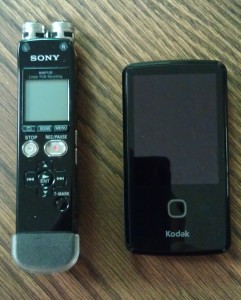 Does your audio match your video? I love that question. If you don’t understand it or have not heard it before, it is asking if your actions match your words. We all know that person who says things that are not even close to how they act. I wonder if these people realize how that looks to the rest of the world.
I don’t think there is any other time in history when the importance of our reputation carries more weight than any other part of our behavior than today. Think about it – who do you gravitate towards? Who do you do business with? Who do you respect or admire?
I consider myself to be a fairly reputable person and I like to think that my video matches my audio but I freely admit that sometimes I would like to hit rewind or delete and start over. Unfortunately, life usually doesn’t work that way and once you do something, it pretty much is a done deal.
So how important is it that what we say matches what we do? Ask Jim Tressel, Sean Payton or possibly the biggest example we have recently seen, Joe Paterno. I know that Paterno has passed, but I can’t think of a better example of what happens to your reputation when your video melts down.
Here are 4 things to consider before you hit record on the video camera:
1. AUTHENTICITY
One of the things I appreciate about people is their authenticity. We need to be real people. We all know that person that doesn’t understand this concept at all. The guy who is all talk and no walk. Regardless of how he views himself, my guess is that his success is going to be quite limited due to his actions.
2. CREDIBILITY
Who do you go to when you need to depend on someone? Usually it is the person that had a track record of credibility. Let’s face it – when we ask someone else to help us out with something, business or personal, they become an extension of us. Their actions represent ours and if you value your reputation, choose wisely.
3. INFLUENCE
This one is my favorite. Leadership is influence, right? So if we want to be a leader or need a leader, we want someone that will positively influence others. Our influence is often powered by our actions. People do what people see. If we want a positive outcome, we better have a good video that matches the script.
4. INTEGRITY
Integrity is as important to your picture as any other thing. Do people think you act the same way when no one is looking as you do when on the main stage? Integrity breeds trust and vice-versa. Trust is hard to earn and easy to lose. Certainly it is easier to come up with the words that portray trust, but our actions are much more powerful, in either direction.
At the end of the day, we want to be known as a person that can be trusted to have our actions align with our words. William Shakespeare said “All the world’s a stage” and he is right. How we act is what will determine our personal brand.
The cameras are always rolling, so you better be prepared to stick with the script you have written and if you need to add-lib during your performance, make sure it’s not something you would rather have on the editing room floor.
**********************************************************************
Don’t miss a single post from Building What Matters by subscribing at the top left of this page.
Help support us by clicking here and Liking our facebook page
Barry Smith www.buildingwhatmatters.com 11/2/12 Photo by author
The post Does Your Video Match Your Audio? Protecting Your Personal Brand appeared first on BUILDING WHAT MATTERS.COM.
]]>The post Cutting Edge Or Bleeding Edge? Leadership Of The Future appeared first on BUILDING WHAT MATTERS.COM.
]]> I see a new face on leadership developing and not just in specific industries. As generation Y begins their assimilation into the workforce, the relational side of the business world is changing. We have all heard the expression cutting edge used to describe new, possibly outside the box, thinking related to technology and education.
Leadership is no different. Cutting edge thinking on leadership is going to look completely different than the days of the Iacocca, Lombardi and Churchill. Today’s leaders like Facebook’s Mark Zuckerberg and Google’s Larry Page are today’s cutting edge. They have transformed the leadership style that will take us into the future.
Let’s face it, the work force is changing and honestly, they are more concerned with quality of life than they are with income. This will require a new way of thinking related to the employee pool available to fill today’s office space?
Here are 4 ways to make sure you stay on the cutting edge as you lead your team forward:
1. Accessibility
Social media and the power of electronic communication have completely change the landscape of the way we communicate. Communication is “real time” in almost every sense of the word. I barely even use the fax machine anymore. Print, scan, email – Done. Texting, freeconferencing.com, GoToWebinar.com. These are all tools that make it simple to transfer information and hold meetings without the need to even show up at the office.
2. Branding
Twenty years ago your brand was the name on your label. Today your brand basically represents everything you stand for. Some would argue that your brand is the most important thing there is related to you or your business. A blow to your brand me be enough to put you out of business. Protecting it is something that businesses focus on daily with great attention and effort.
3. Credibility
Nothing escapes the media today. Not only do we hear about everything in real time but everything really means everything. There are no secrets anymore. Inevitably, the truth will come out. Regardless of everything else that might challenge you on a daily basis, your credibility will either make you or break you. The cutting edge leader is concerned with the credibility of everyone on the team.
4. Engagement
If you want to be successful and advance in your industry, you better do whatever it takes to have the engagement of your workforce. Grass being greener on the other side of the fence has never been more prevalent than it is today. Workers want the workplace to be fun and challenging. I think the most important way to keep workers engaged is to mix it up a little. We have the tendency to become complacent within the world we live in and the minute that happens, we lose the fire that was once had and we become preoccupied with what something else might look like.
The bottom line is that the new leader needs to be a continual thinker. Not that yesteryear’s leaders were not thinkers, but today the need to think outside the box is needed more than ever. Everyone know’s what the other guy is doing and if you don’t think of that next great idea, someone else will and there goes the neighborhood.
If you want to be cutting edge today, you better stay ahead of the curve. If things have been pretty much the same in your workplace the last few years, what makes you think anything will change in the next few?
The bleeding edge leader says “if it’s not broke, don’t fix it.” The cutting edge leader says “I better improve it before it breaks.” What will you do today to change the way you think?
***********************************************************************
Don’t miss a single post from Building What Matters by subscribing at the top left of this page.
Help support us by clicking here and Liking our facebook page
Barry Smith www.buildingwhatmatters.com 9/17/12 photo by author
The post Cutting Edge Or Bleeding Edge? Leadership Of The Future appeared first on BUILDING WHAT MATTERS.COM.
]]>The post What Does Your “Brand” Really Represent? appeared first on BUILDING WHAT MATTERS.COM.
]]> There has been an abundance of material printed lately about the importance of your brand. Some of you are very specific on the development of your brand and then focusing on what it takes to live up to it. Others of you probably don’t even think you have a brand. I think, to a certain degree, we all have a brand.
Now some us may not have a logo or a website but we all have a reputation. Isn’t a brand simply a way to describe what you stand for? It seems to me that our reputation defines our brand no matter how much it is marketed.
Think about the people that you know. If one of them asked you “what do you think my brand is?” My guess is that you would be able to provide them some feedback based on their reputation and what they represent in how they live.
Just as important is someone who has actually created a brand for themselves or their business. The question then becomes, “are they representing their brand?” If they have a good brand but do not represent it well, it will be difficult to build on that brand. If you are in the process of developing a brand, consider these things:
DOES IT REPRESENT THE PRODUCT OR SERVICE I AM PROVIDING?
Your brand needs to be representative of what you believe in and what you are trying to accomplish.
IS IT A BRAND THAT WILL BE EASY TO REMEMBER AND BE RECOGNIZABLE?
Your brand, including your logo, needs to be something that will be recognizable and memorable.
IS IT A BRAND THAT I CAN BUILD ON?
We all start small in the beginning so when developing your brand, make sure that it will continue to represent what you are doing as you continue to grow your business.
IS IT A BRAND THAT PEOPLE CAN IDENTIFY WITH?
This may be the most important concept to consider when developing your brand. People should be able to identify with your brand on a personal level. This will create interest and promote engagement into building a relationship.
In developing my brand, I wanted it to represent not only where I am going but where I have been. Most of the stories I have are related to either my family or the construction trade that I have been part of for thirty years. My company name “Building What Matters” provides a connection to the construction world as well as describes what my mission is – building what matters – people.
I find it fascinating when I meet someone for the first time and they keep looking at the logo on my shirt. I typically give them a few looks and then engage in a conversation about what I do and why I do it. Now you may think it makes sense or maybe you think it doesn’t, but in either case it allows me to tell my story and describe why I am passionate about building up the people around me.
Everyone has a brand of some kind. The real question to consider is “If someone to were asked to describe what you stand for, what you represent, what would they say?” I believe that what they say is your brand. So … what do you stand for?
***********************************************************************
Don’t miss a single post from Building What Matters by subscribing at the top left of this page.
Barry Smith www.buildingwhatmatters.com 8/13/12 image by author
The post What Does Your “Brand” Really Represent? appeared first on BUILDING WHAT MATTERS.COM.
]]>