The post Secrets Of Dynamic Communication – The Final SCORRE appeared first on BUILDING WHAT MATTERS.COM.
]]>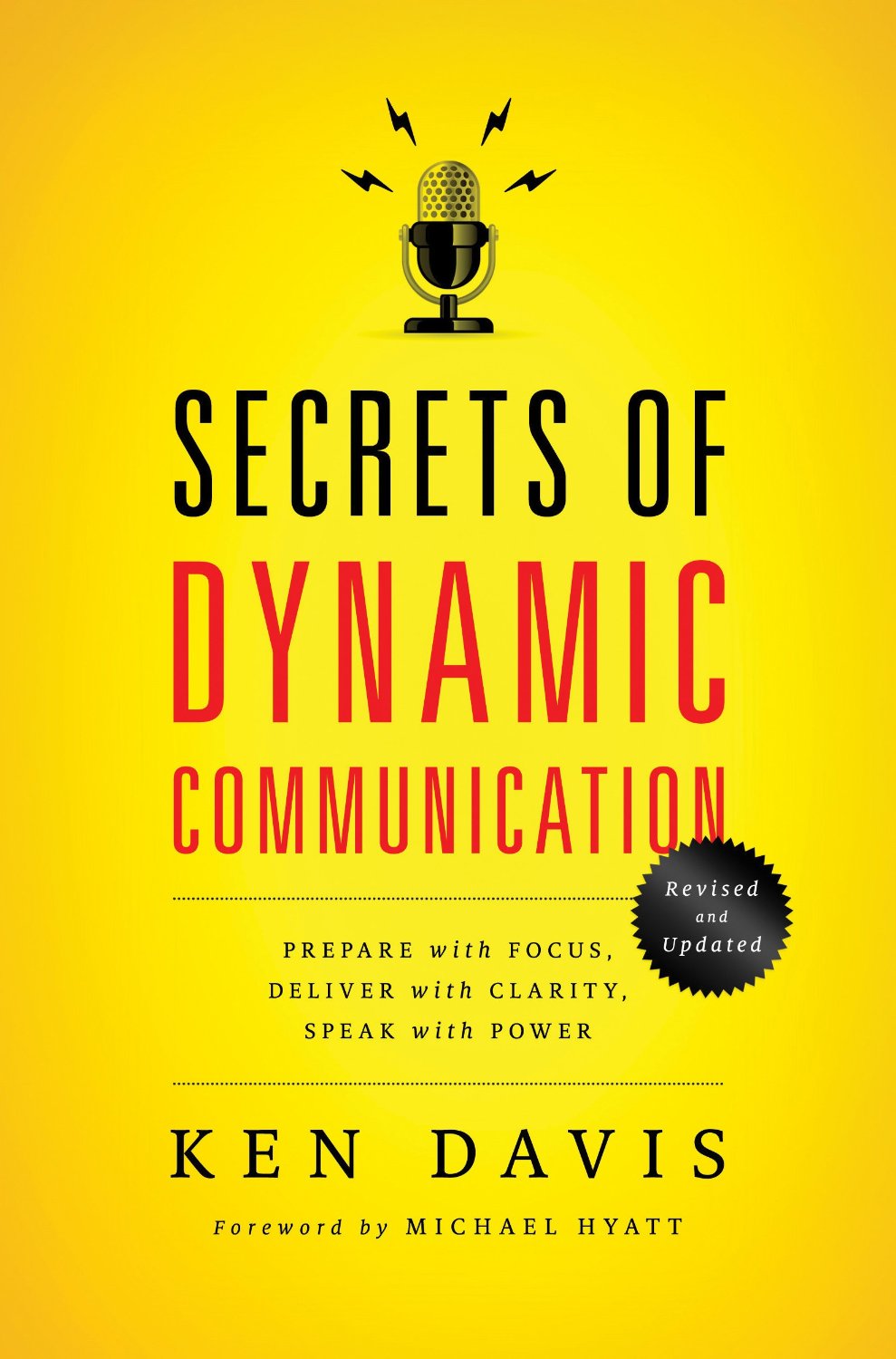 The Platform Builders Mastermind Group invested the month of April digesting the Secrets of Dynamic Communication by Ken Davis. Davis, a greatly sought out speaker, breaks down his SCORRE process in putting together a great presentation.
One of key concepts I include in almost everything I speak on, teach on, or write about is CLARITY. Clarity adds power and impact to anything we attempt to do. [Tweet This]
The SCORRE framework that Davis has broken down does exactly that. It provides clarity and impact to any idea you might have, regardless how you will be presenting it.
Davis offers two primary functions of the SCORRE process:
- It serves as a scope to force the speaker to focus on a single objective.
- It serves as a logical grid forcing the speaker to make sense and lead the audience to the objective.
I believe that those two functions can serve us in any kind of presentation, written or spoken. Let’s take a closer look at the SCORRE process.
SUBJECT
Nothing too scary or difficult here – simply pick a subject. It can be anything, but ideally a subject that people are interested in. Remember, the whole idea of putting a presentation together is to add value to the person watching the presentation or reading the content.
CENTRAL THEME
The central theme is going to be a part of the subject that allows you to build to a specific piece of content. Your subject might be the automobile but without a central theme, such as fuel mileage, you will find it difficult to provide the clarity needed to engage your audience.
OBJECTIVE
The objective is simply the purpose of the body of work. When you have clarity on what exactly you are trying to accomplish, you will find it much easier to put together a presentation that makes sense and that the audience can follow and understand.
RATIONALE
The rationale is the logical content of your presentation that will lead the listener to understand the purpose behind it. In short, these are the main points that support the purpose. This is the structure of your work.
RESOURCES
The resources are the added “personal touches” that enhance the rest of the story. This could be through graphics, data, humor, or any number of different additions that take a framework or outline and turn it into an interesting, engaging, and value adding presentation.
EVALUATION
As a speaker an author myself, I understand the idea of “dual purposing” everything I create. It is my work, cradle to grave. The evaluation part of the process allows me to take a look after each time I present it and see what I need to add, subtract or change.
This book is a highly recommended read for anyone who wishes to communicate in a dynamic way that will connect. The SCORRE framework will allow you to put together a competent presentation or body of work that will provide a clear message and add value to the one receiving it.
Davis has done an amazing job putting what he has presented into the way he has presented it. You can see the SCORRE process throughout the book. His wit and wisdom bring the book to life and he has clearly described what has made him a leader in his field.
***********************************************************************
===> LEADERSHIP by INVITATION now available on AMAZON <===
Click here to get a copy of my Kindle Book “The Manifesto Of An Influential Leader”
Don’t miss a single post from Building What Matters by subscribing at the top left of this page.
Help support us by clicking here and Liking our facebook page
Barry Smith 5/31/14 photo courtesy of Amazon © Building What Matters 2014
The post Secrets Of Dynamic Communication – The Final SCORRE appeared first on BUILDING WHAT MATTERS.COM.
]]>The post Leading The Starbucks Way – Part 2; Connecting With Trust appeared first on BUILDING WHAT MATTERS.COM.
]]> This month in the Platform Builders Mastermind Group, we are diving into “Leading The Starbucks Way: 5 Principles for Connecting with Your Customers, Your Products, and Your People” by Joseph A. Michelli.
Sure this book is about Starbucks, but it’s much bigger than that. Michelli shows why Starbucks has become the coffee bean superpower of the world. And it has nothing to do with the beans. I guess that’s not entirely true, but their success is built much more around who is serving rather than what is being served.
I will admit, I have invested my fair share in the Starbucks brand but I never gave a thought as to what goes on behind the grinder, so to speak. Michelli explores 5 Principles that give Starbucks the advantage over their competition and I for one, will pay much more attention to what is going on behind the counter next time I visit my local Starbucks.
Definitely a great look at what has made Starbucks so successful, but at the same time, the bar has been set very high for them to continue to live up to their reputation.
In this, the second of three posts, I will recap Michelli’s exploration of Principle 2 – Love To Be Loved and Principle 3 – Reach For Common Ground
PRINCIPLE 2 – LOVE TO BE LOVED
In a word, this section is about trust. Both trust of the product and the service and more importantly, consistency in delivering them. It’s not surprising that there is more content about the people than the product in this book. That is where the trust is built.
Think about when you have purchased a product that you believed in but received less than stellar service. You might stick with the product, but if your are like me, you will look elsewhere to get it.
“If you select people with genuine talent for serving others, give them opportunities to become more knowledgeable and passionate about your products, and insist upon product and consumer experience excellence, you are well on the way to gaining the pride and passion of customers.”
While in construction, I often chose service over cost because at the end of the day, I needed someone that would deliver WHEN they say they would and make me feel like I was their most important client. I realize I probably wasn’t, but that doesn’t mean you can’t be treated like you are. Truth be told, I was pretty loyal to those vendors. Hmmmm!
PRINCIPLE 3 – REACH FOR COMMON GROUND
A deep look into the Starbucks way of connecting with their customers, explains much about the forward motion of the organization. It’s one thing to communicate with your customer, but are you really connecting? And I’m not just talking about words.
Starbucks looks at ALL aspects of the environment, the architecture of the store, the neighborhood, the customer base, and the competition. These all factor into the experience that we have when we enter a Starbucks.
“The goal of leadership is to create the right environment for human connection to occur and to help staff members manage the inevitable issues that surface.”
There is certainly risk when you bring the human condition into the business model, but then again, if you want to be the best at what you do, you better be willing to risk something to get there.
I don’t want to feel invisible!
This is probably my favorite quote from this section of the book; “The number one request or desire of every human around the world is to be seen and heard.” (Tweet This)
TODAY’S QUESTION: How effectively have you sought partnerships while building your business and have you positioned yourself to provide services or products that are relevant to your market?
***********************************************************************
===> JOIN THE “LEADERSHIP BY INVITATION” LAUNCH TEAM <===
Click here to get a copy of my Kindle Book “The Manifesto Of An Influential Leader”
Don’t miss a single post from Building What Matters by subscribing at the top left of this page.
Help support us by clicking here and Liking our facebook page
Barry Smith 4/17/14 photo courtesy of amazon © Building What Matters 2014
The post Leading The Starbucks Way – Part 2; Connecting With Trust appeared first on BUILDING WHAT MATTERS.COM.
]]>The post Raising The Bar For Generation Y- Part 2 appeared first on BUILDING WHAT MATTERS.COM.
]]> Last week I introduced you to Ben, a 22 year old working as a Hard Rock Cafe server in Las Vegas. Ben has a bright future in front of him, but he is not the only one. Today I want to introduce you to Stephanie.
Stephanie works as a Food and Beverage Supervisor at the World Marriott in Orlando, Florida. Hmm? 22 years old and a food and beverage supervisor already. Isn’t that interesting!
Through a connection with one of the chef’s at the World Marriott, we were able to set up a private catered dinner for myself and the event coordinator of the John Maxwell Team. The John Maxwell Team holds two large events there every year and we were excited at the opportunity to get a look “backstage” with food services.
The service we have received during our visits to the World Marriott has been nothing short of phenomenal, and after our peek at what goes on behind the scenes, it’s easy to understand why. I won’t pretend to understand what it takes to run a kitchen of this size, but what we saw appeared to be a well-oiled machine, running full throttle, and without a miss.
A big part of the experience was our private server, Stephanie. Just like with Ben in Las Vegas, I was intrigued by her attitude, professionalism, and self-confidence. All characteristics I only occasionally see in adults twice her age. A few of her comments really made me think …
“If you want another course, we will throw it in.”
Logic would suggest that the objective was to take care of a significant client, but the delivery was sincere. Right from the beginning Stephanie made us feel like the only people in the building.
This was something I have never experienced before. A specially constructed room built in the middle of the kitchen so we could see everything going on around us but from within an environment built exclusively for a fine dining experience. I think it’s fair to say that Stephanie really wanted us to enjoy the experience and her commitment to making that so, was authentic and intentional.
“Oh my gosh, I’m so sorry!”
Just as in everything we do, things don’t always go as planned. Upon a minor mishap, exclusive to our private venue, Stephanie immediately apologized, owned it and, most importantly diffused a situation that could have disrupted the entire evening.
In our opinion, it was no big deal, but it certainly could have changed the emotional state and attitude of any person providing service. I find it interesting how difficult it is sometimes to own our actions and simply say “I’m sorry.”
“I can talk through a brick wall.” (Tweet This)
What a great statement. My takeaway from this comment … how long could you speak “intelligently” about your profession? How about in a random conversation with clients or colleagues? Stephanie spent the entire time in the room with us that night and we spent a lot of time talking about all sorts of topics. I don’t remember any that went beyond her ability to add value to the conversation.
I am still amazed at the competence and confidence of someone her age and her ability to control the atmosphere of the room. I suppose you could say that education had it’s benefits.
“I don’t think I have ever said no.”
This was my favorite. We had been giving her a hard because everything was so amazing and it sort of became a challenge to see if they could actually deliver on “anything” we wanted. So naturally, a person of my intellect, came up with a great challenge. “Fresh chocolate chip cookies and vanilla gelato.” No way they could bust that out. Wrong! “No” was not an option.
As I custom desert request arrive, I asked her what they do when they get a request for something they can’t make happen. Her response, “I don’t think I have ever said no.” I guess that pretty much sums up the evening!
Do You Want To Be The Best?
It will be a meal I never forget, but something tells me that Stephanie does the same for other people everyday. I will not soon forget the attitude and effort that went into that dining experience and the real point of the story is that if you want to be the best, you need to act like it – and not just when you have to, but when you don’t. That’s what will set you apart from the rest.
Like Ben, Stephanie has big aspirations for her career. She eventually would like to end up in the California wine valley as a wine sommelier. I know she will make it and she just might be the youngest female to ever become one. I won’t be betting against her anytime soon.
THE QUESTION: Are you serving people in a way that represents your best?
THE CHALLENGE: Do something today that will take your quality of service to the next level.
Read part one by clicking here
***********************************************************************
Click here to get a copy of my Kindle Book “The Manifesto Of An Influential Leader”
Don’t miss a single post from Building What Matters by subscribing at the top left of this page.
Help support us by clicking here and Liking our facebook page
Barry Smith 3/17/14 photo courtesy of amazon © Building What Matters 2014
The post Raising The Bar For Generation Y- Part 2 appeared first on BUILDING WHAT MATTERS.COM.
]]>The post How Does Someone Who Hated English Class End Up A Writer? appeared first on BUILDING WHAT MATTERS.COM.
]]> Most of my High School years were spent trying to stay out of trouble. The only subjects I ever really did any good in were shop, gym and math. English? Not even close. In fact, the only good memory I have of English class was my freshman teacher, Mrs. Miller. It really didn’t even have anything to do with english, it was just that she was pretty cool!
You remember high school? How many cool english teachers do you remember? (No offense if you are an english teacher, remember – this was from the mindset of a teenage male.)
High School english class must have been a traumatic experience!
I honestly don’t even remember what we did in english class. Maybe I have formed one of those mental blocks that keeps you safe from traumatic experiences. So how does someone like that become a writer? I have no idea! It just sort of happened.
As a project manager in the construction world, I often needed to write letters. Usually they were because I wanted something that the person the letter was addressed to probably did not want to give me. Man, as I look back, I wrote some good ones. So I guess I became a writer by way of necessity but I never enjoyed it.
Somewhere around 250 blogs in less than two years, one kindle book and a hard copy due out later this spring. You know what? I like writing now. So what happened? I think it comes down to WHY you write. Just so happens that those in the Jeff Goins community were recently challenged with that question – Why do you write? Additionally there are many of us committing to 500 words or more every day this month. (Interested in joining in? Click here)
Isn’t about time you share your story?
I pondered this question for a while and I think it comes down to this – I write because it is a way for me to share my story and add value to others that I would not be able to otherwise. People all over the world read and comment on my thoughts and I think that’s pretty cool.
I used to live in a pretty small world with lots of walls but a few years back my world opened up, or maybe it was really my mind that did, but I realized that there are people that believe what you believe but think different thoughts everywhere.
Now I get to collaborate and connect with these people every day. I got to tell you – it has made a huge difference in my quality of life. It feels good to help other people and have them help you. I guess that’s why I write – it makes me feel good.
There are a couple of other reasons that I think are important. I believe everyone has a story, and their story needs to be told. What better way to do it than put it out there and share it. The other thing that I think results from writing – it empowers the reader to change the way they think. Some of you already know what’s coming next … my favorite quote by Dr. Wayne Dyer:
“When you change the way you look at things, the things you look at change.”
Could you use a little change in your life? What if your words could change the life of someone else? What if your story might just be what someone else needs to hear?
Obvious question today: What are you writing? Uh oh! I think I heard someone say they’re not writing? WHY NOT?
***********************************************************************
Click here to get a copy of my Kindle Book “The Manifesto Of An Influential Leader”
Don’t miss a single post from Building What Matters by subscribing at the top left of this page.
Help support us by clicking here and Liking our facebook page
Barry Smith 1/4/14 photo by author © Building What Matters 2014
The post How Does Someone Who Hated English Class End Up A Writer? appeared first on BUILDING WHAT MATTERS.COM.
]]>The post Adversaries Into Allies – Part 3; Motivation and Outcome appeared first on BUILDING WHAT MATTERS.COM.
]]>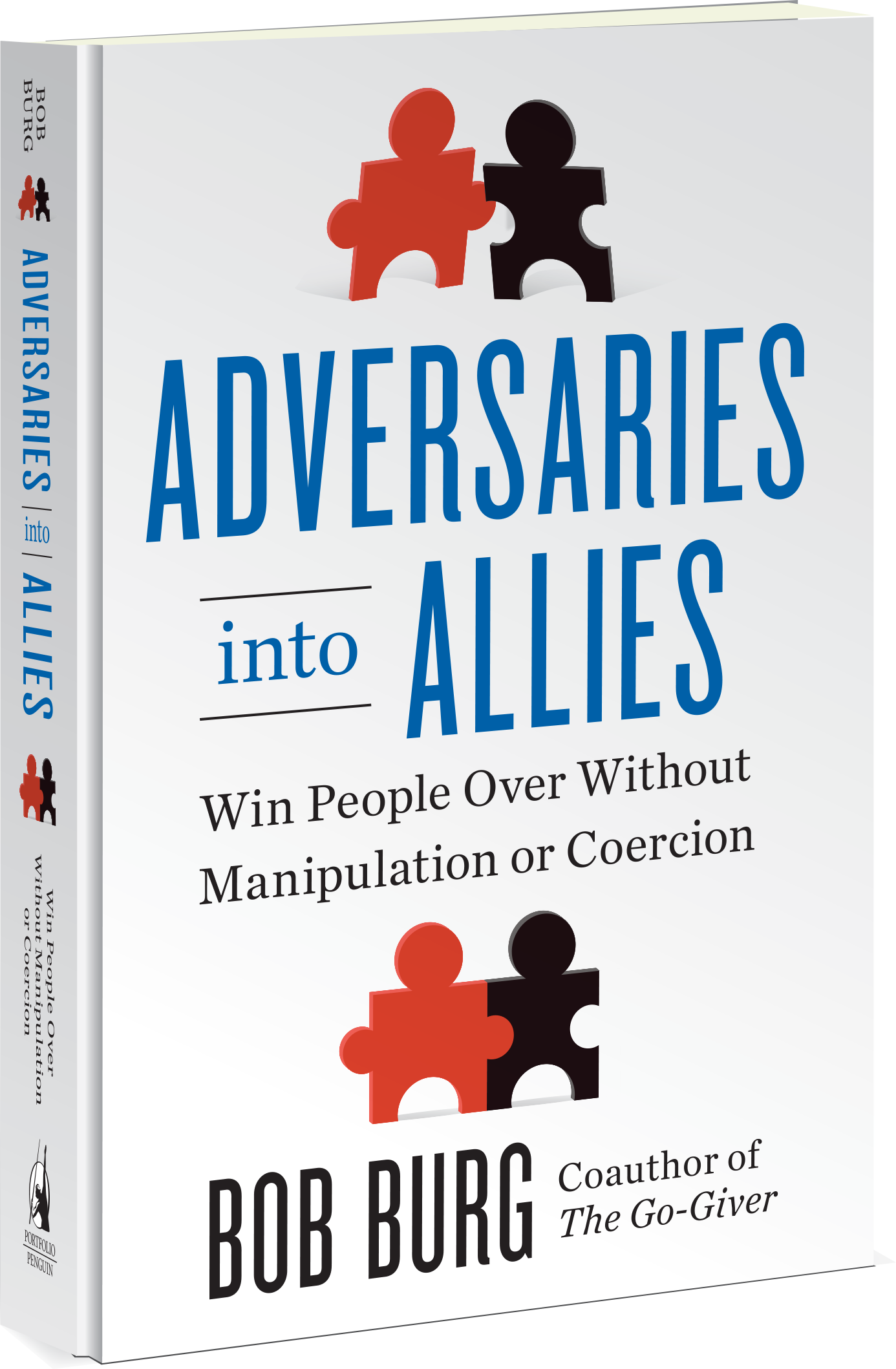 Happy New Year everyone! We are definitely finishing strong with this month’s book mastermind. Adversaries Into Allies – Win People Over Without Manipulation or Coercion, by Bob Burg, gives a fresh look into how we can influence others while maintaining our integrity and character.
Some of you probably recognize Burg as the co-author of The Go-Giver, but this one is all his and according to the author, his finest work – the book he was meant to write.
Burg starts out by introducing us to the idea of Ultimate Influence ==>the ability to get the results you want from others while making them feel genuinely good about themselves, about the process, and about you.
Burg suggests that Ultimate Influence is based on five key principles that occur on an ongoing basis. In this post, the third of four, we will take a deeper look into the third and fourth principles (3) Acknowledge Their Ego and (4) Set The Proper Frame. Take a look at these and see if any of them might apply to your life.
3. Acknowledge Their Ego
- Don’t Shame or Embarrass – Never criticize or condemn publicly. Always seek to build up and encourage! Ultimate Influencers build trust and empower others.
- Be a Judge, Not a Lawyer
- The Principle of Agreement – Avoid using the word “but” because in most cases, it eliminates what you just agreed to.
- Ego Repair
- The Power of Handwritten Notes – Remember the wisdom of John Maxwell; “People don’t care how much you know until they know how much you care.” What are you doing to tell others that you care?
- Edification – a Powerful Key To Influence
- Do You Look for Disagreement? – Respond before you react. Set yourself up for success and find the things you can agree on before the things you can’t.
- Compliment the Uncomplimented
- Caught in the Act! … of Doing Something Right – This is one of my favorites. How often do you catch someone in the act of doing something right – and then recognize them for it?
- “I Appreciate Ya” – When was the last time someone told you they appreciated you? When was the last time you told someone else?
4. Set The Proper Frame
- Positive Expectation Works, but Not Why You Think It Does – Simply stated, you get what you expect. No it doesn’t always work but when you believe in a positive outcome instead of a negative one, you will be much more successful.
- Framing Your Influence in Your First Conversation – First impressions, right? Simply make the conversation revolve around the other person and you set the tone for everything that follows.
- Sometimes’ It’s Good to Let ‘Em See You Sweat
- The Ransburger Pivot
- The Value of the Correct Phrase
- “What Can I do to Help?”
- Win by Making the Other’s Case First – Understanding and accepting the fact the the other person has their own thoughts and ideas, and believes them to be true, puts you in the position to control the outcome.
- Help Them to Live in the Solution – The best way to create an alliance is to bring a solution. Wanting to solve the problem indicates your attitude of working towards a solution – no matter who comes up with it.
- Avoid Negative Framing
- Don’t Fall Victim to the Either/Or
- Persuasion Secrets of a Ten-Year-Old
- Change Your Frame, Change Your Life – Want allies? Turn negatives into positives. No it’s not easy, but staying in the negative will never solve anything.
Well, there is a taste of the thoughts and ideas found within this book. I encourage you to pick up a copy and fill in the stuff I left blank on your own. Some of the chapter headings listed above don’t make a lot of sense until you listen to Burg’s wisdom. Now is your chance!
We certainly have much more to look at in Adversaries Into Allies but understand that people generally believe they are right because their beliefs are based on the experiences they have had. Right or wrong, until you recognize that they believe what they believe, you will find it difficult to persuade them otherwise. So ask yourself this question – Is it really worth the fight or is working together going to provide a better outcome?” Win-Win outcomes are OK!
***********************************************************************
Click here to get a copy of my Kindle Book “The Manifesto Of An Influential Leader”
Don’t miss a single post from Building What Matters by subscribing at the top left of this page.
Help support us by clicking here and Liking our facebook page
Barry Smith 1/3/14 photo courtesy of burg.com © Building What Matters 2014
The post Adversaries Into Allies – Part 3; Motivation and Outcome appeared first on BUILDING WHAT MATTERS.COM.
]]>The post Nelson Mandela – A Lesson In Influence And Integrity appeared first on BUILDING WHAT MATTERS.COM.
]]> It has not even been 24 hours since Nelson Mandela’s time here on earth came to an end. Most reading this probably know that Mandela has been in poor health for quite some time. Still, when that day finally comes, it seems so surreal.
Since his release from prison in 1990, Mandela’s name has stayed prominent among most circles involving leadership. If there was ever a man who understood the power of influence, it was Mandela.
If you have run in any of John Maxwell’s circles, you no doubt know that meeting Mandela is now one thing John had on his bucket list he will never fulfill. He got close a time or two but it just never worked out. I have heard John talk about Mandela numerous times and it always impressed me how well thought of Mandela was in John’s eyes. No doubt Maxwell is a Leadership Icon himself, but for him to think so highly of another leader clearly indicates how highly respected Mandela was.
I am always impressed listening to leaders speak of other leaders. There is just something special about the acknowledgement of greatness between peers. I can’t honestly say that I have studied the life and times of Nelson Mandela, nor could I tell you that much about his political views, but I do know he had incredible influence.
I don’t think I can really add to the mass amount of information currently being posted about Mandela’s life but there is one thing that I have been thinking about. Mandela was loved by millions. He was someone that so many respected and adored. So the question that comes to mind to me is “Am I the type of person that people will look up to and appreciate?” “Am I on anyone’s bucket list?”
I don’t know if I am or not but it does make me think. What do you need to do to be on someone’s bucket list. What is the one thing that could make the difference? I think it is integrity.
Think about someone you look up to. Someone you would like to spend time with. Why? For me, it would be because they are real. They do the right thing for the right reasons. Integrity represents something you can believe in. We all have to make choices and I realize nobody makes the right choice every time. It’s just that some do it much more than others.
I think this quote by Mandela sums it up for me; “If I had my time over I would do the same again. So would any man who dares call himself a man.”
I think that describes integrity to a certain extent. People of integrity don’t play the do-over card. [Tweet Now] They own their mistakes and learn from them. If I dig a little deeper into this quote with my personal take, I hear this;
“I do what I do because I believe in it. I know I will make mistakes but that is the nature of man, and I would not do over what I felt was the right decision even if the outcome was not exactly what I desired. Why? Because without mistakes there is no learning and with no learning there is no progress.”
I am not making a statement regarding Mandela’s beliefs or actions, but I make a bold statement that he believed in what he was doing and stood by it, even risked his life for those beliefs. How many people can you say that about?
A short question for you today, but I believe a powerful one; “Who’s bucket list are you on?” RIP Nelson Mandela
***********************************************************************
Click here to get a copy of my Kindle Book “The Manifesto Of An Influential Leader”
Don’t miss a single post from Building What Matters by subscribing at the top left of this page.
Help support us by clicking here and Liking our facebook page
Barry Smith 12/6/13 photo courtesy of free images © Building What Matters 2013
The post Nelson Mandela – A Lesson In Influence And Integrity appeared first on BUILDING WHAT MATTERS.COM.
]]>The post Adversaries Into Allies – Part 1; Ultimate Influence appeared first on BUILDING WHAT MATTERS.COM.
]]>Happy Holidays everyone! We are definitely finishing strong with this month’s book mastermind. Adversaries Into Allies – Win People Over Without Manipulation or Coercion, by Bob Burg, gives a fresh look into how we can influence others while maintaining our integrity and character.
Some of you probably recognize Burg as the co-author of The Go-Giver, but this one is all his and according to the author, his finest work – the book he was meant to write.
Burg starts out by introducing us to the idea of Ultimate Influence ==> the ability to get the results you want from others while making them feel genuinely good about themselves, about the process, and about you. You get that little piece of wisdom on the first page of the introduction. So far, it only get’s better from there.
Burg suggests that Ultimate Influence is based on five key principles that occur on an ongoing basis. Over the next three weeks I will break these down further but here is the list to get you thinking in the right direction.
1. Control Your Own Emotions
I have been reading a lot about “control” recently and I have to agree with Burg on this. Staying in control will always yield better and more lasting results. Our emotions push us to reacting instead of responding. Who would you rather have creating your future – you or the other person? Want results? Take control!
2. Understand the Clash of Belief Systems
As the author puts it; “Each one of us sees the world in a unique way based on a combination of upbringing, environment, schooling, popular media, and the people with whom we associate.” I love this idea. One of my mentors tells me all the time; “Hang around people that believe what you believe, but think different thoughts.” I think Burg is adding clarity to that statement. It’s not only the idea that people think differently, it’s also about how to process those differences in a productive “collaborative” way.
3. Acknowledge their Ego
This is good stuff. At the end of the day, no matter how much we are willing to give of ourselves and serve others, we still feel good one when someone acknowledges what we have done. It’s simply human nature. Unfortunately, some place too much focus on it. But Burg’s point is clear – if you want to persuade someone to your way of thinking, part of your plan better include some type of positive recognition of the way they are thinking.
4. Set the Proper Frame
Why is it that we choose to set ourselves up for failure when is most cases, with the right choices, we can set ourselves up for success? Burg suggests that we have the power to set the proper frame. It doesn’t matter if we moved first or the other person did. What matters is our last move. Why? Because that is what sets the frame for the next move. You are always one move away from success or one away from failure. [Tweet Now]
5. Communicate with Tact and Empathy
Burg makes the observation that; “Communicating tactfully displays a genuine regard for the other person, which will open the door to making him your ally.” Do first impressions matter? Hello! Think about the last time someone approached you and let’s just say “lacked a little tact” in the way they communicated. How did that make you feel? Look, people want to feel valued and they want to matter. Words matter and they matter a lot. Use them wisely. You never know when you might need an ally.
It’s hard to beat Burg’s take that pretty much frames out the rest of this series … “You’ll see that when you begin to control your emotions, consider others’ points of view and ego, create a positive atmosphere, and communicate tactfully and with empathy, you will get what you want in your personal interactions and relationships.”
We certainly have much more to look at in Adversaries Into Allies but let me leave you with this question today; “Which provides a better outcome – when they’re with you or when they’re against you?”
***********************************************************************
Click here to get a copy of my Kindle Book “The Manifesto Of An Influential Leader”
Don’t miss a single post from Building What Matters by subscribing at the top left of this page.
Help support us by clicking here and Liking our facebook page
Barry Smith 12/4/13 photo courtesy of burg.com © Building What Matters 2013
The post Adversaries Into Allies – Part 1; Ultimate Influence appeared first on BUILDING WHAT MATTERS.COM.
]]>The post It Is Character That Defines “The Heart Of Leadership” appeared first on BUILDING WHAT MATTERS.COM.
]]> I have long been a fan of Mark Miller‘s work and when I found out I had the opportunity to be on the launch team for his new book “The Heart of Leadership” I couldn’t wait to write this review.
If you have read any of Miller’s recent work, you know that he has a unique way of building a story around the premise of the book and in effect, brings the lessons and the story itself to life. The Heart of Leadership is a follow up, at least as the story goes, to “Great Leaders Grow” (read my review of Great Leaders Grow).
Blake, who got off to a great start as a young leader now finds himself stuck. Stuck in his job and stuck as a leader. He turns back to his mentor Debbie, who had previously been mentored by Blake’s father before he passed away.
Debbie introduces Blake to 5 professionals that take Blake on a journey to find what he has been missing to take his leadership to the next level. He has been missing The HEART of Leadership.
So let’s take a look at just what it is that makes up The Heart of Leadership.
HUNGER FOR WISDOM
Leaders recognize that if they want to be effective over the long haul, they need to be life long learners. They need to commit to not only increasing their knowledge but their relational skills as well. Be self confident and consistent in your beliefs and values but always be open to input, new ideas and the views and opinions of others. We can always learn, even in our failures and difficult times.
EXPECT THE BEST
Miller states it very well; “To expect the best is an attitude, a belief, a choice, a lifestyle and a trait that virtually every successful leader possesses. We believe the best about others and about ourselves.” What a powerful statement. Expecting the best is about attitude and as we all know, attitudes are contagious. Leadership character is about having a positive attitude and creating a culture that expects and produces the best.
ACCEPT RESPONSIBILITY
There may be no greater leadership character trait than owning your actions, and not only your actions, but the actions of the entire team. John Maxwell says that “everything rises and falls on leadership.” Miller makes it clear that accepting responsibility, for both the good and the bad, needs to fall on the leader. Along with that, praise needs to be shared whenever possible. Leaders with heart give the credit to others and find their success in the success of their team.
RESPOND WITH COURAGE
Miller pulls a quote from Dr. Henry Cloud; “Leaders get what they create and what they allow.” [Tweet This] It takes courage to create. Often times, leaders are faced with making difficult decisions. Responding with courage, and doing it consistently, will shape your leadership character and help to build trust. Courage is a product of confidence and confidence comes from believing in yourself.
THINK OTHERS FIRST
Leaders need followers and a leader’s responsibility is to turn those followers into other leaders. This only happens when the leader focuses on the success of those he is leading. Miller puts it like this; “It’s about who is responsible for what, and how can I, as the leader, help people to be successful?” Miller makes a valuable point that if we are to become servant leaders, we need to spend time with other servant leaders and learn how they think and understand the real reasons why they do what they do.
I think the biggest takeaway for me from this fine work was the example of an iceberg that Miller uses to describe leadership. The 10 percent above water represents your leadership skills – What you know. The 90 percent underwater represents your character – Who you are. We often judge people for what they know but the true heart of leadership comes from your character – this is the heart of leadership.
I love this quote from the author; “It is ultimately leadership character that determines our opportunity for influence and impact.“ So today I have a challenging question for you: What is included in the 90 percent of your iceberg?
***********************************************************************
Click here for a 3-Video Series from John Maxwell and Les Brown being “Authentic and Transparent”
Click here to listen in on October 30th as John Maxwell shares how to “Influence through Connecting”
Don’t miss a single post from Building What Matters by subscribing at the top left of this page.
Help support us by clicking here and Liking our facebook page
Barry Smith 10/24/13 photo courtesy of Amazon © Building What Matters 2013
The post It Is Character That Defines “The Heart Of Leadership” appeared first on BUILDING WHAT MATTERS.COM.
]]>The post Do You Want To Be Treated Fair Or Equal? appeared first on BUILDING WHAT MATTERS.COM.
]]> I recently had a conversation with a client on the difference between fair and equal. The conversation revolved around the way we raised our kids but it got me thinking about the bigger picture.
Do you want to be treated fair or equal? Are they the same? Does it depend on the situation? Maybe they mean something completely different. Who gets to decide?
If you want to know my answer, it’s fair. Well some of the time. Those of you that follow me know that I don’t make political statements and this post will be no exception. That being said, I firmly believe in equal rights, freedom of speech as well as the freedom to pursue happiness.
We should all be treated equal and we should all have the right to pursue what we desire. Where I get stuck is on equal opportunity. I don’t want to get stuck playing word games and this could easily be a simple issue of how you define opportunity. Opportunity is not being handed something that is available. I believe that is enabling.
What is fair is providing the opportunity but letting the most deserving, the one who has worked the hardest, the one who is willing to risk what they already have to achieve more, receive that opportunity.
This is the problem. Our culture had allowed these two terms to be watered down so much that we no longer recognize the difference. We have a broken system and no one party, organization, or administration is to blame. I think we spend so much time talking about the problem and whose at fault that we forget to work towards finding a solution.
My opinion, yes my opinion, is not based on race, color, religion or political affiliation. It is based on the belief that we need to stop enabling and start empowering. The only way for people to get better, and better off, is to empower them to do so.
What’s fair to invest in people so that they will invest in themselves and in-turn will begin to invest back in others or in their communities. That’s fair to them and fair to everyone else.
I may get a little push back on this post, and that’s ok. Why? Because I will stand behind my words. I am willing to invest in others. I believe in people and that the greatest gift we can give them is to do just that – believe in them.
I have no problem whatsoever, in giving a person an opportunity, but if we fail to empower them to embrace that opportunity as a way forward, we are doing them a dis-service and we collectively continue to be part of the problem instead of the solution.
My challenge today is to consider the desired outcome in helping those in need. It doesn’t matter if it’s material goods, a job opportunity or maybe something as simple as a little encouragement.
Consider what you are doing or providing – is it a short term solution to a long term problem or is there a way to empower someone to be part of their own solution?
***********************************************************************
SAVE THE DATE: On October 10th, John will be doing a WEBCAST to teach from his new book and introduce the Maxwell Leadership Assessment. CLICK HERE TO REGISTER FOR THE WEBCAST
Don’t miss a single post from Building What Matters by subscribing at the top left of this page.
Help support us by clicking here and Liking our facebook page
Barry Smith 9/28/13 photo by author © Building What Matters 2013
The post Do You Want To Be Treated Fair Or Equal? appeared first on BUILDING WHAT MATTERS.COM.
]]>The post DAY 5 – Showing Gratitude Even When You Don’t Feel It appeared first on BUILDING WHAT MATTERS.COM.
]]>
Have you ever been really frustrated and were ready to tear the head off the next person that happens to come your way? Did you ever consider saying “thank you” to them in lieu of the first thing that comes into your mind? I think I can safely answer those questions for you. Yes and No.
I recently finished reading “The In-Between – Embracing the Tension Between Now and the Next Big Thing” by Jeff Goins. Goins does a great job of describing the benefits of what happens during the ‘in-between” times and how that part of the journey is often overlooked. It takes focus to achieve this.
An added value that Goins has offered with the launch of his new book is what he calls the “Slow Down Challenge.” If you have been following me for a while, you know I usually do a book review post on Wednesday. I am going to throw a little twist into that for this and one more post.
This will be the final of five posts following Goins Slow Down Challenge. Here is the lineup that will take us through this five post series:
- Day 1 – The Habit of Noticing (Click here to read)
- Day 2 – Savoring Every Moment (Click here to read)
- Day 3 – Focusing On What Really Matters (Click here to read)
- Day 4 – Interruptions (Click here to read)
- Day 5 – Gratitude
It’s so easy to react to the any situation after it happens. Usually when we react, it is due to something going wrong and us using our human ability to act before we think. C’mon, you know you have done this!
Have you ever been upset and someone and out of the blue, they said or did something nice. Kind of a humbling moment isn’t it? We have a tendency to become so consumed in the moment. But not what the moment could hold, but what we hold in the moment.
In an earlier post, I mentioned a place my wife and I go to about an hour away that releases us from the day to day interruptions that create stress. One of the reasons I like to go up there is because of the view.
It doesn’t matter where we go or what we do when we are up there, all around us there are things to be thankful for. Maybe it’s a way to refuel on gratitude. Do you have a place you can go where you are easily reminded why you have so many reasons to be thankful?
The key to life is balance, right? Well, sort of. I would suggest that it is balancing not necessarily everything, but the right things. The in-between times are good times to think about all you are thankful for, in fact, it’s probably the best time.
When was the last time you made a list of all the things you were grateful for? Have you ever made that list? Consider this your bonus challenge: Make a list of 25 things you are grateful for and put it somewhere so that you can see it every day. You might just be a little more grateful when you have a constant reminder of those things.
Here is the action plan from Day 5 of the Slow Down Challenge:
- Today, try saying “thank you” for everything.
- Say it to the server who took forever to bring out your meal. Say it to the cashier who moves to slow. Say it to your late lunch appointment or the call center operator who keeps putting you on hold.
- Say it to God for every inconvenience that causes you to grow.
- Say “thank you.” Don’t just think it or tell it to yourself. Actually speak the words – and mean them.
So my challenge for today; “Don’t wait for a reason to say thank you to someone. Intentionally go out of your way to say thank you, when it’s not even called for, to at least five people today.” Do it because you want to and not because need to.
Oh, and by the way … “Thanks for reading this post and joining me in The Slow Down Challenge”
***********************************************************************
Don’t miss a single post from Building What Matters by subscribing at the top left of this page.
Help support us by clicking here and Liking our facebook page
Barry Smith 9/9/13 photo by author © Building What Matters 2013
The post DAY 5 – Showing Gratitude Even When You Don’t Feel It appeared first on BUILDING WHAT MATTERS.COM.
]]>