The post Fred 2.0 – Part 3: The Fred Community appeared first on BUILDING WHAT MATTERS.COM.
]]>
If you have been following me for a while, you probably know that I transitioned from a 30 year career in Construction to become a coach, speaker, trainer and author focused on Communication, Growth and Leadership.
Part of the reason I chose this change was because I want to create a legacy that will be remembered and I want to make a difference “that makes a difference.” One way to do that is to be a FRED.
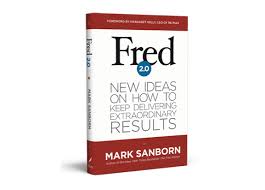
My wife and I recently took a trip to Oahu to visit our oldest son Scott, who will be graduating from the University of Hawaii in December. On the flight over I read Mark Sanborn’s “The Fred Factor” and on the return flight finished the sequel, “Fred 2.0.”
This is the final of three posts on Fred 2.0. For those looking to read Fred 2.0, I would suggest reading the original first. You really need to know the story behind Fred to appreciate what Sanborn delivers in 2.0.
Sanborn gives a pretty good summary of the book with the subtitle, “New Ideas On How To Keep Delivering Extraordinary Results.”
In a nutshell, the original Fred was Sanborn’s postman, and Fred went over and above to be more than just ordinary. Fred’s commitment to “going the extra mile,” was Sanborn’s inspiration for the first book.
In 2.0, Sanborn takes a deeper look at the four basic Fred principles:
- Everybody makes a difference.
- It is all built on relationship.
- You can add value to everything you do.
- You can reinvent yourself continually.
Through these three posts, I will give a key thought from each of the books’ 15 chapters.
WHAT IT YOU’RE A HEAD FRED?
Sanborn asks a great question when he says; “The real test of leadership is this: is anyone or anything better because of you?” He adds; “Leaders don’t just tell a better story; they make the story better.” He gives 10 things you need to do to be a head Fred.
- Lead by example
- Start with what’s right instead of what’s wrong
- Encourage people to try
- Ask for and share ideas about how to be like Fred
- Remove barriers and obstacles
- Be their champion
- Give them the freedom they need
- Teach the Fred principles consistently
- Recognize and reward
- Enjoy
BUILD A FRED TEAM
Sanborn makes a great point when he says “The only thing more powerful than a committed individual is a team of committed individuals.” Can you imagine what it would be like if your entire team had an attitude like Fred? He goes on to give four things that every team needs. Interesting to me that he points out that these four things don’t necessarily have to come from the team leader.
- Encouragement
- Examples
- Ideas
- Recognition
RAISE A FRED JR.
As leaders, there is nothing more important than the influence we have on our children. Sanborn gives us what he refers to as “Fred Values.”
- Teach your children well
- Don’t stop with your own children
- It always starts with a relationship
- Reward reading
- Start a conversation
- Explain and engage
- Don’t dumb it down, but keep it simple
- Recognize any effort
CREATE A COMMUNITY OF FREDS
As leaders, we desire to leave a legacy and influential leaders work hard to create a legacy that actually means something and impacts the community they live in. Sanborn encourages us to “Spread the spirit of Fred.”
- Take the lead
- Identify the objectives
- Find like-minded people
- Create interest
- Involve as many people as you can
- Regularly recognize and reward at a community level
BEST ALWAYS
Clearly the idea of Fred is to go over and above and to do it consistently. No better way to wrap up this book then to suggest the idea that we strive to provide our best always. Sanborn gives us his thoughts on how to do that.
- Slow down
- Get out
- Pay attention
- Do something
- Enjoy life
- Get better
I had the wonderful opportunity to be on a phone call earlier this week with Mark Sanborn and it was clear that he has become a product of his product. His desire to add value to his community is extremely evident, not just in his writing but in many things he is currently working on. He suggests three simple, yet powerful kinds of love that will allow you to do and be your best.
- LOVE WHAT YOU DO
- LOVE THE PEOPLE YOU SERVE WITH
- LOVE THE PEOPLE YOU SERVE
My question for the day, actually three questions; “Put the words “DO YOU” in front of the three statements above. How would you answer those questions?” If you don’t like the answers, you might just need some more FRED in your life!
***********************************************************************
Don’t miss a single post in this series from Building What Matters by subscribing at the top left of this page.
JOIN ME ON A FREE CALL INTRODUCING “THE 5 PILLARS OF INFLUENTIAL LEADERSHIP” ON MAY 23RD
Help support us by clicking here and Liking our facebook page
Barry Smith 5/22/13 photo courtesy of michaelhyatt.com © Building What Matters 2013
The post Fred 2.0 – Part 3: The Fred Community appeared first on BUILDING WHAT MATTERS.COM.
]]>The post Are You Thriving Or Surviving In Your ENVIRONMENT? appeared first on BUILDING WHAT MATTERS.COM.
]]>Charles “Tremendous” Jones said “You are the same today that you are going to be in five years from now except for two things: the people with whom you associate and the books you read.”
So a few simple questions … Who are you hanging around and what are you reading?
 Let’s be honest – we are a product of our environment. There is really no way around it. If you feel like there is more to life and you just can’t figure out what it is, it might be due to the fact that there is only so much visible in the environment you are currently in.
Now comes the hard part – you need to change your environment or you need to change your environment. In other words, you can be an agent of change within the environment you are in or you can find another environment.
In either case, the choice is yours. I just spent a week on the Island of Oahu and I saw all kinds of environments. Most of the Island is very conducive to the growth of vegetation. Lots of sun and lots of water. The result; lots of greenery.
 I also saw parts of the Island that were run down and it appeared that poverty was in full force. No bad on the state of Hawaii – most communities have representation of all these types of conditions. It’s just the way things are. But it was very clear that some were thriving and some were simply surviving.
So like I said, it’s all about our choices. Are you currently in an environment that provides INSPIRATION and SECURITY? Do you live in FEAR because of the EXPECTATION that FAILURE is not an option?
Does your work CULTURE allow for BALANCE between your business and personal life? How would you rate employee ENGAGEMENT and MOTIVATION? Is the concept of TEAMWORK helping to build MORALE?
Is COMPETITION so fierce within the organization that you have to RISK your QUALITY of work in search of SUCCESS and VICTORY? Are you RESPECTED for THINKING that CHANGE means OPPORTUNITY?
On May 23rd, at 8:00 pm ET, I will be hosting a free call introducing “The 5 Pillars Of Influential Leadership” Coaching Program.
This will be a content filled call that will not only teach you about influential leadership but also about leading an intentional and successful life. The words in capitals above are topics within Pillar #2 – Environment.
This is the second of five posts related to the 5 Pillars that will go out prior to the call on the 23rd.
For more information and to register for the free call CLICK HERE.
To see the first video on Pillar #1 – AWARENESS click here
***********************************************************************
Don’t miss a single post from Building What Matters by subscribing at the top left of this page.
Help support us by clicking here and Liking our facebook page
Barry Smith 5/13/13 photo by author © Building What Matters 2013
The post Are You Thriving Or Surviving In Your ENVIRONMENT? appeared first on BUILDING WHAT MATTERS.COM.
]]>The post To Sell Is Human – Part 3, What To Do appeared first on BUILDING WHAT MATTERS.COM.
]]> This is the final of of three posts taking a look at Dan Pink’s “To Sell Is Human.” Pink brings a new look at the art of selling and explains why although statistically one of nine Americans work in sales, so do the rest of us.
In section one, Pink discusses what he calls the “Rebirth of a Salesman.” In section two, discussed in this post, Pink provides a new twist to the ABC’s of selling which historically has stood for Always Be Closing, by discussing Attunement, Buoyancy and Clarity. In section three, he discusses the way we should be selling in today’s environment – The Pitch, How to Improvise and How to Serve.
Pink provides his three abilities that matter most.
PART THREE – WHAT TO DO
7. PITCH
Pink provides his six successors to the elevator pitch:
- 1. The one-word pitch – Simply put – pitching one word that provides the impact or curiosity for more.
- 2. The question pitch – Ronald Reagan campaign “Are you better off now than you were four years ago?”
- 3. The rhyming pitch – Johnnie Cochran Simpson trial “If it doesn’t fit; you must aquit.”
- 4. The subject line pitch – Make the subject line in your email about the reader and get a better open rate.
- 5. The twitter pitch – Yes the twitter pitch … anything you want to say in 140 characters or less.
- 6. The Pixar pitch – Once upon a time_____. Every day,_____. One day _____. Because of that, _____. Because of that, _____. Until finally _____.
8. IMPROVISE
Pink discusses the first principle of improvisation – hearing offers – depends on our ability to really hear what is being said. He states that “we must rethink our understanding of what it is to listen and what constitutes an offer.” He goes on to describe an exercise he took part in where one person would share some personal detail and the other had to wait fifteen seconds to respond. Cathy Salit, the original facilitator of the test put it this way “take in anything and everything someone says as an offer you can do something with.
I think the basic idea here is that when we do a better job listening, we will have more information to improvise in providing a response instead of simply reacting to what was said.
9. SERVE
Pink finishes off the book by comparing selling to serving. Pink suggests that improving another’s life and, in turn, improving the world is really what it means to serve.” Thus is you want to be a good seller, you better be a good server. He goes on to ask the simple question … “If the person you’re selling to agrees to buy, will his or her life improve? When your transaction is over, will the world be a better place than when you began?”
I have been guilty of using the phrase “upsell” in the past but Pink has a better word to use – “Upserve.” He defines it as “doing more for the other person that he expects or you initially intended, taking the extra steps that that transform a mundane interaction into a memorable experience.
So by now you should realize that no matter what you do you are probably in sales. Now that you know, how do you plan on Upserving your client or customer?
Next week we will start a new series on “The Impact Equation” by Chris Brogan and Julien Smith
To Read Part One of “To Sell Is Human” click here
To Read Part Two of “To Sell Is Human” click here
Find out more about Daniel Pink and “To Sell Is Human” at www.danpink.com
***********************************************************************
Don’t miss a single post in this series from Building What Matters by subscribing at the top left of this page.
Help support us by clicking here and Liking our facebook page
Barry Smith www.buildingwhatmatters.com 3/13/13 photo courtesy of Amazon
The post To Sell Is Human – Part 3, What To Do appeared first on BUILDING WHAT MATTERS.COM.
]]>The post Self-Leadership – Why We Need To Always Wear This Hat. appeared first on BUILDING WHAT MATTERS.COM.
]]> I was recently involved in a conversation with my coaching mentor on the topic of self leadership. The conversation was related to the coaching process but it struck me that the practice of self-leadership is really something that we need to incorporate into all aspects of our lives.
I commented that I had told one of my mastermind groups that I would occasionally “put on my coaches hat” during our meetings. The more I study the art of coaching, the more I realize that coaching is a process that can help us in all forms of communication, whether structured or unstructured.
The backbone of the coaching process is that the answers to the questions already exist within the individual, they simply are not asking the right questions. So I got to thinking “why can’t we steer our everyday conversations towards asking the right questions?”
Here are 5 keywords to consider when having everyday conversations:
1. AWARENESS
How much are we aware of what is really being said in any conversation that we have? I know I am often guilty of thinking more about my response than what is actually being spoken to me. To be really aware in the conversation, you need to give total focus to the words being spoken to you and not on the words you are planning to respond with.
2. ENGAGEMENT
Another conversational trap … are you really engaged with the person you are speaking with (notice I said with and not to)? Making the conversation about the other person is the best way to become and remain engaged. The minute our own thoughts and agenda take over we have disengaged.
3. NON-JUDGEMENTAL
The other person has for whatever reason decided to share and confide in you. Typically this is not done to promote some type of judgement in return. Many times the words that are spoken are simply an effort to be heard. No solution or instruction is needed, simply acknowledgement and affirmation.
4. RESPONSIBILITY
I believe that we are all here to serve a greater purpose. We have a responsibility to each other to be part of the solution and not part of the problem. When actively participating in a conversation, our responsibility is to listen, not speak. People, by nature, want to be heard. They want to be validated and have their feelings and thoughts affirmed. Don’t feel the need to fix every problem that comes across your table. Remember the first principle of coaching … the answer is within the individual.
5. PERMISSION
If you do have something to say that you feel may be constructive, ask permission to share it. What’s wrong with simply asking “Can I tell you what I think?” or “Would you like to know how I feel about it?” Sometimes the answer might be “No, I just needed to get that out of my system.” Making the conversation about the other person can result in no need to say anything, simply listen and hear what is being said.
Self Leadership is a necessary tool in coaching. But it’s more than that. It is a tool that can be used in everything we do that involves communication.
The next time you get into a conversation, lead yourself to a point in which the question you ask is “How can I help the person I am talking to answer their own question?” This is the way we develop others to become more self confident and independent. That is true influence!
***********************************************************************
Don’t miss a single post from Building What Matters by subscribing at the top left of this page.
Help support us by clicking here and Liking our facebook page
Barry Smith www.buildingwhatmatters.com 10/26/12 photo by author
The post Self-Leadership – Why We Need To Always Wear This Hat. appeared first on BUILDING WHAT MATTERS.COM.
]]>The post “Sorry, I Didn’t Hear You” – The Art Of Active Listening appeared first on BUILDING WHAT MATTERS.COM.
]]> I am sure that you have heard the phrase “selective hearing” used to describe the lack of listening. Big laughs, haha, most of the time I hear this it is used to describe men not listening to their wives. Question for you here … which is more difficult, active listening or selective hearing?
Now that I have thoroughly confused everyone, I should probably explain to difference, the difference from my viewpoint anyway. I would describe “selective hearing” as the ability to block out certain sounds and yes, this can even include people so that you hear only that (or those) which you choose to hear. On the other hand, “active listening” enables the listener to take in all the information and pull out and process the relevant pieces.
I am writing this post as I sit in a hotel lobby and I have observed many very interesting interactions between all the people sharing this space. Four men standing around a woman doing something on her laptop computer. I am not sure what is really going on here, but the men are clearly listening.
A line at the coffee stand. One person behind the counter is like a machine … take the order, fill it, next! The other person, stopping to talk to the customers. I wonder which one of these two likes their job more and I wonder which one will produce higher customer satisfaction … Just wonderin’.
He are 5 things to consider when deciding between active listening and selective hearing
1. AWARENESS
To successfully do either, your level of awareness needs to be dialed in. The difference, your awareness will help you eliminate something in one process and add in the other. Do you want to add or subtract when given the opportunity?
2. DEVELOPING OTHERS
I can pretty much tell you that when we practice selective hearing, there is little chance for any development. You may eliminate something that could cause damage, but as far as improving, not going to happen … ya know – that old thing called “Return on Investment.”
3. FOCUS
If you want results through active listening, you better be prepared to focus. Clear you own mind of all the external distractions and zero in on the subject at hand. Active listening takes work, but the rewards can be unbelievable.
4. INSPIRATION
When was the last time you inspired someone by not doing or saying something. Everyone likes to be inspired once and a while. To really know what is going to make a person tick, you better be very in tune with where they are at. Once you know what it is, you can provide inspiration.
5. GROWTH
We all need to experience growth is some way in our lives if we want to continue to improve who we are. Part of that process is helping others. The best way we can do that is by listening to where they are at. Encourage them, support them and listen actively so they are heard.
At the end of the day, people want to be heard. The only way that will happen is if someone else is listening. You need to make the decision if you are going to selectively hear or actively listen.
Look at it this way … If you want to be heard the next time you have something to say, you might want to stop now and give somebody else the same opportunity. They might just have something worth hearing.
***********************************************************************
Don’t miss a single post from Building What Matters by subscribing at the top left of this page.
Help support us by clicking here and Liking our facebook page
Barry Smith www.buildingwhatmatters.com 10/18/12 photo by author
The post “Sorry, I Didn’t Hear You” – The Art Of Active Listening appeared first on BUILDING WHAT MATTERS.COM.
]]>The post 4 Reasons Kids Ask Better Questions Than Grown-Ups appeared first on BUILDING WHAT MATTERS.COM.
]]> I remember when my boys were small and like most kids asked lots of questions. Now you don’t have to have had your own kids to have witnessed this. Maybe a niece or nephew, a siblings child or even a kid down the street. They all ask questions.
My boys are now both in their twenties and attending college but I remember when they were in their early “inquisitive” years and thinking “why do they ask so many questions.” The obvious answer is because they wanted the answer, they wanted to learn. There were no dumb questions and nothing stopped them from asking anything that happened to pop into their mind.
Asking questions is how we learn, so why is it that as we get older, we find ourselves asking fewer and fewer questions? It can’t be because we know it all, although we all know that guy who thinks he does. Are we afraid that we might ask that “dumb” question and embarrass ourselves? Maybe we see it as a sign of weakness. Besides, we can find out just about anything on google, right?
Here are four reasons that kids ask better questions than adults and generally get better answers:
1. CURIOSITY
Don’t you ever find yourself saying “I wonder why …..” Of course you do. We are all curious about things everyday. Kids ask the question “why does it rain?” Adults will state it this way, “why does it have to rain?” See the difference? Kids want to understand and adults want an explanation. We have the need to justify the things that are going on instead of just accepting them.
2. PROBLEM SOLVING
Certainly most of the problems we deal with as adults are different that when we were kids. Kids want to know how to fix their broken toy or make their bike work again. “Daddy, can you fix it?” “Yes son, Daddy can fix it.” Problem solved! Nothing frustrates me more than another adult coming to me with a problem with no suggestion as to how to solve it. We are adults, we are suppose to be the problem solvers.
3. RESPONSIBILITY
Hopefully at an early age, you started to teach your kids about responsibility (you can do this even if you don’t have your own kids) so that they would understand what it means to help out and be a productive part of the household. Kids ask lots of questions about responsibility – most start with “why”. As adults, we should know the “why” and if you are being asked why, then maybe you have not communicated clearly enough to that person what their responsibilities are.
4. RELATIONSHIPS
If you value your relationships, you better be asking questions. Kids ask questions all the time about the other people they interact with. “Why is Jimmy so mean?”, “When can Emma come over and play?” They want to know why people act the way they do and when they can spend time with them. As adults shouldn’t we be asking similar questions? I think we have a tendency to assume what people are feeling and whether or not they even like spending time with us.
The point of all this … kids do not suffer from the self-limiting beliefs or dominating thoughts that adults do and therefore ask any and all the questions that allow them to communicate how they really feel. Adults, most of the time, think about how others will perceive the question before they ask it.
Do yourself a favor and quit worrying about what other people will think about what you have to say, be respectful and positive but if you have a question, ask it.
You don’t know what you don’t know and until you find out what you don’t know, you won’t learn anything.
***********************************************************************
Don’t miss a single post from Building What Matters by subscribing at the top left of this page.
Help support us by clicking here and Liking our facebook page
Barry Smith www.buildingwhatmatters.com 10/16/12 photo by author
The post 4 Reasons Kids Ask Better Questions Than Grown-Ups appeared first on BUILDING WHAT MATTERS.COM.
]]>The post “Practice Makes Perfect”, Or Does It? appeared first on BUILDING WHAT MATTERS.COM.
]]> How many times have you heard the expression “practice makes perfect”? Run out of fingers yet? We have all heard it countless times and for the most part believe it to be true. I am not so sure anymore. I can’t argue that the more we work on something, the more proficient we get, and the better we will probably become in doing it.
The part of this that has me questioning the concept is that no matter how good we get at something, what we do with it is really what matters. You may be a great writer or speaker. You might know everything there is about computer hardware. You might even be the best cook there ever was, except for my grandmother of course. But what are you doing with the skills you have been blessed with?
Back to the idea of practice … there is no question that repetition will result in proficiency. But what are you doing, why are you doing it and more importantly, how will you use it to benefit others?
I have a set of golf clubs and I like to golf, but don’t really have the time or money to do it as often as I would like. So how important is it that I practice the game? I don’t golf to win anything. If you have ever golfed with me, you would agree. I like to golf because I enjoy being outside and having a good time with my friends. In this case, practicing has no relevance on my objective.
Alright, where am I going with this … if you are going to practice at something, be clear on your objectives. We all have a story to tell – our story. So why is this important because our story is unique and our experiences can be used to benefit others.
So here it comes … your life is really nothing more than practice. We will never reach perfection. There is only one guy that was perfect and He left His legacy by writing a Book. The rest of us can merely try and practice what we believe in and try and get better at living so that others can be better for what they have learned from us.
Here are a few thoughts as to why it is important to practice life:
1. INSPIRATION
I like to practice things that inspire people. If someone sees something I am doing and how much I enjoy it, maybe it will inspire them to do the same. Not necessarily the same thing, but something that gives them the same joy and fulfillment that I get from what I am doing. Everyone is so busy today, I think sometimes they forget about living. I used to be that guy, but not anymore!
2. PURPOSE
I like practicing things that add to reaching my potential and fulfilling my purpose. Chasing a dream, if you will. I want my words, written or spoken to make a difference in the lives of those around me. So I practice and then I practice some more. I’ll admit, sometimes practice is not fun and it does require work. But hey, practice makes perfect, right?
3. LEGACY
This is probably the biggest reason I practice. I want to make a difference. And not only today, tomorrow or next week. I want to make a difference after I am gone. How do I do that? You guessed it – practice. I practice being a better husband, a better father and a better person all the way around. If you have followed me for long, you know I am a sports fanatic. Seems fitting that those athletes that have left behind a legacy on the field, continued to practice right up until their final game.
I guess the point of my story is this … we practice living every day but are we getting better at it? We all have dreams and the people that are close to us have dreams. If we have to practice anyway, why not practice something that will make a difference.
***********************************************************************
Don’t miss a single post from Building What Matters by subscribing at the top left of this page.
Help support us by clicking here and Liking our facebook page
Barry Smith www.buildingwhatmatters.com 10/15/12 photo by author
The post “Practice Makes Perfect”, Or Does It? appeared first on BUILDING WHAT MATTERS.COM.
]]>The post Performance: What Happens When The A-Team Is Not Available? appeared first on BUILDING WHAT MATTERS.COM.
]]> When faced with an important or difficult task, we typically call on the best of our best, those whose performance carries a track record of success. We have all used the phrase “A-Team” to describe this group. But what happens when the A-Team is not available?
If you didn’t see it, the blown call at the end of last night’s Monday Night Football game was apparently the final straw. I suppose we can try and look at the glass half full and recognize that this may have been what was needed to end the contract battle between the NFL and the referees and get the A-Team back on the field.
The mistakes and errors of the “replacement refs” had reached the point where the NFL had to make a decision. Continue on with an inferior product or come to a resolution with the seasoned referees. The B-Team, in over their heads, simply did not have the experience to do the job. They did not have respect or credibility to accomplish the mission.
Several thoughts crossed my mind related to what happens when the A-Team is not available and what we can do to make the best out of what we have to work with. Here are 4 things to consider when dealing with the second or third choice for the task at hand:
1. Authority
If your team knows that they are not the first choice, their natural tendency will be to believe that expectations are not as high. As a leader, we need to empower anyone and everyone on our team. Give them the authority to make decisions and hold them accountable for them. Ownership of the decisions will facilitate more effort and more success.
2. Credibility
Just because they are not the first choice does not mean that they are not capable to do the job. Make it know to everyone that you believe in the team to accomplish the task successfully. Credibility will breed confidence and engagement. When others know that you believe in them, they will believe in themselves.
3. Respect
With respect comes trust and trust is a huge part of letting a team operate successfully as a cohesive unit. If your team feels like they are being micro-managed, they will be less likely to make decisions and will most likely look to you or someone else to decide for them. The original idea was to have them handle the project, so let them.
4. Recognition
Any chance for this team to become an A-Team will come from recognizing their success. Regardless of the process, we must recognize the success of the team. This may not be easy and in all honesty, some help may be required along the way. The bottom line is that they will either fail or succeed. If the success is not recognized then you will eventually be faced with the same challenge again.
The replacement referees were treated exactly like that – replacements. If they were viewed a little different, I wonder if there would have been a different outcome. So what do we do when our only choice is the B-Team? Treat them like the A-Team and pretty soon they will be.
***********************************************************************
Don’t miss a single post from Building What Matters by subscribing at the top left of this page.
Help support us by clicking here and Liking our facebook page
Barry Smith www.buildingwhatmatters.com 10/2/12 photo by author
The post Performance: What Happens When The A-Team Is Not Available? appeared first on BUILDING WHAT MATTERS.COM.
]]>The post Servant Leadership – Why Is It So Hard To Find These Leaders? appeared first on BUILDING WHAT MATTERS.COM.
]]> Name someone you would consider a servant leader. I’m waiting! In today’s fast paced society that is all about the bottom line. Servant leadership is a rarely seen, let alone understood. There is no time to invest in people, we are too busy investing in new technological advances or aggressive marketing campaigns.
It appears we have forgotten that our people are still our greatest asset and at the same time, our greatest liability. Why are we not investing the time and resources to protect and develop our people?
Tom Osborne, Hall of Fame coach and currently athletic director at the University of Nebraska recently announced that he would retire at the end of the year. Although most will recognize Osborne for his accomplishments on the field, he would most likely tell you that his leadership accomplishments off the field are what truly define his legacy.
In 1991, Tom and his wife Nancy founded the TeamMates program to encourage and help school-aged youth to graduate from high school and pursue post-secondary education. A true pioneer in servant leadership, Osborne has always put the players before the game. In his book “Secrets To Becoming A Leader“, Osborne gives us eight characteristics of a servant leader:
1. The leader is willing to sacrifice self-interest for the good of the group.
Servant leaders will always put others before their own interests. The higher they go, the more they will give up.
2. The leader is willing to listen empathetically to understand followers.
Servant leaders will listen with compassion. They will make their decisions based on the specific needs of the person.
3. The leader is a role model – exemplifies qualities that followers admire.
Servant leaders always lead by example. They strive to be a picture of what they want others to become.
4. The leader is able to communicate and inspire others towards a shared vision.
Servant leaders not only communicate, they connect. They connect on a level that will facilitate development and engagement.
5. The leader’s actions are rooted in principles and values rather than in external rewards.
Servant leaders consistently exhibit high moral and ethical standards. Trust and respect are two major factors in their success.
6. The leader encourages growth and increased responsibility in followers.
Servant leaders recognize that they need to grow and empower others and develop leaders that will do the same in the future.
7. The leader is dedicated to having his or her organization serve others and be a constructive force in society.
Servant leaders give back to their community on a consistent basis. They recognize and appreciate what they have been blessed with and are willing to share their success with others.
8. The leader has exceptional awareness and vision – he or she can anticipate future trends and events.
Servant leaders look at the big picture and develop those around them so that their team is able to continue without them and continue the vision that was put in place.
It is clearly a challenging list that Coach Osborne had provided. As a leader, you have to ask yourself “Am I managing a business or am I developing a team?” Tom Osborne will leave behind one of the greatest coaching careers in college football history. More importantly, he leaves behind a legacy of countless athletes whose lives he influenced in a positive way. I once heard it said that:
“People won’t remember what you said and they won’t remember what you did. What they will remember is how you made them feel.”
What significant act will you do today that will influence someone’s life that will be remembered tomorrow?
***********************************************************************
Don’t miss a single post from Building What Matters by subscribing at the top left of this page.
Help support us by clicking here and Liking our facebook page
Barry Smith www.buildingwhatmatters.com 10/1/12 photo by author
The post Servant Leadership – Why Is It So Hard To Find These Leaders? appeared first on BUILDING WHAT MATTERS.COM.
]]>The post Cutting Edge Or Bleeding Edge? Leadership Of The Future appeared first on BUILDING WHAT MATTERS.COM.
]]> I see a new face on leadership developing and not just in specific industries. As generation Y begins their assimilation into the workforce, the relational side of the business world is changing. We have all heard the expression cutting edge used to describe new, possibly outside the box, thinking related to technology and education.
Leadership is no different. Cutting edge thinking on leadership is going to look completely different than the days of the Iacocca, Lombardi and Churchill. Today’s leaders like Facebook’s Mark Zuckerberg and Google’s Larry Page are today’s cutting edge. They have transformed the leadership style that will take us into the future.
Let’s face it, the work force is changing and honestly, they are more concerned with quality of life than they are with income. This will require a new way of thinking related to the employee pool available to fill today’s office space?
Here are 4 ways to make sure you stay on the cutting edge as you lead your team forward:
1. Accessibility
Social media and the power of electronic communication have completely change the landscape of the way we communicate. Communication is “real time” in almost every sense of the word. I barely even use the fax machine anymore. Print, scan, email – Done. Texting, freeconferencing.com, GoToWebinar.com. These are all tools that make it simple to transfer information and hold meetings without the need to even show up at the office.
2. Branding
Twenty years ago your brand was the name on your label. Today your brand basically represents everything you stand for. Some would argue that your brand is the most important thing there is related to you or your business. A blow to your brand me be enough to put you out of business. Protecting it is something that businesses focus on daily with great attention and effort.
3. Credibility
Nothing escapes the media today. Not only do we hear about everything in real time but everything really means everything. There are no secrets anymore. Inevitably, the truth will come out. Regardless of everything else that might challenge you on a daily basis, your credibility will either make you or break you. The cutting edge leader is concerned with the credibility of everyone on the team.
4. Engagement
If you want to be successful and advance in your industry, you better do whatever it takes to have the engagement of your workforce. Grass being greener on the other side of the fence has never been more prevalent than it is today. Workers want the workplace to be fun and challenging. I think the most important way to keep workers engaged is to mix it up a little. We have the tendency to become complacent within the world we live in and the minute that happens, we lose the fire that was once had and we become preoccupied with what something else might look like.
The bottom line is that the new leader needs to be a continual thinker. Not that yesteryear’s leaders were not thinkers, but today the need to think outside the box is needed more than ever. Everyone know’s what the other guy is doing and if you don’t think of that next great idea, someone else will and there goes the neighborhood.
If you want to be cutting edge today, you better stay ahead of the curve. If things have been pretty much the same in your workplace the last few years, what makes you think anything will change in the next few?
The bleeding edge leader says “if it’s not broke, don’t fix it.” The cutting edge leader says “I better improve it before it breaks.” What will you do today to change the way you think?
***********************************************************************
Don’t miss a single post from Building What Matters by subscribing at the top left of this page.
Help support us by clicking here and Liking our facebook page
Barry Smith www.buildingwhatmatters.com 9/17/12 photo by author
The post Cutting Edge Or Bleeding Edge? Leadership Of The Future appeared first on BUILDING WHAT MATTERS.COM.
]]>