The post What If Plan “B” Could Become Plan “Better”? appeared first on BUILDING WHAT MATTERS.COM.
]]>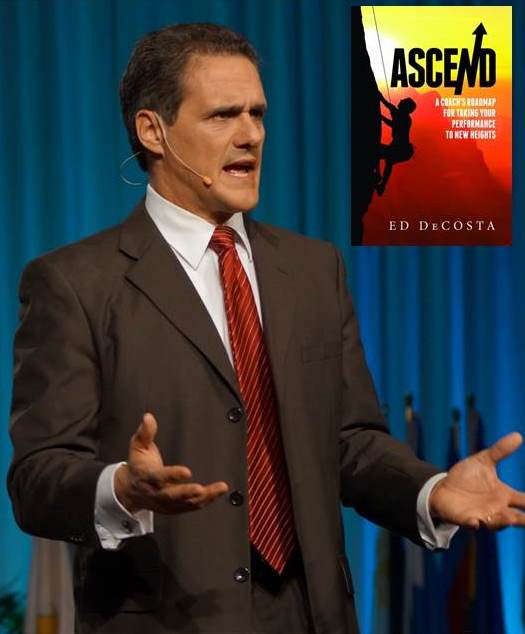 Last week on our Platform Builders Mastermind call. we spotlighted one of the Maxwell Team mentors, Ed DeCosta, who recently release his new book ASCEND: A Coach’s Roadmap For Taking Your Performance To New Heights.
If you want some “no-nonsense, get results” strategies for reaching new levels of achievement, you will find it in ASCEND. But it’s not the book that inspired this post, it was something Ed said on the call.
Ed made the statement that “Sometimes Plan B needs to be Plan Better.” [Tweet This]
I don’t think Ed even realized the genius in the statement when he made it, but genius it is. That comment changed my entire thought process on the idea of a “backup plan.” You see, that’s what I’ve always thought a Plan B was – the option when the desired one doesn’t work. Not any more!
If you have been settling for Plan B, Knock it off!
Maybe you are a lot smarter than me and have already figured this out, but for me, Plan B has always been the backup plan just in case Plan A didn’t work out. Right? Look, being smarter than me is not any kind of earth shattering accomplishment but changing your perspective on this just might be. If you have conceded that Plan B is always less desirable than Plan A, Knock it off!
What if we looked at Plan A failing not as a failure, but as an opportunity to learn and seize the opportunity to make Plan B – Plan Better. What if Plan Better doesn’t work? Well, you can call it whatever you want, but by learning lessons instead of conceding defeat, we can continue a path towards success.
Start learning lessons instead of conceding defeat!
Full transparency here, I just came into this awareness less than a week ago and although I have not had a chance to put it to the test yet, I do have some big “Plan A” activities that will be put to the test this week and this I know – if I have to go to the backup plan, it will be Plan Better.
I think our culture has conditioned us to believe that acceptance of thinking that our results are “good enough”, “better than than they use to be”, or “at least different than they were before” are reasonable outcomes. Nonsense!
Start setting yourself up for success!
The whole idea of setting goals and stretching outside our comfort zone are to produce what we have not achieved before. Why do we settle for less than we desired? Why is better OK when best is what we are shooting for? Why do words live “CAN’T”, “NEVER”, and “ALMOST” remain in our daily vocabulary?
I think it’s because we have lowered our standards. And by doing so, we have lowered our own self-image. Ed and the other Maxwell mentors all adhere to the belief that we will never out perform our own self-image.
When Plan A doesn’t work, we immediately jump to the next best choice instead of creating a BETTER one. Peter Drucker had some thoughts on this when he said:
“The best way to predict the future is to create it.” [Tweet This]
TODAY’S QUESTION: Are you following a downward progression in your decision making process that will ultimately net you less of a result than you originally desired?
TODAY’S CHALLENGE: Learn from the Plan A’s that didn’t work out and set yourself up for success by making Plan B – Plan Better!
***********************************************************************
===> JOIN THE “LEADERSHIP BY INVITATION” LAUNCH TEAM <===
Click here to get a copy of my Kindle Book “The Manifesto Of An Influential Leader”
Don’t miss a single post from Building What Matters by subscribing at the top left of this page.
Help support us by clicking here and Liking our facebook page
Barry Smith 4/14/14 photo by author © Building What Matters 2014
The post What If Plan “B” Could Become Plan “Better”? appeared first on BUILDING WHAT MATTERS.COM.
]]>The post Effectiveness Is A Path To Results – Not Productivity appeared first on BUILDING WHAT MATTERS.COM.
]]> This was one of those blog titles that I plugged in a few weeks ago because I thought it would be a good topic for one of my upcoming posts. As I opened up wordpress to start in on the post I had to laugh. This is a picture of my desk at the exact moment I logged in. Appropriate subject? Ya Think!
I have been very transparent about my “comfort zone” when it comes to my work space. Most of my life, I have had a million things going on, finishing very few of them in a timely manner, but feeling achievement by getting lots done. Right? I guess it’s a matter of perspective. Checking 30 items off your list in one day may appear to be a huge success. But if you had three hundred items when you started the day, maybe not so much.
Being Busy And Productive Is Not Enough
I have learned a lot about the difference between being busy and being productive over the past few years and it has helped. In my defense, I have been working diligently on getting the draft done for my new book, Leadership by Invitation, and earlier today, I was pulling quotes from several different sources (as you can tell) but my desk still ends up like this at least once a week. I guess old habits are hard to break.
For the most part, I have turned being busy into being productive, but with that success (if you can call it that) I have come to realize that there is a new level in achievement. That comes form moving from productivity to effectiveness. Now you might think that these two words mean relatively the same thing. Well, not in my world. And here is why.
Success Comes When We Move From Productive To Effective
As I have focused in on living out my purpose – “building what matters – people!” – I have realized that we can be very productive, while at the same time not be effective at all. Huh? In my book, I talk about strategies and vision that produce results. These results are based upon a specific purpose. Do you see where I’m going with this?
I can be very productive, take out the trash, wood on the fire, shovel the snow off the driveway and so on. All of these are productive, but really don’t connect back to my purpose. Based on my experience, many people out there are lost somewhere in this state of confusion. They get busy with a list, over time that list grows (with many items serving other people’s purpose rather than their own) and they lose sight of what they really want to accomplish.
So what can bring clarity to all of this and help you maintain focus on fulfilling your purpose? In a few months you will be able to read the long version when the book comes out, but here is a snapshot for you that might help you get headed in the right direction.
How To RSVP Your Way To Success
Be clear on your VISION. What do you really want? If you are in a leadership position, and you are, what vision are you casting to those around you? Are you even casting a vision?
Once you identify that vision, you need to determine your role in achieving it. That’s right, your purpose. Identifying and understanding your PURPOSE is what brings additional clarity to the big picture and helps you to stay on task. (Tweet This / Post to LinkedIn)
Now that you have a vision and understand your purpose in fulfilling that vision, you need a strategy to achieve that vision and fulfill your purpose. The right STRATEGY is what keeps your work not just productive, but effective.
Now that the strategy is in place and you are casting your vision and fulfilling your purpose, take a look at the RESULTS you are getting. If they are not what you identified within your strategy, make the necessary course corrections and stay at it.
There is a quick look at what’s coming up in much more detail, but I believe that even taking a little time right now to see how your current condition or circumstance fits into this framework, might just make a difference for you.
The Question: Are you being productive or effective?
The Challenge: Take a look at your activities and find something you are doing in which you can move from being not just productive, but effective.
***********************************************************************
Click here to get a copy of my Kindle Book “The Manifesto Of An Influential Leader”
Join me on the STOP CHALLENGE CHOOSE 12 week health transformation
Don’t miss a single post from Building What Matters by subscribing at the top left of this page.
Help support us by clicking here and Liking our facebook page
Barry Smith 2/10/14 photo by author © Building What Matters 2014
The post Effectiveness Is A Path To Results – Not Productivity appeared first on BUILDING WHAT MATTERS.COM.
]]>The post The Men Who Built America – Thomas Edison appeared first on BUILDING WHAT MATTERS.COM.
]]> Well here we are, a new year and a new plan, right? I know this – the Platform Builders have some new plans for 2014 and this year we are starting our Mastermind study with a little twist.
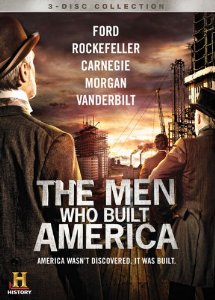
This month we are masterminding through The Men Who Built America, a DVD produced by the History Channel along with Think and Grow Rich by Napoleon Hill to compliment the mini-series built around some of the great early leaders and entrepreneurs that help build the United States into a world power at the end of the 19th Century.
If you don’t know the back story on how these two connect together, Napoleon Hill was commissioned by Andrew Carnegie to study the most successful people and find out what resulted in their success. The men who built America were among many of the 20,000+ that Hill interviewed over the twenty year period it took him to write the book.
This month we are going take a look at Andrew Carnegie, Thomas Edison, JP Morgan and Henry Ford. In this, the second of four posts, we will take a look at Thomas Edison.
Edison, the holder of 1,093 U.S. patents, is most recognized as the inventor of the light bulb. Also credited for the phonograph and motion-picture camera, Edison was much more than an inventor. His inventions set the world on the pathway to modern electricity and global communications.
So how did a man with only three months of formal education and whose hearing was impaired at an early age become “one of the men who built America?”
You Don’t Need Ears To Hear!
THOUGHTS ARE THINGS
“The value of an idea lies in the using of it.” – Thomas Edison
What if Edison never imagined his thoughts and ideas as things. Ideas are great, but as Hill shows in the story of how Edwin C. Barnes partnered with Edison, you have to treat them as such. An idea will not become reality until it is brought to life by the hand of the one who conceived it. How many ideas do you have that never come to life? Have you considered the power you hold within you to manifest your thoughts into reality? Here lies the great opportunity to ask; How can I?”
So what if nobody ever did it before!
FAITH
“Be courageous. I have seen many depressions in business. Always America has emerged from these stronger and more prosperous. Be brave as your fathers before you. Have faith! Go forward!” – Thomas Edison
Hill provides a very interesting definition of faith. “A state of mind which may be induced, or created, by affirmation or repeated instructions to the subconscious mind, through the principle of autosuggestion.” Edison simply refused to believe that something could not be done. He had the faith that with enough perseverance and effort, anything could be accomplished – even when “common sense” might suggest otherwise.
Mach 3 with your hair on fire!
THE BRAIN
“It is astonishing what an effort it seems to be for many people to put their brains definitely and systematically to work.” – Thomas Edison
The brain continues to be one of the most studied and least understood parts of the human body. But even in Hill’s time, it was accepted that the brain was a powerful machine that could actually create it’s own energy. Edison was continually pushing his thinking to new levels. He constantly tapped his own awareness of what he knew and filled in the blanks with what he pulled from others. Viewed as a curse by many, part of Edison’s genius is that his mind never quit working. Turning though into action, over and over, produced more inventions than anyone else in history.
Most equate the success of these men to industry and the technological advances of their time. I think the simple truth is that these men just thought better than everyone else. Edison makes a simple but powerful statement when he said; “Everything comes to him who hustles while he waits.” (Tweet This / Share on Facebook / Post to LinkedIn) The men who build America were always hustling – at least mentally.
This will be a great mastermind study. None of these men were angels, but one thing about them – they never let anyone else limit what they could do.
Your brain is constantly producing new thoughts. So I have a few question for you to ponder today. What are you doing with your ideas? How many times do you thing the words “that’s never been done before” described something that had just been done?
***********************************************************************
Click here to get a copy of my Kindle Book “The Manifesto Of An Influential Leader”
Don’t miss a single post from Building What Matters by subscribing at the top left of this page.
Help support us by clicking here and Liking our facebook page
Barry Smith 1/15/14 photo courtesy of Amazon © Building What Matters 2014
The post The Men Who Built America – Thomas Edison appeared first on BUILDING WHAT MATTERS.COM.
]]>The post The Collaboration Economy – Leadership On A Global Scale appeared first on BUILDING WHAT MATTERS.COM.
]]>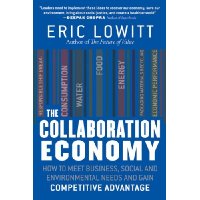 I recently finished “The Collaboration Economy – How to meet Business, Social, and Environmental Needs and Gain Competitive Advantage” by Eric Lowitt. It focuses on how some of the major global players in business and industry have taken it upon themselves to LEAD the way into more environmentally friendly business practices.
Yes, the environmentally conscientious reader will probably connect on a higher level to the content but there are some significant leadership lessons to be found in this vision focused framework by Lowitt.
He describes the efforts being done on a global level by some of today’s industry leaders such as GE and Coca-Cola, to not only be more responsible in the way we are conducting our business but more importantly, how we can collaborate together to accomplish missions that can’t be achieved on an individual basis. In short, a new world economy based on collaboration.
Lowitt breaks the book down into three sections:
PART 1 – WELCOME TO THE COLLABORATION ECONOMY
Basically setting the stage, Lowitt describes the difference between “The Waste Economy,” where we are now and “The Collaboration Economy,” where we better be headed.
I won’t run you through the statistics, but basically we are on a short ride to running out of the natural resources that sustain us on a daily basis. Although focused on environmental issues, I would not consider this a “tree hugger” (for sake of a better term) book.
The real focus is on the collaboration between world business leaders that can lead to changes that simply could not be done by the individual corporations. This is a clear statement, backed up with logic and fact, that we is better than me.
PART 2 – BRINGING THE COLLABORATION ECONOMY TO LIFE AND SCALE
Part two is a series of chapters focused on specific topics such as energy, water and food, to name a few. Lowitt describes in detail, how industry leaders are partnering with competitors and leveraging suppliers to join the effort to make needed global changes.
Some may read into the specifics of the topic, but what really resonated to me were the leadership skills that were represented in the changes that have begun. Think about it – many of the examples that Lowitt explores requires business leaders to take tremendous risks, to their own reputation and position as well as to the bottom line of the business.
Significant financial investments had to be made in order to be the front-runners in these risky decisions. Many times, I found myself wondering what went through the minds of these leaders as they put the financial stability of their corporations on the line to do the right thing. Some big leadership lessons throughout!
Although I live in Oregon, a progressive state in their recycling and conservation efforts, I have never given much thought to what goes on behind the scenes. Yes we have come a long way in the last 40 years, but there is still a long way to go.
PART 3 – PUTTING IT ALL TOGETHER TO MOVE FORWARD
The final section really brings home the leadership concepts required to pull this major endeavor off.
Collaborative Leaders Do The Following:
- Think beyond their tenure
- Focus on collective and not individual success
- Are willing to accept someone else’s idea as better than theirs
- Are willing to make sacrifices for the good of the whole
- Understand their position is a privilege and not a right, and act accordingly
- Commit to a true purpose
- Promote and rely on partnerships
- Act with integrity, while guided by an ethical compass
- Have a “How Can We” mindset
Lowitt wraps up the book with this thought:
“Let’s not seek to sustain our current socioeconomic situation. Instead, let’s work together to create a new era of prosperity that benefits our lives today while enhancing future generations’ ability to meet their needs in perpetuity.”
I realize this is a lot to think about, but the reality is that if our generation doesn’t think about it, time will run out and none of us want our kids or their kids to end up in a world that can’t sustain itself.
My question for you today is this; “Are you willing to give today what is required to preserve tomorrow?” We can all do something – What will you do?
***********************************************************************
Don’t miss a single post from Building What Matters by subscribing at the top left of this page.
Help support us by clicking here and Liking our facebook page
Barry Smith 8/28/13 photo courtesy of Amazon © Building What Matters 2013
The post The Collaboration Economy – Leadership On A Global Scale appeared first on BUILDING WHAT MATTERS.COM.
]]>The post The Mentor Leader – Part 2: Marks, Moments and Model appeared first on BUILDING WHAT MATTERS.COM.
]]>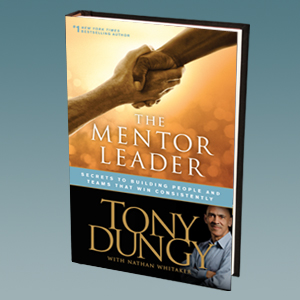 This is the second of three posts discussing “The Mentor Leader – Secrets To Building People And Teams That Win Consistently” by Tony Dungy. I will admit, I have been a fan of Coach Dungy since long before his first book “Quiet Strength” was published. I have been so impressed not by what Coach Dungy has done but by who he is, and more importantly how he has impacted so many lives around him.
His third book, The Mentor Leader, unlocks the concept of leadership much more than Quiet Strength or his second book, Uncommon, had done previously. Make no mistake, they are all worth the read, but The Mentor Leader brings it all home.
The subtitle, secrets to building people and teams that win consistently. says it all. Mentor Leadership is about building people and when you do that, success is sure to follow.
I will break the book’s nine chapters into three posts. The first will discuss the Mandate, Mind-set and Maturity of a mentor leader. The second will cover the Marks, Moments and Model of a mentor leader and the final will address the Means, Methods and Measure or a mentor leader.
THE MARKS OF A MENTOR LEADER: CHARACTERISTICS THAT MATTER
“Being approachable and available is necessary for effective leadership.”
- Mentor Leaders are high in character. They know who they are and what they stand for.
- Mentor Leaders exhibit trustworthy traits such as competence, integrity and self-confidence.
- Mentor Leaders demonstrate leadership attributes such as courage, vision, mission and faith.
- Mentor Leaders have strong relational skills such as accountability, shepherding and loyalty.
The marks of a mentor leader define much more than what that leader does. They define who that person is.
THE MOMENTS OF A MENTOR LEADER, INFLUENCE AND IMPACT
“Regardless of our situations in life, we are always role models for someone – always.”
- Mentor Leaders know they can only change one life at a time.
- Mentor Leaders are prepared to act when Unexpected Opportunities become available.
- Mentor Leaders understand that others are watching and act as role models.
- Mentor Leaders seek out and take a proactive role in mentoring others.
A mentor leader recognizes that not all moments to make a difference in someone’s life will be planned out. The difference is that they are ready, and willing, to act when opportunity knocks.
THE MODEL OF A MENTOR LEADER: LIVING THE MESSAGE
“When you are in a crisis, it’s too late to try and get people to follow you.”
- Mentor leaders are known for both their words and actions.
- Mentor leaders are known and respected for commitment to their faith.
- Mentor Leaders are known by the legacy they are creating.
I believe the best way for a mentor leader to lead is to develop other leaders. The life of a mentor leader may be remembered for their defining moments, but the true measure of a mentor leader is in how many defining moments they can help create for others.
My son and I have traveled over 1,500 miles over the last four days and we have seen all types of people living in a variety of different ways. Several of them, without even knowing their stories, could have benefited from a mentor in their life.
So I have one question for you today related to your influence on others. “When opportunity knocks, will you be ready?”
To see part one of The Mentor Leader click here
***********************************************************************
Don’t miss a single post from Building What Matters by subscribing at the top left of this page.
Help support us by clicking here and Liking our facebook page
Barry Smith 7/10/13 photo by amazon © Building What Matters 2013
//
The post The Mentor Leader – Part 2: Marks, Moments and Model appeared first on BUILDING WHAT MATTERS.COM.
]]>The post The 5 Pillars Of Influential Leadership – Part 10: Their Growth Plan appeared first on BUILDING WHAT MATTERS.COM.
]]>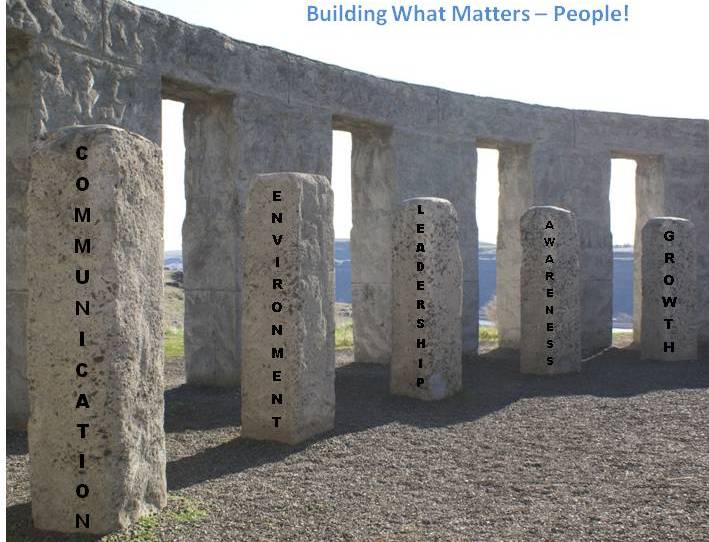 This is the 10th of 16 weekly installments on The 5 Pillars of Influential Leadership. Every Thursday, I will break down the 5 Pillars and show you how becoming and influential leader will not only improve your job skills but your personal life as well.
The 5 Pillars is a project that I have been working on for almost two years and had a great time with the official launch of “The 5 Pillars of Influential Leadership” Coaching program on May 23th.
Why the 5 Pillars? I have spent more than 30 years in the business world and although it has been primarily in the Construction world, the 5 Pillars philosophy works across all industries. In fact, while developing this program I realized that it can have a significant impact on your personal life as well.
I will break down each Pillar into three sections, personal, business and community. Any growth or improvement needs to start within, with the end goal of influencing the community you live in. In this post we will take a look at COMMUNITY GROWTH.
I think we all want to leave a legacy and a big part of that is how you impact your community. The truth is that only a small percentage of us will have a significant impact on our community. Will you be in that percentage?
PRIORITIES
It will no doubt be challenging to do the things that will positively impact your community but the reward will be worth the effort. As stated earlier, only a small percentage of people will impact the community around them.
For your community to grow and for you to be part of that growth, you need to know what is needed within that community. What are the priorities? Don’t let what you want to give your community get in the way of what they really need. Always answer the “Why is this a win-win?” question when helping your community grow.
FULFILLMENT
I work with many “difference makers” in my community and one thing is common across the board. They do what they do, not for financial gain or recognition, but because it make them feel good. Giving back to your community provides fulfillment to the basic human desire to feel valued. There is no greater reward than knowing that you have “done your part” to make a difference in the lives of others.
GOALS
Most of us focus on our personal goals and put most of our effort into them. Honestly, I am probably no different. What I have observed however, is that when my own goals are in alignment with the goals of my community, I receive help along the way in achieving them. Zig Ziglar said; “If you help enough people get what they want, you will get what you want.” He was right!
CREDIBILITY
If you have any desire to be successful, you better plan on being credible in the eyes of others. Credibility among a few is good but investing yourself in your entire community will bring the credibility needed to be recognized as an influential leader.
PERFORMANCE
Performance, regardless of how you have defined it, is basically defined by how it is perceived. If you think you have performed well but no one else has seen any benefit from your actions, have you really made a difference? Your level of performance will be evaluated by those that you impact. The things that you excel in should produce positive results in your community as well.
The 5 Pillars coaching program will take each topic to a much deeper level. We will explore open ended questions and how they are directly impacting your life and more specifically in this segment, will allow you to evaluate and understand your role in growing your business.
In the mean time, start asking the type of questions that will result in better answers. When you ask “How can I” you get an answer that will move the needle. “What can I do today that will improve my community?” Answer that question, act on it, and you will succeed.
RELATED:
- Click here to see Part 1
- Click here to see Part 2
- Click here to see Part 3
- Click here to see Part 4
- Click here to see Part 5
- Click here to see Part 6
- Click here to see Part 7
- Click here to see Part 8
- Click here to see Part 9
- For more on The 5 Pillars of Influential Leadership and to view my video click here
- To view my guest post in the 2013 International Leadership Blogathon click here
***********************************************************************
Don’t miss a single post from Building What Matters by subscribing at the top left of this page.
Help support us by clicking here and Liking our facebook page
Barry Smith 6/6/13 photo by author © Building What Matters 2013
The post The 5 Pillars Of Influential Leadership – Part 10: Their Growth Plan appeared first on BUILDING WHAT MATTERS.COM.
]]>The post GROWTH: You Will Only Go As Far As You Are Willing To GROW appeared first on BUILDING WHAT MATTERS.COM.
]]>Carl Jung said “The greatest tragedy of the family is the unlived lives of the parents.” Stop and read that again. I believe that this is true not just for parents but for everyone.
Living a fulfilled, meaningful life requires growth. One of my focus points as a coach, trainer, speaker and author is growth. Whenever I address the subject of growth, I always bring up the two components required for growth. Intentionality and Accountability.
 The first two Pillars of my 5 Pillars of Influential Leadership are Awareness and Environment. Both of these are critical to our growth. Once we realize where we are and where we want to be and how that journey will be impacted by the environment we find ourselves in, we are ready to grow.
But as I said, growth only comes through Intentionality and Accountability. Certainly there are many other factors that will determine how you grow and the rate in which you do it, but the first step is always intentionality.
Every time I use the word “try” when speaking with one of my coaches or mentors, I hear the silence on the other end of line. I love this quote from one of the greatest visionaries in history, Yoda. “Do or do not, there is no try.” Trying get’s you to the line of intention, but accomplishes nothing. Like Yoda said, “do or do not.”
We have to have the try to get headed in the right direction, but growth comes from actually doing it. Doing it comes through accountability.
Without continual growth and progress, such words as improvement, achievement and success have no meaning.” – Benjamin Franklin
 It doesn’t matter how you define success, you have to be a life long learner to continue to achieve that success. When you stop growing, you put a cap on your potential and I believe that when you stop moving forward you are moving backward.
Growing means stretching outside of your comfort zone. It means doing things you have not done before. It means facing the failure of not succeeding the first time you attempt something new. Many people have a tendency to quit when the going get’s tough.
PERSONAL GROWTH requires SACRIFICE, SELF-CONTROL, DISCIPLINE and PERSEVERANCE. Your ATTITUDE is really a reflection of your CHARACTER.
Your INTEGRITY will create CONSISTENCY and CREDIBILITY. Understanding your PRIORITIES will allow you to maximize your PERFORMANCE.
COMMITMENT to EDUCATION will help you overcome ADVERSITY and positve ACTION will help build SELF-CONFIDENCE and EMPOWER you in the FULFILLMENT of your GOALS.
If you want to do more, achieve more and become more, you need to grow more. So my question today is simple, “How far are you willing to grow?”
***********************************************************************
On May 23rd, at 8:00 pm ET, I will be hosting a free call introducing “The 5 Pillars Of Influential Leadership” Coaching Program.
This will be a content filled call that will not only teach you about influential leadership but also about leading an intentional and successful life. The words in capitals above are topics within Pillar #3 – GROWTH.
This is the third of five posts related to the 5 Pillars that will go out prior to the call on the 23rd.
For more information and to register for the free call CLICK HERE.
To see the first video on Pillar #1 – AWARENESS click here
To see the second video on Pillar #2 – ENVIRONMENT click here
***********************************************************************
Don’t miss a single post from Building What Matters by subscribing at the top left of this page.
Help support us by clicking here and Liking our facebook page
Barry Smith 5/17/13 photo by author © Building What Matters 2013
The post GROWTH: You Will Only Go As Far As You Are Willing To GROW appeared first on BUILDING WHAT MATTERS.COM.
]]>The post 20,000 Days And Counting – Part 2: Beating The Clock appeared first on BUILDING WHAT MATTERS.COM.
]]> This is the second of three posts discussing the book “20,000 Days And Counting” by Robert D. Smith. Smith has taken a very interesting and compelling look at what his life represented during the first 20,000 days and more importantly, the next 20,000.
If you do the math, you will see that 20,000 days represents more than 54 years on this earth. Smith takes an aggressive approach to how he will live out his remaining days to the fullest.
As he puts it, “What can you do right now in order to make the most out of the years in front of us? What can we do to accomplish more, to celebrate more, to touch more lives in our remaining years than we have to this point?”
These three posts will summarize Smith’s “Crash Course for Mastering Your Life RIGHT NOW.”
Part one discusses the “20,000 Day Mind-Set.” Part two deals with “Beating the Clock” and part three makes the simple statement that “Today is Day One.”
BEATING THE CLOCK
In section two, Smith gives several thoughts on how we “beat the clock” and accomplish so much more when we put an intentional effort to it.
Smith suggests there are really only two options we have in any choice; yes or no. As he puts it, “Constantly saying no – to lunch, to that project, to a vacation, to whatever it may be – diminishes opportunities for discovery and growth. If you want things to change in your life, you have to be open for change, to new possibilities. To say yes.”
He really left a mark on me when he suggested that when we say yes, we expand our territory and that of others. Realizing that my yes can change the lives of others has become a great motivator for me.
Smith then throws out a very interesting concept. He says “become your own problem.” His thought is that when we do that we “take the outside circumstances and bring them inside. Suddenly you have power.”
The idea is that it puts the ball in your court and forces you to act on it. I love this. I know when I am backed into a corner and have no other option to do something, I respond. Making “you the problem” forces you to respond and if you have your A-game on, you will respond productively.
Smith wraps up the section with this question: “Are you spending life merely reacting to events as they happen, or are you moving forward each day with clear objectives?
I spent way to much of my life reacting, letting life happen to me. Now with the clear objective of “building what matters – people” I have become much more intentional and am happening to life.
Smith poses another great question that I leave you with today.
“If you were transported one year into the future, looking back, how would you advise yourself right now?” Got your answer yet?
- To Read Part 1 of 20,000 Days and Counting click here
- Find out more about Robert D. Smith by clicking here
Next Wednesday, in Part 3, we will take a look at “Today Is Day One.”
***********************************************************************
Don’t miss a single post in this series from Building What Matters by subscribing at the top left of this page.
For more information on my next Deeper Path Cohort click here
Help support us by clicking here and Liking our facebook page
Barry Smith www.buildingwhatmatters.com 4/24/13 photo courtesy of Amazon
The post 20,000 Days And Counting – Part 2: Beating The Clock appeared first on BUILDING WHAT MATTERS.COM.
]]>The post 20,000 Days And Counting – Part 1: The Mind Set appeared first on BUILDING WHAT MATTERS.COM.
]]>This is the first of three posts discussing the book “20,000 Days And Counting” by Robert D. Smith. Smith has taken a very interesting and compelling look at what his life represented during the first 20,000 days and more importantly, the next 20,000.
If you do the math, you will see that 20,000 days represents more than 54 years on this earth. Smith takes an aggressive approach to how he will live out his remaining days to the fullest.
As he puts it, “What can you do right now in order to make the most out of the years in front of us? What can we do to accomplish more, to celebrate more, to touch more lives in our remaining years than we have to this point?”
These three posts will summarize Smith’s “Crash Course for Mastering Your Life RIGHT NOW.”
Part one discusses the “20,000 Day Mind-Set.” Part two deals with “Beating the Clock” and part three makes the simple statement that “Today is Day One.”
THE 20,000 DAY MIND-SET
Smith tells the story of a good friend of his that died in a freak playground accident when they were teenagers. After that, as Smith describes, “Every day became a mission to find out why I was here and what I was supposed to do with mt life.”
I don’t think it is a coincidence that I read those words on the same day that tragedy struck during the Boston Marathon. Why is it that so many cases, it takes some sort of tragedy to prompt us to evaluate what we are doing with our life? We should have this type of mind-set everyday. That is exactly what Smith is saying in this first section of the book.
(Side thought here – please continue to keep those impacted by the events in Boston in your thoughts and prayers.)
Smith goes on to describe the different ways he has changed his thinking to maximize every minute of every day. As he puts it, “Time is merely the measure of passing events … don’t focus on time, but on the events themselves. When you control the event, you control your life.”
Interesting thought! Where is our focus? I know where I have often found mine – on time. I don’t have enough time. I wish I had more time. We get so focused on time, we do forget to focus on what we are doing with it. For me, this was a huge takeaway.
“Dream as if you’ll live forever. Live as if you’ll die today.” – James Dean
James Dean lived exactly 9,000 days before his untimely death in a car accident. From what I know about James Dean, he lived up to his quote. That being said, I wonder what opportunities he might have missed in those 9,000 days.
Smith provides three things that help us create this mind-set:
- Create a life statement
- Contact Important People
- Number your days, daily
I think he is right. He makes a statement that really made me think.
“Very few people on the planet will ever receive a standing ovation for anything they do in their entire lives.”
So my question today … What will you do in your remaining days that deserves a standing ovation?
Find out more about Robert D. Smith by clicking here
Next Wednesday, in Part 2, we will take a look at Beating The Clock
***********************************************************************
Don’t miss a single post in this series from Building What Matters by subscribing at the top left of this page.
For more information on my next Deeper Path Cohort click here
Help support us by clicking here and Liking our facebook page
Barry Smith www.buildingwhatmatters.com 4/17/13 photo courtesy of Amazon
The post 20,000 Days And Counting – Part 1: The Mind Set appeared first on BUILDING WHAT MATTERS.COM.
]]>The post When Your Job Description Doesn’t Match Your Purpose! appeared first on BUILDING WHAT MATTERS.COM.
]]> What happens when your job description doesn’t match your purpose? Oh boy, that’s a loaded question. Based on what I know, most people fall into this category. What do I know that leads me to this belief? I know that less that 30% of Americans are actively engaged in their job.
That means that over 70% are just showing up to collect a check. Some are even actively disengaged in that they are sabotaging their workplace through any number of ways including, but not limited to, gossip, stealing hours and contributing to a negative culture.
I am not suggesting that if you fall into this category you quit your job today. I am however, suggesting that you take a hard look at the big picture and evaluate whether or not you need to consider a change. If money is all that matters to you, then by all means, find the job that will pay you the most.
If on the hand, you are more interested in quality of life, leaving a legacy and doing something that you are passionate about, identify your purpose in life and find a job that allows you to live out your purpose.
I don’t believe you can truly be victorious in your life if you are not fulfilling the life design that you were created to live.
“There is no passion to be found in settling for a life that is less than the one you are capable of living.” – Nelson Mandela
If you are not living life with passion and your job has something to do with it, I would suggest taking a hard look at what YOU can do to make a change. Yes, I said you. Why? Because the first step to finding that “sweet spot” is taking control of your own life.
There are two great days in a person’s life – the day you are born and the day you discover why.” – William Barclay
Maybe you haven’t discovered why yet. I was 45 years old when I discovered my why and I really don’t think you are ever too old. I spoke with a 79 year old woman a few weeks ago that was searching for her why and she couldn’t wait to start living out the next chapter of her life.
So back to the question – what if your why does not match up with your job description. When you discover your why, determine how you can start today, to live towards reaching your potential and living out the life you were designed to live.
I spent almost two years planning for my “next chapter” and at the end of 2012, made a full time commitment to living out the life that was waiting for me to live. I am still blessed to do some part time work with the company that hired me 15 years ago to be an estimator and project manager. The difference is that my job description now is a coach, speaker, trainer and author and I can choose what I do and don’t do that is in alignment with my purpose.
Where to go from here? I would suggest taking your focus off your job description and onto your life description. Not only will you find greater purpose, but greater happiness and fulfillment.
If you are reading this, you have already experienced one of the two most important days in your life. How soon will you experience the second?
***********************************************************************
Don’t miss a single post from Building What Matters by subscribing at the top left of this page.
For more information on my next Deeper Path Cohort click here
Help support us by clicking here and Liking our facebook page
Barry Smith www.buildingwhatmatters.com 4/9/13 photo by author
The post When Your Job Description Doesn’t Match Your Purpose! appeared first on BUILDING WHAT MATTERS.COM.
]]>