The post Scan-Snap-Savor And Re-Program Your Results! appeared first on BUILDING WHAT MATTERS.COM.
]]> One of the segments we added to The Platform Builders Mastermind Group this year was a “Leadership Spotlight.” During one segment of our call each week, we feature an author or leader and focus on their current projects or activities.
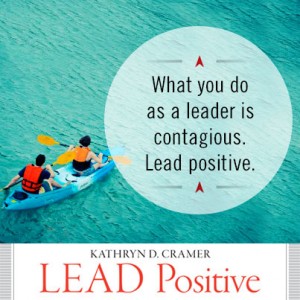
This week we had a great call and were honored to have Dr. Kathryn Cramer join us who recently released her seventh book, LEAD Positive: What Highly Effective Leaders See, Say and Do.
The latest in Dr. Cramer’s Asset Based Thinking (ABT) series, LEAD Positive pack a tremendous amount of great content on how to be courageous, resilient, and optimistic as we as leaders, can produce significant and lasting change in both our personal and professional lives.
This book is full of concepts and ideas that will no doubt change the way we think, and result in raising our leadership lid. Dr. Cramer suggests that we, by nature, are wired to “avoid harm” and therefore react faster to the negative than we do to the positive. Over time, this creates a negative bias in our thinking. But we have the power to change that!
One of Dr. Cramer’s ABT exercises really caught my attention. The Scan-Snap-Savor exercise, although simple in concept, has the potential to completely change the way we think. See what you think …
SCAN
Dr. Cramer suggests that we look for a positive fact that is either happening right now or in our immediate past. Then focus your attention on one of three areas, self, others, or situation. In Dr. Cramer’s word’s, “The self scan requires you to look for your own leadership strengths, capabilities, efforts, and skills that are showing up in the present moment to move things forward.”
To me, this sounds like “short-term version of the Law of Reflection. Dr. Cramer points out that, “The situation scan leads you to zero in on the emerging dynamics working in your favor.” How cool is that! All we have to do is think positive and the energy pulled from that thinking will produce positive results. The power of positive thinking ring a bell for anyone?
SNAP
I recently heard Dr. Cramer describe this part of the equation as taking a mental picture of that positive fact that you focused on the the scan step. When we develop that positive image in our mind just like downloading pictures onto you computer. They are stored there for your future use.
Again, a pretty straight forward concept – visually snap the picture and download it to your cranial hard-drive. (Tweet This) I see it like this, if you don’t take the picture, you are going to have to recreate the image to access that “positive” memory. In today’s warp speed society, we simply choose not to take the time or energy to do it and default to the negativity bias we already have.
SAVOR
This is the difference maker. Before you store away that mental snapshot, spend 30-60 seconds “savoring” it. Remember a hundred years ago when film had to be developed in a liquid solution? It had to soak in that stuff until it fully developed. Dr. Cramer has brought that concept back to life and you don’t even need a dark room.
Follow her advice and, “Let the full measure of the experience sink deeply into your implicit memory. Savor it. In less than 90 seconds, you have allowed yourself to step outside the hustle and bustle of the day.“
Dr. Wayne Dyer said, “When you change the way you look at things, the things you look at change.” Maybe it’s time you trade in that old camera that doesn’t seem to be working for you and pick up a new one that takes the type of pictures that will get you the “POSITIVE” results you have been looking for.
TODAY’S CHALLENGE: Pick up a copy of LEAD Positive and start using your manual focus option. You just might like the increased quality of the pictures you’ve been taking!
***********************************************************************
Click here to get a copy of my Kindle Book “The Manifesto Of An Influential Leader”
Don’t miss a single post from Building What Matters by subscribing at the top left of this page.
Help support us by clicking here and Liking our facebook page
Barry Smith 3/26/14 photo courtesy of the Weaving Influence © Building What Matters 2014
The post Scan-Snap-Savor And Re-Program Your Results! appeared first on BUILDING WHAT MATTERS.COM.
]]>The post Deposits and Withdrawals – What’s On Your Leadership Balance Sheet? appeared first on BUILDING WHAT MATTERS.COM.
]]> It’s funny how life has a way of balancing itself out. I have found that the time when I feel the best and am the most productive are when my life is in balance. I also have noticed that when my friends and clients are in that same zone they experience similar results.
In my new book coming out later this spring, Leadership by Invitation, I explore the concept of answering the call to lead. What will it take to answer that invitation? A new commitment to investing in yourself and in others to create the impact and influence needed to lead.
So if we need to make new investments, we need to be prepared to make the necessary deposits that will result in a positive return on that investment. As I was balancing the checkbook the other day it struck me that our Leadership balance sheet is much a checkbook. You make deposits and you make withdrawals and what you have to work with is represented on the bottom line.
Credit Cards Don’t Work When It Comes To Leadership
I know you understand that if you want to take a withdrawal, at some point in time, you needed to make a deposit in order to make that withdrawal. Let’s take a look at a few things that leaders need to keep in balance to lead.
Look, the day is going to come, if it hasn’t already, that you need to make a withdrawal from your leadership bank and if you don’t have the funds to cash that check, you will lose the opportunity to make a difference is someone else’s life. Credit cards don’t work when it comes to leadership and we can’t ask life to take a time out until we build back up our account.
I have heard more than once that if you want to see where someone is committed, look at their calendar and look at their checkbook. Those two things will show you where you deposits are being made. The question is whether or not they are in something that will allow you to make a withdrawal down the road.
Life Has No “Time Back” Guarantee!
TIME
If there is never enough time, and there never is, how can we expect to make the necessary withdrawals to invest time in others. Leadership is influence, right? Most leaders are consumed by the needs of the people they lead. It’s not intentionally set up that way, but those in authority, the leaders, are typically expected to solve the problems.
So how does a leader make those time deposits? They can start by EMPOWERING others to make their own decisions. Part of being a leader is casting vision, and communicating that vision will allow others to understand the desired outcome and make decisions, on their own or within their team, that will produce that same outcome.
Another great way is to DELEGATE. I love what my mentor John Maxwell told me. If someone else can do something 80% as well as you, let them do it. You don’t have to do it all yourself!
You Can Wear Your Running Shoes In The Boardroom
HEALTH
Most of us live in a culture that is simply moving faster than we like. If you want to live in the age of technology, you need to be prepared to move at light speed like the rest of the world.
I love the quote “Lead, follow, or get left behind.” If we don’t take the lead on leading ourselves to take the necessary steps to show up with physical energy, mental clarity and emotional stability, (Tweet This / Share on Facebook / Post to LinkedIn) how can we be expected to instill that in others?
As a leader, what deposits are you making to allow for those withdrawals? Are your eating, exercising and sleeping habits providing the deposits necessary for you to make those withdrawals when a twelve hour day is needed? I have said it before. The toughest person to lead is me.
What Is Your Disaster Management Plan?
We are usually last on the list and leaders, by nature, put others first. This is a formula for disaster. Look at the most successful leaders. They show up with energy, clarity and for the most part physically fit. Any clues to be found there? Do you think they are making the right deposits?
I have heard more than once that if you want to see where someone is committed, take a look at their calendar and their checkbook. That’s my challenge for you today. Take a look at those two things and see what they are producing for your bottom line.
That leads to an related question of great importance. What adjustment do you need to make today to build up equity in your Leadership Balance Sheet?
***********************************************************************
Click here to get a copy of my Kindle Book “The Manifesto Of An Influential Leader”
Don’t miss a single post from Building What Matters by subscribing at the top left of this page.
 Help support us by clicking here and Liking our facebook page
Barry Smith 1/24/14 photo by author © Building What Matters 2014
The post Deposits and Withdrawals – What’s On Your Leadership Balance Sheet? appeared first on BUILDING WHAT MATTERS.COM.
]]>The post Have You Ever Been On A Trip To Someday Isle? appeared first on BUILDING WHAT MATTERS.COM.
]]> Someday I think I’ll _________. Go ahead and fill in the blank. Now answer a question for me. How long have you been saying that? If you are like most, there are things that you want to do and as soon as someday gets here, you will do them.
One of my mentors asked once; “Show me someday on the calendar.” If you didn’t know this already, someday is not on the calendar. So what is keeping you from finding your someday?
If whatever it is that filled in your blank is worth doing, it should be worth doing now. If there is preparation that needs to be done in order to do it, when will you start? More importantly, when will you decide that you are done “getting ready” and it’s time to start? I think this is where many of us get stuck. At some point in time, you need to quit getting ready and just start.
I think this is one of the biggest responsibilities there is when it comes to leadership. In my book, Leadership by Invitation, that will be out later this spring, I look at four areas of leadership that we will find ourselves in most of the time. Leading your self, leading at home, leading at work and leading in your community. We will all find ourselves in these situations multiple times every day. Every day we will have to make decisions and the timing of those decisions will make the difference between success and failure.
John Maxwell talks about The Law of Timing in The 21 Irrefutable Laws of Leadership and gives these factors to use when we prepare for the timing of our actions:
Understanding – Are you clear on what the decision actually is and what will be involved in making that decision? Is there more that you need to learn? What is it?
Maturity – Do you have the correct motives in making this decision? Maturity is typically the result of applying experience based knowledge into a strategic action that will produce an expected outcome.
Confidence – Do you believe that what you are about to do is the right decision? Are you willing to stand behind it even if someone else doesn’t or things don’t go quite as planned?
Decisiveness – Are you going to move forward regardless of the challenges that may come up. Hesitation can kill any momentum that you might be building. Course corrections are alright, but direction needs to remain forward.
Experience – Everything that happens to us in life, good and bad, has the potential to teach us. The key is to actually learn from these experiences. Don’t waste opportunities to learn from your experiences.
Intuition – Make sure you have considered the things that you have not considered. Awareness is huge when it comes to timing. You don’t know what you don’t know. If something doesn’t feel right, find out why.
Preparation – Have you done what is needed to set yourself up for success? A solid plan before you start will produce great results. When you have prepared for the decision – act on it!
Life is busy. You have a full plate. Your “someday” list grows daily. I get it. This is why this is so important to leadership. The next time you use the word someday, challenge yourself to choose a day. It might be tomorrow or two months from now but once you choose a day, you can start to follow the framework above and develop a plan to make someday today.
So if you have been on an extended stay on Someday Isle, it’s time to come back to reality. There is nothing wrong with dreaming but if you want that dream to come true, you need a plan.
Martin Luther King Jr. said “The time is always right to do what is right.” (Tweet This / Share on Facebook / Post to LinkedIn)
So my question for you today “Is the time right?” and my challenge – Act on it!
***********************************************************************
Click here to get a copy of my Kindle Book “The Manifesto Of An Influential Leader”
Don’t miss a single post from Building What Matters by subscribing at the top left of this page.
Help support us by clicking here and Liking our facebook page
Barry Smith 1/20/14 photo by author © Building What Matters 2014
The post Have You Ever Been On A Trip To Someday Isle? appeared first on BUILDING WHAT MATTERS.COM.
]]>The post The Men Who Built America – Thomas Edison appeared first on BUILDING WHAT MATTERS.COM.
]]> Well here we are, a new year and a new plan, right? I know this – the Platform Builders have some new plans for 2014 and this year we are starting our Mastermind study with a little twist.
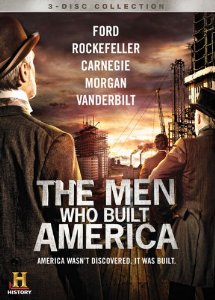
This month we are masterminding through The Men Who Built America, a DVD produced by the History Channel along with Think and Grow Rich by Napoleon Hill to compliment the mini-series built around some of the great early leaders and entrepreneurs that help build the United States into a world power at the end of the 19th Century.
If you don’t know the back story on how these two connect together, Napoleon Hill was commissioned by Andrew Carnegie to study the most successful people and find out what resulted in their success. The men who built America were among many of the 20,000+ that Hill interviewed over the twenty year period it took him to write the book.
This month we are going take a look at Andrew Carnegie, Thomas Edison, JP Morgan and Henry Ford. In this, the second of four posts, we will take a look at Thomas Edison.
Edison, the holder of 1,093 U.S. patents, is most recognized as the inventor of the light bulb. Also credited for the phonograph and motion-picture camera, Edison was much more than an inventor. His inventions set the world on the pathway to modern electricity and global communications.
So how did a man with only three months of formal education and whose hearing was impaired at an early age become “one of the men who built America?”
You Don’t Need Ears To Hear!
THOUGHTS ARE THINGS
“The value of an idea lies in the using of it.” – Thomas Edison
What if Edison never imagined his thoughts and ideas as things. Ideas are great, but as Hill shows in the story of how Edwin C. Barnes partnered with Edison, you have to treat them as such. An idea will not become reality until it is brought to life by the hand of the one who conceived it. How many ideas do you have that never come to life? Have you considered the power you hold within you to manifest your thoughts into reality? Here lies the great opportunity to ask; How can I?”
So what if nobody ever did it before!
FAITH
“Be courageous. I have seen many depressions in business. Always America has emerged from these stronger and more prosperous. Be brave as your fathers before you. Have faith! Go forward!” – Thomas Edison
Hill provides a very interesting definition of faith. “A state of mind which may be induced, or created, by affirmation or repeated instructions to the subconscious mind, through the principle of autosuggestion.” Edison simply refused to believe that something could not be done. He had the faith that with enough perseverance and effort, anything could be accomplished – even when “common sense” might suggest otherwise.
Mach 3 with your hair on fire!
THE BRAIN
“It is astonishing what an effort it seems to be for many people to put their brains definitely and systematically to work.” – Thomas Edison
The brain continues to be one of the most studied and least understood parts of the human body. But even in Hill’s time, it was accepted that the brain was a powerful machine that could actually create it’s own energy. Edison was continually pushing his thinking to new levels. He constantly tapped his own awareness of what he knew and filled in the blanks with what he pulled from others. Viewed as a curse by many, part of Edison’s genius is that his mind never quit working. Turning though into action, over and over, produced more inventions than anyone else in history.
Most equate the success of these men to industry and the technological advances of their time. I think the simple truth is that these men just thought better than everyone else. Edison makes a simple but powerful statement when he said; “Everything comes to him who hustles while he waits.” (Tweet This / Share on Facebook / Post to LinkedIn) The men who build America were always hustling – at least mentally.
This will be a great mastermind study. None of these men were angels, but one thing about them – they never let anyone else limit what they could do.
Your brain is constantly producing new thoughts. So I have a few question for you to ponder today. What are you doing with your ideas? How many times do you thing the words “that’s never been done before” described something that had just been done?
***********************************************************************
Click here to get a copy of my Kindle Book “The Manifesto Of An Influential Leader”
Don’t miss a single post from Building What Matters by subscribing at the top left of this page.
Help support us by clicking here and Liking our facebook page
Barry Smith 1/15/14 photo courtesy of Amazon © Building What Matters 2014
The post The Men Who Built America – Thomas Edison appeared first on BUILDING WHAT MATTERS.COM.
]]>The post The Men Who Built America – Andrew Carnegie appeared first on BUILDING WHAT MATTERS.COM.
]]>Well here we are, a new year and a new plan, right? I know this – the Platform Builders have some new plans for 2014 and this year we are starting our Mastermind study with a little twist.
This month we are masterminding through The Men Who Built America, a DVD produced by the History Channel along with Think and Grow Rich by Napoleon Hill to compliment the mini-series built around some of the great early leaders and entrepreneurs that help build the United States into a world power at the end of the 19th Century.
If you don’t know the back story on how these two connect together, Napoleon Hill was commissioned by Andrew Carnegie to study the most successful people and find out what resulted in their success. The men who built America were among many of the 20,000+ that Hill interviewed over the twenty year period it took him to write the book.
This month we are going take a look at Andrew Carnegie, Thomas Edison, JP Morgan and Henry Ford. In this, the first of four posts, we will take a look at Andrew Carnegie.
Carnegie is most recognized for the steel empire he built that would later become the U.S. Steel Company after being sold to J.P. Morgan in 1901 for the equivalent of 13.5 Billion Dollars in today’s economy. But there is much more to Carnegie’s story.
So what was it that took a boy born into poverty in the Country of Scotland to become one of the wealthiest men in the America? Lets take a look at three of the things that Napoleon Hill discovered:
Rags To Riches
DESIRE
“Every act you have ever performed since the day you were born was performed because you wanted something.” – Andrew Carnegie
Carnegie spent his early years in business watching men like Vanderbilt, Rockefeller and Thomas Scott. He watched them build their empires and when his opportunity came, he knew exactly what he wanted and that desire never left. From one venture to the next his desire empowered him to find a way to achieve it.
Is It Time To Get A Bigger Box?
IMAGINATION
“Think of yourself as on the threshold of unparalleled success. A whole, clear, glorious life lies before you. Achieve! Achieve!” – Andrew Carnegie
One of the events showcased in the mini-series is when Thomas Scott, Carnegie’s mentor and boss, asked Carnegie to build and oversee the design and construction of a bridge across the Mississippi River. Scott suggested a man who according to Scott, “could do anything”, to design it. As it turned out, the designer said it was impossible. Carnegie responded with a emphatic “Nothing is Impossible.” From there he imagined the construction of the bridge using steel and thus began the legacy of Carnegie Steel.
Just When You Think You’ve Had Enough …
PERSISTENCE
“People who are unable to motivate themselves must be content with mediocrity, no matter how impressive their other talents.” – Andrew Carnegie
All these men, including Carnegie, defined the spirit on entrepreneurship. I won’t suggest that they came up with entirely new ideas (except for possibly Edison) but they figured out entirely new ways to use what was already there, how to use it more efficiently, or how to produce it quicker and cheaper. None of these advances came with failure. 10,000 tries at the light bulb ring any bells for you? But all these men, especially Carnegie refused to quit. They persisted until they succeeded.
Most equate the success of these men to industry and the technological advances of their time. I believe what really made them more successful than anyone else of their time was their entrepreneurial spirit. They were visionaries. They saw what other didn’t and did what others couldn’t and achieved the impossible. (Tweet This / Share on Facebook / Post to LinkedIn)
This will be a great mastermind study. None of these men were angels, but one thing about them – they never let anyone else limit what they could do.
So I have a question for you to ponder today. What limits are holding you back for doing what you want to do and becoming who you want to be?
***********************************************************************
Click here to get a copy of my Kindle Book “The Manifesto Of An Influential Leader”
Don’t miss a single post from Building What Matters by subscribing at the top left of this page.
Help support us by clicking here and Liking our facebook page
Barry Smith 1/8/14 photo courtesy of Amazon © Building What Matters 2014
The post The Men Who Built America – Andrew Carnegie appeared first on BUILDING WHAT MATTERS.COM.
]]>The post Adversaries Into Allies – Part 3; Motivation and Outcome appeared first on BUILDING WHAT MATTERS.COM.
]]>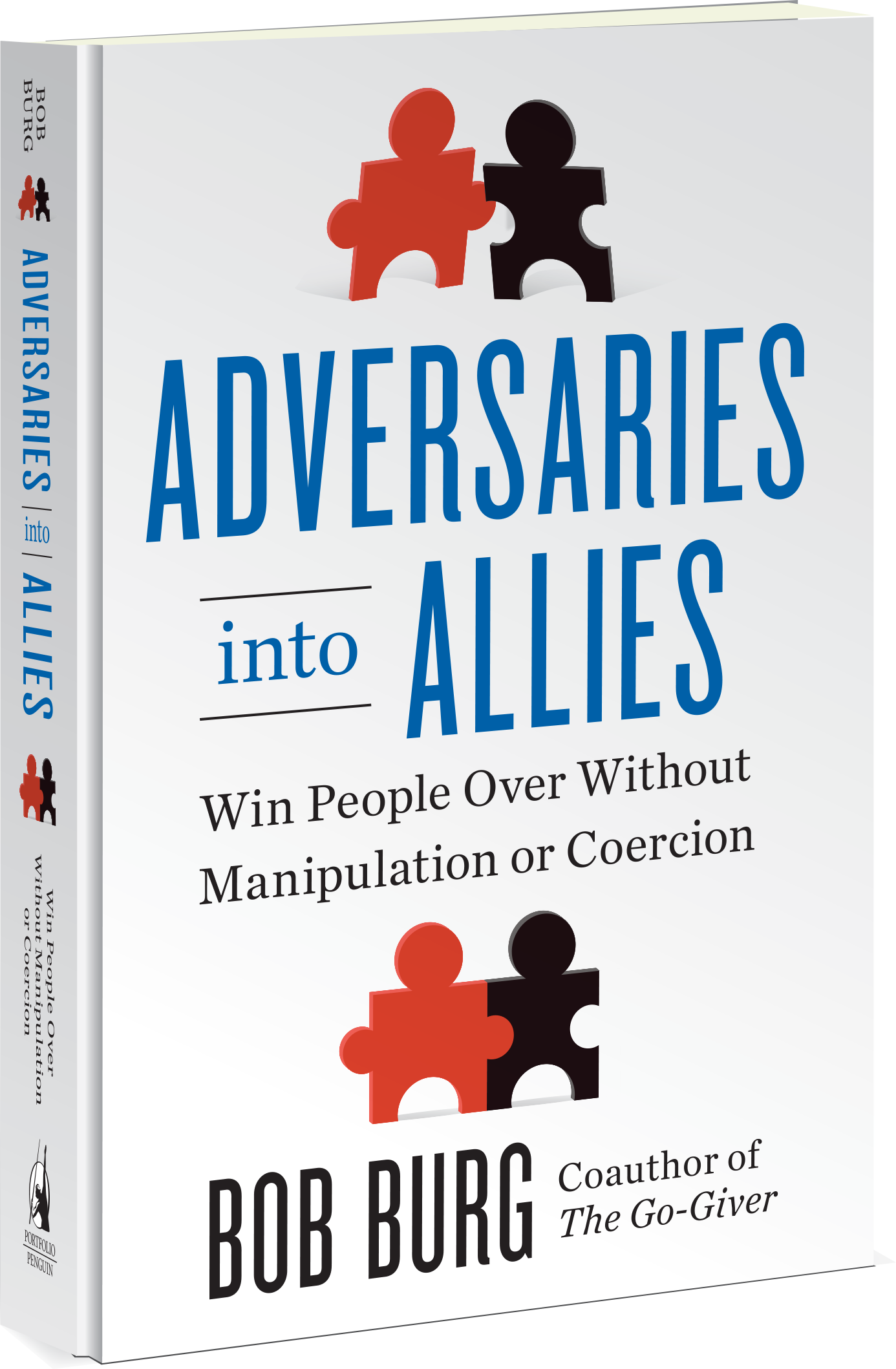 Happy New Year everyone! We are definitely finishing strong with this month’s book mastermind. Adversaries Into Allies – Win People Over Without Manipulation or Coercion, by Bob Burg, gives a fresh look into how we can influence others while maintaining our integrity and character.
Some of you probably recognize Burg as the co-author of The Go-Giver, but this one is all his and according to the author, his finest work – the book he was meant to write.
Burg starts out by introducing us to the idea of Ultimate Influence ==>the ability to get the results you want from others while making them feel genuinely good about themselves, about the process, and about you.
Burg suggests that Ultimate Influence is based on five key principles that occur on an ongoing basis. In this post, the third of four, we will take a deeper look into the third and fourth principles (3) Acknowledge Their Ego and (4) Set The Proper Frame. Take a look at these and see if any of them might apply to your life.
3. Acknowledge Their Ego
- Don’t Shame or Embarrass – Never criticize or condemn publicly. Always seek to build up and encourage! Ultimate Influencers build trust and empower others.
- Be a Judge, Not a Lawyer
- The Principle of Agreement – Avoid using the word “but” because in most cases, it eliminates what you just agreed to.
- Ego Repair
- The Power of Handwritten Notes – Remember the wisdom of John Maxwell; “People don’t care how much you know until they know how much you care.” What are you doing to tell others that you care?
- Edification – a Powerful Key To Influence
- Do You Look for Disagreement? – Respond before you react. Set yourself up for success and find the things you can agree on before the things you can’t.
- Compliment the Uncomplimented
- Caught in the Act! … of Doing Something Right – This is one of my favorites. How often do you catch someone in the act of doing something right – and then recognize them for it?
- “I Appreciate Ya” – When was the last time someone told you they appreciated you? When was the last time you told someone else?
4. Set The Proper Frame
- Positive Expectation Works, but Not Why You Think It Does – Simply stated, you get what you expect. No it doesn’t always work but when you believe in a positive outcome instead of a negative one, you will be much more successful.
- Framing Your Influence in Your First Conversation – First impressions, right? Simply make the conversation revolve around the other person and you set the tone for everything that follows.
- Sometimes’ It’s Good to Let ‘Em See You Sweat
- The Ransburger Pivot
- The Value of the Correct Phrase
- “What Can I do to Help?”
- Win by Making the Other’s Case First – Understanding and accepting the fact the the other person has their own thoughts and ideas, and believes them to be true, puts you in the position to control the outcome.
- Help Them to Live in the Solution – The best way to create an alliance is to bring a solution. Wanting to solve the problem indicates your attitude of working towards a solution – no matter who comes up with it.
- Avoid Negative Framing
- Don’t Fall Victim to the Either/Or
- Persuasion Secrets of a Ten-Year-Old
- Change Your Frame, Change Your Life – Want allies? Turn negatives into positives. No it’s not easy, but staying in the negative will never solve anything.
Well, there is a taste of the thoughts and ideas found within this book. I encourage you to pick up a copy and fill in the stuff I left blank on your own. Some of the chapter headings listed above don’t make a lot of sense until you listen to Burg’s wisdom. Now is your chance!
We certainly have much more to look at in Adversaries Into Allies but understand that people generally believe they are right because their beliefs are based on the experiences they have had. Right or wrong, until you recognize that they believe what they believe, you will find it difficult to persuade them otherwise. So ask yourself this question – Is it really worth the fight or is working together going to provide a better outcome?” Win-Win outcomes are OK!
***********************************************************************
Click here to get a copy of my Kindle Book “The Manifesto Of An Influential Leader”
Don’t miss a single post from Building What Matters by subscribing at the top left of this page.
Help support us by clicking here and Liking our facebook page
Barry Smith 1/3/14 photo courtesy of burg.com © Building What Matters 2014
The post Adversaries Into Allies – Part 3; Motivation and Outcome appeared first on BUILDING WHAT MATTERS.COM.
]]>The post Is Discipline The Hard Part Or The Easy Part? appeared first on BUILDING WHAT MATTERS.COM.
]]> Alright, I will admit it, the idea and implementation of discipline have never been one of my strengths. Those of you that have known me for a while are probably laughing right now because you know how true that statement is.
I have had my share of challenges just like everyone else, but for the most part, things have worked out for me and I never had to discipline myself to achieve some major goal or overcome a significant challenge. To be honest, I think this has hurt me more than help me. I think a lot can be learned from being disciplined to do something consistently and once completed, I think it empowers you to achieve even more.
The last few years I have had high expectations of myself and have set many goals. Many I achieved and some I did not. Why did I fail in some areas? I think I can point to one common theme – Discipline.
Now I’m a pretty smart guy (most of the time) and it didn’t take me too long to realize that if I am going to accomplish the goals I set for myself, I need discipline. So I did the smart thing – I asked for some help. I now have a few people holding me accountable to be disciplined. End of story – mission accomplished – right?
Well sort of. This is where I think I have been messed up in my thinking. I know other people that are disciplined. They run so many miles a week. They go to the gym so many days a week and so on. We all know these people. They seem to accomplish whatever they set out to do. What makes the difference? How come they get it done consistently?
Well here is what I think. They get it done consistently because they START consistently. Starting is the key to finishing. Here are some helpful ways to get you started.
STORY – If you are attempting to be disciplined, there is a story behind why you are doing it. What is your story? Are you clear on the reasons you are attempting to start, stop, do more or do less of something? A strong story will provide the strength to succeed.
TELL SOMEONE – I mentioned it earlier, have someone hold you accountable. Make sure they know exactly what it is that you are trying to accomplish. No one can do as much by themselves as they can with the help of others.
ACTION – Actually doing the work is what will accomplish the goal. Starting is the first step to finishing and starting takes action. Wanting to do something is great, but that intention, by itself will accomplish nothing.
RISK – Let’s spin it a little bit. We usually look at doing something new based on what it will add to our lives. How often do you evaluate the risk of not doing something? Sometimes the real risk is in deciding to do nothing at all.
TIME MANAGEMENT – What is the best way to start something? Get it on your calendar. This has been the best tool I have found to help me reach my goals. My calendar does half the work for me.
So back to the question posed in the title of this post. Is discipline the hard part or the easy part? In my opinion, it is the hard part. Doing the work is really pretty easy once you start. When was the last time you gt in your car to go to the gym and turned around half way to go back home? When was the last time you went for a walk and turned around at the end of your driveway?
A month from now, everyone will be talking about New Year’s Resolutions. My challenge for you today – START NOW! Unless of course, you can tell me why January 1st is a better day than today to start doing something you need to do now.
***********************************************************************
Click here to get a copy of my Kindle Book “The Manifesto Of An Influential Leader”
Don’t miss a single post from Building What Matters by subscribing at the top left of this page.
Help support us by clicking here and Liking our facebook page
Barry Smith 12/2/13 photo by author © Building What Matters 2013
The post Is Discipline The Hard Part Or The Easy Part? appeared first on BUILDING WHAT MATTERS.COM.
]]>The post How You EAT, MOVE and SLEEP Will Change Your Life! appeared first on BUILDING WHAT MATTERS.COM.
]]> Today’s post is one I never really envisioned myself writing but I have come to understand, and appreciate that our physical health had a tremendous amount to do with the way we do just about everything.
I had lots of goals for 2013, and to be honest, some of them won’t be met. The good thing is that in almost everyone of them that I will fall short in, I know why. It may be due to being unrealistic to begin with, maybe it was lack of commitment on my part or maybe just the fact that some of my priorities have changed throughout the year. But at least I can learn from these failures.
A few months ago, my mentor Kary gave a group teaching on having a solid core so you could show up with all your energy available to best serve your family, your clients or simply anyone that came across your path. I really felt convicted by his words as I knew that my fitness goals were some that I was way behind on.
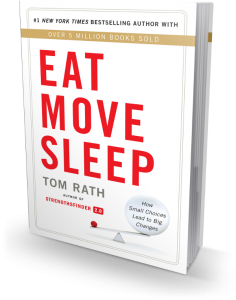
Most of you know I am always looking for the next “great” book to read and about the same time as I was trying to figure out how to reverse the downward trend in my efforts to improve my eating, exercise routine, and sleeping habits, a book comes out called EAT MOVE SLEEP by Tom Rath. Now some of you may recognize Rath as the author of StrengthsFinder 2.0 and I found this title surprising given his previous efforts – that was until I found out the rest of the story.
As it turns out, Rath has been dealing with a very serious illness for more than 20 years and refusing to just accept his fate, he set out to find out how he could do for himself what his body would not. For more than 2o years Rath has been studying how the food we eat, the exercise we do, and the sleep we get influence our body’s ability to function and take care of itself.
I am not really going to break down the book, but I would like to share what I have learned in each of these three areas.
EAT
If you would have asked me 3 months ago “how well do you eat?” I would have probably said that I don’t eat bad, but I don’t really eat good either. I actually have stayed away from the really bad stuff (except ice cream and pizza of course) for the most part. My big problem was that I skipped breakfast, snacked my way through lunch and ate a big dinner – because I was hungry – Hello! And then had a snack later at night to finish off the day.
Now I get it. Get a good breakfast, snack on healthy “whole” foods and eat a normal dinner. If you are going to have a snack at night, choose something healthy like fruits or nuts. I know everyone is different, but the elimination, for the most part, of all the sugars and carbs I used to eat and a better schedule has allowed me to lose 20 pounds in less than three months and I feel much better.
MOVE
My relative inactivity over the last 12 months has certainly had an impact on me. Losing twenty pounds has helped but simply stated, I need to start moving more. No extremes, but some consistency would be nice. I have some colleagues holding me accountable to this so I intend on making solid, lasting improvements.
If you want to know all the things you didn’t know related to why it’s important to exercise, grab a copy of the book. I learned a lot of new stuff and I thought I knew most of it already.
SLEEP
I find it interesting that Rath just happened to list these three things in the specific order of how well I am doing on them. The bottom line is that you need 7-9 hours of sleep a night. That means my bottom line is at about a minus 3. I have a much better understanding of sleep and what happens to your body when you don’t get enough of it.
So here is the bottom line that I believe will help anyone reading this. It doesn’t matter how much you know about any subject. What matters is how well you implement the needed changes in your life or business. I am headed in the right direction and the reason is that I finally figured out that you can’t do it all at once. You need to take it one step at a time and develop habits. Get one thing out of the way and start the next.
A very important challenge today. First, get a copy of Eat Move Sleep. This book will provide some valuable information that can change your life. Second, choose one of these areas – any one of them, and start doing something different. Set yourself up for success and start today.
***********************************************************************
Click here to get a copy of my Kindle Book “The Manifesto Of An Influential Leader”
Don’t miss a single post from Building What Matters by subscribing at the top left of this page.
Help support us by clicking here and Liking our facebook page
Barry Smith 11/21/13 photo courtesy of eatmovesleep.org © Building What Matters 2013
The post How You EAT, MOVE and SLEEP Will Change Your Life! appeared first on BUILDING WHAT MATTERS.COM.
]]>The post Give And Take – Part 1: Does Generosity Hold You Back? appeared first on BUILDING WHAT MATTERS.COM.
]]>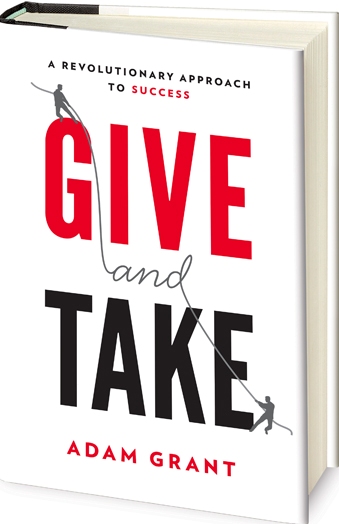 I am currently reading “Give And Take – A Revolutionary Approach To Success” by Adam Grant. I was not familiar with the book or the author but Give and Take came highly recommended by Jeremey Donovan who wrote “How To Give A TED Talk” that I reviewed earlier this year.
Rarely do I read a book in which I am not familiar with the author or the content. In the case of Give and Take, I’m glad I did. Grant has taken a very unique look at the difference between givers and takers and how different paths lead to different results.
This will be the first of three posts in which I will briefly summarize each of the nine chapters. Grant suggests that most people fall into one of two categories; givers and takers. Matchers are the in-between group and operate on the principal of fairness and strive to preserve an equal balance of giving and getting.
GOOD RETURNS – The Dangers and Rewards of Giving More Than You Get
In the first chapter Grant lays out the basic differences between givers and takers and sets up the entire concept with this:
“According to conventional wisdom, highly successful people have three things in common: motivation, ability and opportunity. If we want to succeed, we need a combination of hard work, talent, and luck.” Then he offers up the fourth ingredient – “success depends heavily on how we approach our interactions with other people.”
He goes on to define givers and takers but really get’s you hooked when he explains that it is givers who sit at both the bottom and the top of the success ladder. Only a third of the way into the book, this one is already hitting home. Givers do start out at the bottom, but there is a clear path to success that Grant spells out.
THE PEACOCK AND THE PANDA – How Givers, Takers, and Matchers Build Networks
In chapter two, Grant takes a look at how givers, takers, and matchers develop fundamentally distinct networks, and why their interactions within these networks have different characters and consequences.
Grant explores the idea that networks come with three major advantages: private information, diverse skills, and power. “By developing a strong network, people can gain invaluable access to knowledge, expertise, and influence.” Do those sound like important elements to success?
THE RIPPLE EFFECT – Collaboration and the Dynamics of Giving and Taking Credit
In chapter three we find Grant exploring how the differences between givers and takers affect individual and group success. Grant tells a few stories about some of the great influencers of our past and draws this conclusion:
“Americans see independence as a symbol of strength, viewing interdependence as a sign of weakness. This is particularly true of takers, who tend to see themselves as superior to and separate from others.”
“Givers reject the notion that interdependence is weak. Givers are more likely to see interdependence as a source of strength, a way to harness the skills of multiple people for a greater good.”
This book has pushed me to really take a hard look at my motives and actions regarding giving and taking and I think that there are two types of giving that we need to focus on. Grant suggests that if you have the opportunity to give to someone else and it will take five minutes or less – just do it. I have found that most of this type of giving falls into the “random acts of kindness” category.
The second type of giving is more strategic and planned out but still falls into the giving category. We all need to create and income to survive and I believe that to be successful, you need a strategy. There is nothing wrong with doing something “free of charge” or “paying it forward” as they say, but you can do these things with an end goal in sight.
So you probably already know the question for today; “Are you a Giver or a Taker?” If you are not sure, or want to see what Grant thinks, click here and take The Give And Take Assessment.
***********************************************************************
Don’t miss a single post from Building What Matters by subscribing at the top left of this page.
Help support us by clicking here and Liking our facebook page
Barry Smith 8/7/13 photo courtesy of Amazon © Building What Matters 2013
The post Give And Take – Part 1: Does Generosity Hold You Back? appeared first on BUILDING WHAT MATTERS.COM.
]]>The post Does Inspiration Come From The Journey Or The Destination appeared first on BUILDING WHAT MATTERS.COM.
]]> Most of our success in life originated from some person, place or event that inspired us, or did it?
I have recently given this idea much thought and I am beginning to believe that it is not where someone has ended up that inspires me, bu the journey they took to get there.
I have surrounded myself with people that inspire me and I can honestly say that some have made it big time and some are still in the early stages. The interesting thing to me as I try and learn from their experiences, is that I am no more inspired by those that have already achieved their goals and dreams then those who are still in pursuit.
I have been asked before, “Who inspires you?” and for the most part my mind immediately shifted to those who, by the standards set by the world we live in, have achieved success.
I have a different look on things now. Why do I feel this way? Because I see the hard work and determination that leads up to the accomplishment.
Think about it. How often do we really know what it took for someone to achieve their goals and reach their dreams? Usually it’s not until they have gotten there and we read about it in their book, in a magazine or some other social media publication.
I now draw my inspiration from my friends and colleagues who are doing what I am doing. Chasing their dream through hard work and perseverance. Overcoming adversity because their “why” is strong enough to find the “how.”
“Don’t judge each day by the harvest you reap but by the seeds you plant.” – Robert Louis Stevenson
I love what Stevenson says. Do you find inspiration in what you give or what you get? The thing that inspires me most is watching people that are working hard to add value to others, not themselves. That’s what inspires me.
If I want to inspire others, I need to give them hope that they can be more and achieve more. The way I can do that is by believing in myself and believing in them.
“In life you need either inspiration or desperation.” – Tony Robbins
I want others to live an inspired life not a desperate one. Most people wake up every day focused on what they have to do. My dream is for people to wake up focused on what they want to do.
So does inspiration come from the journey or from the destination? I believe it comes from the journey. The destination might look nice but it’s the trip that makes the difference.
In July, I am taking my youngest son on a road trip to Mt. Rushmore. The trip will include stops in Jackson Hole, Wyoming and Yellowstone National Park.
Seeing Mt. Rushmore will certainly be something I will remember for the rest of my life but what inspires me is that I get to spend two thousand miles with my son. I have planned out the trip and every day we have a destination, but the journey is what we will remember.
Simon Sinek in his Ted talk “How great leaders inspire action” says that people don’t care about what you do, they care about why you do it. My question today, “Why do you do what you do?”
***********************************************************************
Don’t miss a single post from Building What Matters by subscribing at the top left of this page.
Help support us by clicking here and Liking our facebook page
Barry Smith 6/3/13 photo by author © Building What Matters 2013
The post Does Inspiration Come From The Journey Or The Destination appeared first on BUILDING WHAT MATTERS.COM.
]]>