The post Are Your Expectations Keeping You From Success? appeared first on BUILDING WHAT MATTERS.COM.
]]>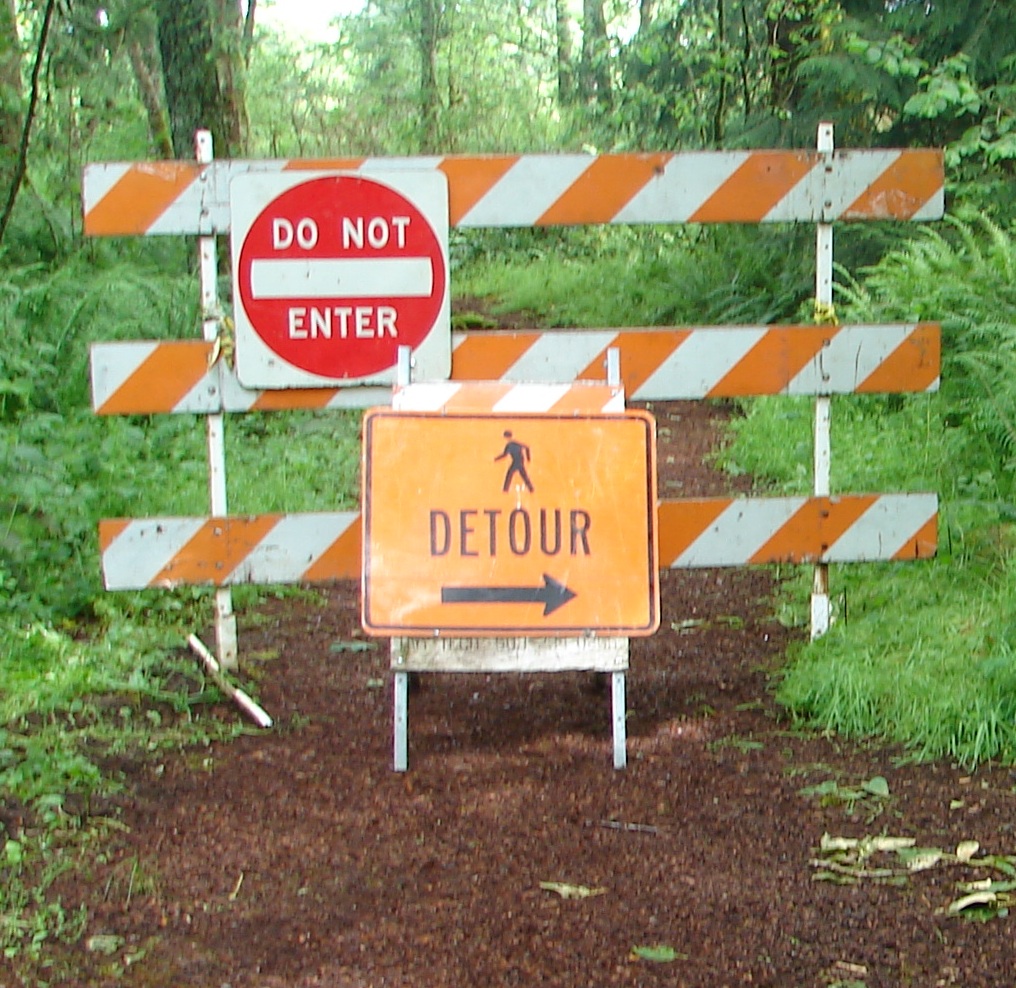 Expectations. What does this word actually mean and how does it impact our lives? Have you ever been disappointed because your expectations were not met? Have you ever exceeded your expectations and felt overwhelmed with joy at the success?
I believe our expectations, what we expect to happen, have more impact on us that most of the other thoughts that go through our mind. Why? Because we are emotional people.
One of the hats I have worn over the last 30 years is that of a construction estimator. Some estimates are small only taking a few hours to complete and some are much longer, taking days or even weeks.
Early in my career, I had high expectations related to winning the bid based on the estimate. I was connected to the outcome. It wasn’t about doing a good job, it was about getting a job. The construction industry is very competitive and I believe most contractors lose more than they win. So if our expectation is to win, then we are disappointed more often than not. Right? Isn’t that how life is anyway?
OK, where am I going with this? Here is where I am going – when our expectations are tied to the outcome, the outcome will determine our success and our attitude. In other words, we are connected to an external motivator.
On the other hand, if our expectations are tied to our effort and our attitude, we are connected to an internal motivator. This internal source is one that we control. External sources are controlled by other factors, most beyond our control.
So I offer up the two types of expectations:
HOPE – Expectations based on what you hope the outcome will be.
Let me stick with the estimating example here to explain. If I put together an estimate and my expectation is that “I hope we are the successful bidder” I have limited my potential of success to outside factors. Did someone else provide a lower estimate? Was my estimate evaluated correctly? Were any of the estimates even within budget and will the project even move forward?
You see my point? This way of thinking connects us to the outcome and we hang in the balance, anxiously awaiting the outcome to see if we were successful. We get word a week later that we were not the successful bidder and we feel deflated. We failed.
BELIEF – Expectation based on what you believe the outcome will be.
Now let’s get to the winners equation. If my expectations are based on doing the best I can on the estimate and the acceptance that that represents a successful effort, then I will be successful upon completing the estimate. I am not connected to the outcome. I am not influenced by the decisions or actions of others.
This type of thinking facilitates a positive attitude as well as building self-confidence in doing what we are supposed to do and doing as well as we possibly can. Success is connected to the journey and not the destination.
“Winners make a habit of manufacturing their own positive expectations in advance of the event.” – Brian Tracy
I understand that in business and in life, there has to be some wins. We certainly have to be somewhat connected to the outcome to move forward. But this I know … a positive attitude and doing the best you can at what you do will inevitably lead to success.
So two questions for you today: “Are your expectations based on what you hope will happen or on what you believe will happen?” and more importantly , “Are you connected to the outcome or are you creating it?”
***********************************************************************
Don’t miss a single post in this series from Building What Matters by subscribing at the top left of this page.
Help support us by clicking here and Liking our facebook page
Barry Smith www.buildingwhatmatters.com 4/30/13 photo by author
The post Are Your Expectations Keeping You From Success? appeared first on BUILDING WHAT MATTERS.COM.
]]>The post Looking For Motivation? – Maybe It’s Time To Get MOTIFIED! appeared first on BUILDING WHAT MATTERS.COM.
]]> I recently delivered a sixty minute presentation on Influential Leadership to about sixty electrical contractors at their regional conference held at the Oregon Coast.
I am very glad that I have progressed enough in my public speaking abilities that I am able to laugh at myself with no problem. This is a really good thing because I often find myself with these opportunities.
This presentation was no different. As often happens to me, things pop into my head and I end up going a little “off-script.” I do not remember exactly what I was talking about at the time but the word that I wanted to say was “motivated.” What came out was a word that to the best of my recollection, I have never said or even heard. The word was MOTIFIED.
Many people would simply correct themselves and move on, but not me. I could see some grins on the faces in the room and am pretty sure I even heard a few chuckles. Take advantage of a captured audience .. right? I paused and asked the group, “what did I just day?” More than one spoke the word back to me just as I had delivered it.
As I later reflected on my presentation, I realized that this ten or fifteen seconds of authenticity really helped me to connect with the audience. I am sure that I will use this story in the future at one time or another so it got me thinking … I better be able to define this word.
Malcolm Gladwell, author of some of the most famous business books of our time, The Tipping Point, Blink and Outliers, tells the story of how he would invent words and insert them into his writings – “tipping point” being one of the most famous. He would then see if others would use the word in their own work later. No coincidence that I recently learned of this reading “The Impact Equation” by Chris Brogan and Julien Smith. (Stay tuned for a 4 post series on The Impact Equation).
So what does “motified” mean? Well I guess the first part is easy – Motivation. Now comes the fun part … how do we tie a word that ends in “fied” into the definition? Unified. Satisfied. Certified. Magnified. There are certainly a number of words one could use. But what might just stick?
I am certainly open to your thoughts, but I am going to go with satisfied. Why do we try and motivate people? In most cases, because we want them to achieve more in working towards a desired outcome. If we achieve that desired outcome, we are satisfied. Seems logical enough – now how do we use it?
When we motivate someone, it typically is to get them to start something new or do more of what they are already doing. But motivation only lasts as long as the motivator keeps motivating. What if we did such an incredible job of motivation that there was an actual change in the person being motivated. Not just short term, but long term.
To motivate is to “get them going” but when they are motified, they keep going.” I like that. I think lots of people have motivated me in my life but very few have motified me. I want to be a motifier, not a motivator.
OK – we had a little fun in this post but think about how important words, and more importantly their meanings, are. Remember what my speech was on that resulted in the creation of this word – Influential Leadership. If you truly want to influence others, you better be able to motify them.
Who do you know that needs to be MOTIFIED?
***********************************************************************
Don’t miss a single post from Building What Matters by subscribing at the top left of this page.
Help support us by clicking here and Liking our facebook page
Barry Smith www.buildingwhatmatters.com 3/11/13 photo by author
The post Looking For Motivation? – Maybe It’s Time To Get MOTIFIED! appeared first on BUILDING WHAT MATTERS.COM.
]]>The post The Law Of The Big Mo – Are You Building Momentum? appeared first on BUILDING WHAT MATTERS.COM.
]]>
Sandy River – New Location after Washout
Early last year I experienced a great example of the power that momentum can produce. Unusually warm temperatures and heavy rains on Mt. Hood in Oregon produced runoff that forced the Sandy River over it’s banks washing out a road that had previously withstood numerous high-water events.
Witnessing the damage, I could only imagine the increasing momentum as each swollen tributary dumped into it creating a raging river that wiped out everything in it’s path.
John Maxwell in his The 21 Irrefutable Laws of Leadership states that
“Many times momentum is the only thing that makes the difference between losing and winning.”
Several homes, roadways and thousands of trees lost to momentum that day and hundreds of homeowners were stranded when a 600′ section of the only road in or out was washed away.
The construction company I work for was called in to make the repairs, relocate the river and get the road opened up. As you can see in the picture above, there was still momentum that would have to be dealt with to accomplish the difficult task.
Maxwell gives us 7 Truths about Momentum:
- 1. Momentum Is The Great Exaggerator
- 2. Momentum Makes Leaders Look Better Than They Are
- 3. Momentum Helps Followers Perform Better Than They Are
- 4. Momentum Is Easier To Steer Than To Start
- 5. Momentum Is The Most Powerful Change Agent
- 6. Momentum Is The Leader’s Responsibility
- 7. Momentum Begins Inside The Leader
I saw many of these truths demonstrated up on that mountain, not only in the devastation that took place, but in the days following the event when the repairs and restoration took place. In less than 24 hours we reconstructed the original channel of the river and then redirected the flow back in the location it had originally been. It only took about 30 minutes for the river to carve it’s way back to it’s original location (see picture) allowing us to start the road reconstruction.

The River Back Into It’s Original Channel
The same momentum that resulted in the river jumping it’s banks was now used to put it back where it had been. The difference – this time we were controlling the direction of the momentum. That example is a lot like leadership. When we control the power of momentum and steer it in the direction desired we can control the direction of the flow and achieve our desired results.
We were later recognized by Clackamas County for our commitment in completing the work under very difficult conditions and more importantly for the leadership demonstrated by many of our team members. There were many sacrifices made by our crews to do what needed to be done. In my opinion, it was leadership that kept our momentum flowing seven days a week, twelve hours a day until we were done.
My takeaway – as leaders, we need to stay in front of the issues and problems that we deal with every day and build momentum steering them in a productive direction. The minute we fall behind, we find ourselves running away to keep from getting run over.
Are you building momentum in your business or personal life or simply trying to stay out of the way? Your answer may tell you the direction you are headed.
***********************************************************************
Next Up: Law # 17 – The Law of Priorities
Don’t miss any of the remaining Laws by subscribing at the upper left of this page.
Barry Smith www.buildingwhatmatters.com 8/29/12 photos by author
The post The Law Of The Big Mo – Are You Building Momentum? appeared first on BUILDING WHAT MATTERS.COM.
]]>