The post Closing The Gap Between What You Know And What You Do appeared first on BUILDING WHAT MATTERS.COM.
]]>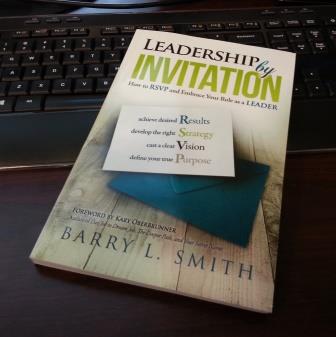 In the mail today, I received the author’s complimentary copy of my new book, Leadership by Invitation. I was being interviewed earlier in the week about the book and was asked the question; “What is the one thing you would tell someone who is writing a book to help them reach their goal of actually getting it published?” Great question!
Simple answer. START WRITING.
I spend a lot of time thinking about what I write. I blog multiple times every week, create content on a regular basis, and am already working on my next book project. You might find this hard to believe, but do you know that until I actually start writing, nothing gets written? I can spend all day thinking about it, I might even have a pretty good idea on what to write. But until I start pounding the keyboard, nothing gets done.
You have to Start before you can Finish!
I think there are a lot of similarities between this thought on writing and just about anything else you might want to achieve. We have to START. At some point in time, we need to decide that we are done getting ready and just go for it.
There are also similarities on what happens after you start. I have found that in writing, it is only after you start writing the words that the story really starts to come to life. One thought leads to another and “whaddayaknow” a few months later you have a book.
It’s no different in anything else. You want to lose 30 pounds? Well, you have to lose one before you can lose the other twenty-nine. You want to make a million dollars? You have to make one before you make the other … you get the picture!
The Power of Knowledge comes through Action.
The point is, you have to START. If you are reading this, I will make the assumption that you are fairly well educated and have acquired a significant amount of knowledge over the years. But what are you doing with that knowledge? I used to think knowledge was power. NOT! The power of knowledge does not come from simply possessing it, you must act upon it.
This gap between what we know and what we do is the gap that will lead us not only to success, but to significance. Everyday should be a day of closing that gap. But it takes action. Yoda said it best; “There is no try, there is only do and do not.” [Tweet This] So which is it going to be?
In order to close the gap we need to “DO.” The way we do anything is to START. I have found that it is much easier to start something small as compared to something big. It much less intimidating and much easier to achieve. I have seen so many people take on large tasks and fail because they did not identify the small steps along the way.
Every Great Accomplishment has been Achieved One Step at a Time.
Writing is a great example. The idea of writing a book may seem too much for you to ever accomplish. But how about a chapter, better yet a paragraph and if you still think it’s too much, just write out a sentence. To my knowledge, there are no books out there that were not written “one letter” at a time.
Today’s Challenge: Choose something in your life that you want to do but have been putting off because “it’s just to big” and break it down into small steps and START. That is how you will close the gap between what you know and what you do.
***********************************************************************
===> JOIN THE “LEADERSHIP BY INVITATION” LAUNCH TEAM <===
Click here to get a copy of my Kindle Book “The Manifesto Of An Influential Leader”
Don’t miss a single post from Building What Matters by subscribing at the top left of this page.
Help support us by clicking here and Liking our facebook page
Barry Smith 5/23/14 photo by author © Building What Matters 2014
The post Closing The Gap Between What You Know And What You Do appeared first on BUILDING WHAT MATTERS.COM.
]]>The post The Power Of Urgency – The Time To Act Is Now appeared first on BUILDING WHAT MATTERS.COM.
]]>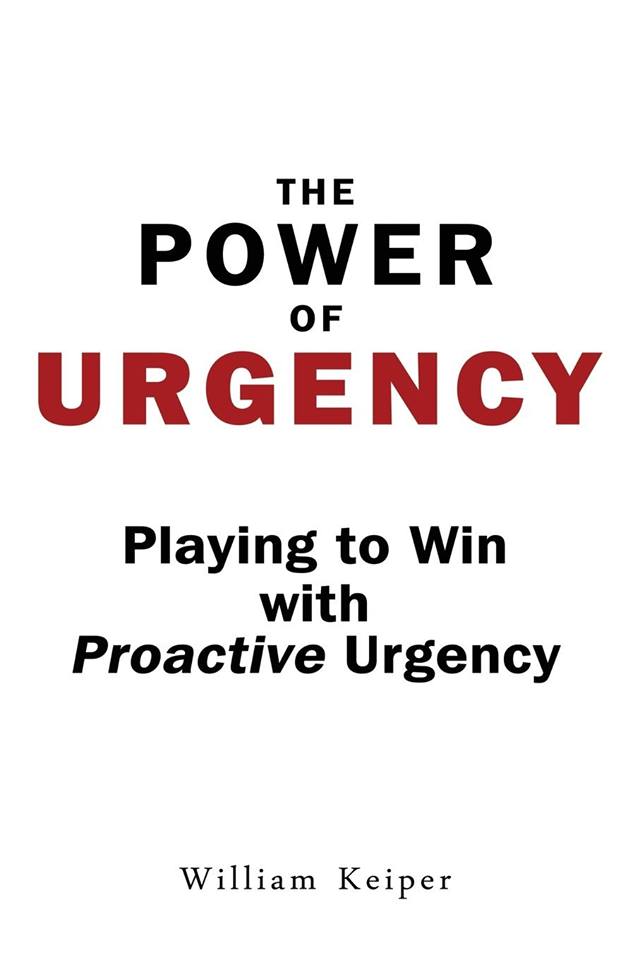 This month in The Platform Builders mastermind group we are working our way through “The Power Of Urgency – Playing to Win with Proactive Urgency” by William Keiper. John Maxwell teaches that the greatest gap is the gap between what we know and what we do. I believe the Proactive Urgency that Keiper is talking about can close that gap.
As soon as I write and publish this post, I will start on the final chapter of my new book, Leaderhip by Invitation – How to RSVP and Embrace Your Role as a LEADER, that will be available in April. I wish I would have practiced pro-urgency a little sooner in getting by draft completed.
Procrastination, or lack of pro-urgency as I understand more clearly, has plagued me all my life. Start a project and then start a project and then, you guessed it, start another project. But never getting any of them done. My greatest accomplishments always seem to come when I am under the gun.
I used to think that this was a strength, and I guess it can be at times, but the truth is that pro-urgency eliminates a lot of the “unknowns” that can creep up while attempting anything. Life happens fast, and sometimes what happens comes at us so fast we have to go on the defense just to protect our end of the field.
The recent Super Bowl was an example of a great defense resulting in victory. But that defense was calculated, well thought out and well planned. That defense used pro-urgency to prepare and produce.
The lack of pro-urgency results in a defense that is fighting for it’s life. This defense is reacting instead of responding and it shows. My experience has been that although this type of defense can function, and even function well, they forfeit the opportunity to make adjustments for the unknown and unplanned events that happen. Basically, it limits your ability to stay in control and be flexible.
“It is important that you get clear for yourself that your only access to impacting life is action.” – Werner Erhard (Tweet This / Post to LinkedIn)
In this, the second of three posts, I want to offer up Keiper’s thought provoking take on the idea of Proactive Urgency. Keiper ends each of the 17 chapters with an “Urgency Rule” and I want to highlight a few to set the frame for the rest of the book.
Urgency Rule #9 – There is power, clarity and efficiency in creating and consciously attending to distinctions. You can see what you need to see, when you need to see it.
The noise and clutter that we face everyday overwhelms our senses and numbs our ability to focus. Pro-urgency provides the clarity to cut through all that noise because we know what we want before we need it. That way, when the time comes that we need it, we already know what it is.
Urgency Rule #10 – The future of a moment ago has arrived. You bring it your perfection along with your uniqueness. Make it your mission to leverage your uniqueness starting immediately.
You should be using your uniqueness as an advantage over everyone else. The things that make you different are exactly the things that will let you stand out in the crowd. All you need to be is 1% better or faster than the next guy to have an advantage.
Urgency Rule #11 – Security is mainly illusory. Remember Helen Keller’s words: “Avoiding danger is typically no safer in the long run than outright exposure.” Practice leaving your comfort zone.
If you want to do something you’ve never done before, you need to become someone you’ve never been before. The only place you will find that is outside your comfort zone. And the time to leave is now!
The question: What is it that you know you need to do, but haven’t because it will require you to step outside your comfort zone?
The challenge: STEP!
***********************************************************************
Click here to get a copy of my Kindle Book “The Manifesto Of An Influential Leader”
Join me on the STOP CHALLENGE CHOOSE 12 week health transformation
Don’t miss a single post from Building What Matters by subscribing at the top left of this page.
Help support us by clicking here and Liking our facebook page
Barry Smith 2/12/14 photo courtesy of amazon © Building What Matters 2014
The post The Power Of Urgency – The Time To Act Is Now appeared first on BUILDING WHAT MATTERS.COM.
]]>The post Effectiveness Is A Path To Results – Not Productivity appeared first on BUILDING WHAT MATTERS.COM.
]]> This was one of those blog titles that I plugged in a few weeks ago because I thought it would be a good topic for one of my upcoming posts. As I opened up wordpress to start in on the post I had to laugh. This is a picture of my desk at the exact moment I logged in. Appropriate subject? Ya Think!
I have been very transparent about my “comfort zone” when it comes to my work space. Most of my life, I have had a million things going on, finishing very few of them in a timely manner, but feeling achievement by getting lots done. Right? I guess it’s a matter of perspective. Checking 30 items off your list in one day may appear to be a huge success. But if you had three hundred items when you started the day, maybe not so much.
Being Busy And Productive Is Not Enough
I have learned a lot about the difference between being busy and being productive over the past few years and it has helped. In my defense, I have been working diligently on getting the draft done for my new book, Leadership by Invitation, and earlier today, I was pulling quotes from several different sources (as you can tell) but my desk still ends up like this at least once a week. I guess old habits are hard to break.
For the most part, I have turned being busy into being productive, but with that success (if you can call it that) I have come to realize that there is a new level in achievement. That comes form moving from productivity to effectiveness. Now you might think that these two words mean relatively the same thing. Well, not in my world. And here is why.
Success Comes When We Move From Productive To Effective
As I have focused in on living out my purpose – “building what matters – people!” – I have realized that we can be very productive, while at the same time not be effective at all. Huh? In my book, I talk about strategies and vision that produce results. These results are based upon a specific purpose. Do you see where I’m going with this?
I can be very productive, take out the trash, wood on the fire, shovel the snow off the driveway and so on. All of these are productive, but really don’t connect back to my purpose. Based on my experience, many people out there are lost somewhere in this state of confusion. They get busy with a list, over time that list grows (with many items serving other people’s purpose rather than their own) and they lose sight of what they really want to accomplish.
So what can bring clarity to all of this and help you maintain focus on fulfilling your purpose? In a few months you will be able to read the long version when the book comes out, but here is a snapshot for you that might help you get headed in the right direction.
How To RSVP Your Way To Success
Be clear on your VISION. What do you really want? If you are in a leadership position, and you are, what vision are you casting to those around you? Are you even casting a vision?
Once you identify that vision, you need to determine your role in achieving it. That’s right, your purpose. Identifying and understanding your PURPOSE is what brings additional clarity to the big picture and helps you to stay on task. (Tweet This / Post to LinkedIn)
Now that you have a vision and understand your purpose in fulfilling that vision, you need a strategy to achieve that vision and fulfill your purpose. The right STRATEGY is what keeps your work not just productive, but effective.
Now that the strategy is in place and you are casting your vision and fulfilling your purpose, take a look at the RESULTS you are getting. If they are not what you identified within your strategy, make the necessary course corrections and stay at it.
There is a quick look at what’s coming up in much more detail, but I believe that even taking a little time right now to see how your current condition or circumstance fits into this framework, might just make a difference for you.
The Question: Are you being productive or effective?
The Challenge: Take a look at your activities and find something you are doing in which you can move from being not just productive, but effective.
***********************************************************************
Click here to get a copy of my Kindle Book “The Manifesto Of An Influential Leader”
Join me on the STOP CHALLENGE CHOOSE 12 week health transformation
Don’t miss a single post from Building What Matters by subscribing at the top left of this page.
Help support us by clicking here and Liking our facebook page
Barry Smith 2/10/14 photo by author © Building What Matters 2014
The post Effectiveness Is A Path To Results – Not Productivity appeared first on BUILDING WHAT MATTERS.COM.
]]>The post The Men Who Built America – Henry Ford appeared first on BUILDING WHAT MATTERS.COM.
]]>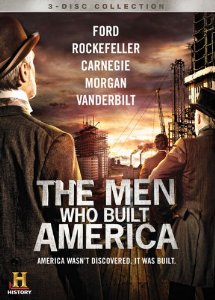 Well here we are, a new year and a new plan, right? I know this – the Platform Builders have some new plans for 2014 and this year we are starting our Mastermind study with a little twist.
This month we are masterminding through The Men Who Built America, a DVD produced by the History Channel along with Think and Grow Rich by Napoleon Hill to compliment the mini-series built around some of the great early leaders and entrepreneurs that help build the United States into a world power at the end of the 19th Century.
If you don’t know the back story on how these two connect together, Napoleon Hill was commissioned by Andrew Carnegie to study the most successful people and find out what resulted in their success. The men who built America were among many of the 20,000+ that Hill interviewed over the twenty year period it took him to write the book.
This month we are going take a look at Andrew Carnegie, Thomas Edison, JP Morgan and Henry Ford. In this, the final of four posts, we will take a look at Henry Ford.
Ford set himself apart from the other men who built America buy focusing his efforts on the people. He paid twice the average wage and wanted the average working man to be able to afford an automobile. Amazed at how machines worked, Ford used his vision to transform the auto industry.
So how did a man that began his business career under the challenges of poverty, illiteracy, and ignorance become “one of the men who built America?”
I Think I Can, I Think I Can, I Think I Can
AUTOSUGGESTION
“If you think you can do a thing or think you can’t do a thing, you’re right!” – Henry Ford
Ford Motor Company was actually Ford’s third automobile venture. The first two failed miserably yet Ford refused to give up. He continued to believe that he could successfully manufacture automobiles at a profit and at the same time, do what no one else had done, make them affordable. His vision was strong enough to become reality. He refused to give in to negative talk and literally convinced himself that it could be done through the power of autosuggestion.
1+1=3 … Sometimes More
POWER OF THE MASTERMIND
“If there is any one secret of success, it lies in the ability to get the other person’s point of view and see things from that person’s angle as well as from your own.” – Henry Ford
Ford’s most outstanding achievements began when he formed acquaintances with Harvey Firestone, John Burroughs, and Luther Burbank, well known thought leaders at that time. Ford realized that not only could he gain knowledge from spending time with big thinkers but the interaction in itself, was increasing his ability to retain information and think better himself.
If Only I Would Have Known Before It Was Too Late!
SPECIALIZED KNOWLEDGE
“Coming together is the beginning; keeping together is progress; working together is success.” – Henry Ford
Ford had great vision but lacked the knowledge, in multiple areas, to make his vision a reality. What Ford did know, was that by surrounding himself with the right people – the people that had that knowledge, he could achieve anything he wanted. He continued to do this throughout his career and when faced with the issue of not knowing, simply found someone who had the specialized knowledge he was looking for and added them to his team.
Napoleon Hill said; “Strength and growth come only through continuous effort and struggle.” (Tweet This / Share on Facebook / Post to LinkedIn)
Hill was right, our success will come from continuous effort and struggle. The difference comes in how we take on the struggle. Ford found ways to reduce the struggle by bringing those to his team that could provide the “right” kind of effort.
Here is an important question: Are you trying to do it all on your own or are you enlisting the help of others through collaborative relationships? The answer might just predict your success or failure in that endeavor. Who can you add to your team that will take you to the next level?
- Click here to read Part 1 on Andrew Carnegie
- Click here to read Part 2 on Thomas Edison
- Click here to read Part 3 on JP Morgan
***********************************************************************
Click here to get a copy of my Kindle Book “The Manifesto Of An Influential Leader”
Join me on the STOP CHALLENGE CHOOSE 12 week health transformation
Don’t miss a single post from Building What Matters by subscribing at the top left of this page.
Help support us by clicking here and Liking our facebook page
Barry Smith 1/29/14 photo courtesy of Amazon © Building What Matters 2014
The post The Men Who Built America – Henry Ford appeared first on BUILDING WHAT MATTERS.COM.
]]>The post Have You Ever Been On A Trip To Someday Isle? appeared first on BUILDING WHAT MATTERS.COM.
]]> Someday I think I’ll _________. Go ahead and fill in the blank. Now answer a question for me. How long have you been saying that? If you are like most, there are things that you want to do and as soon as someday gets here, you will do them.
One of my mentors asked once; “Show me someday on the calendar.” If you didn’t know this already, someday is not on the calendar. So what is keeping you from finding your someday?
If whatever it is that filled in your blank is worth doing, it should be worth doing now. If there is preparation that needs to be done in order to do it, when will you start? More importantly, when will you decide that you are done “getting ready” and it’s time to start? I think this is where many of us get stuck. At some point in time, you need to quit getting ready and just start.
I think this is one of the biggest responsibilities there is when it comes to leadership. In my book, Leadership by Invitation, that will be out later this spring, I look at four areas of leadership that we will find ourselves in most of the time. Leading your self, leading at home, leading at work and leading in your community. We will all find ourselves in these situations multiple times every day. Every day we will have to make decisions and the timing of those decisions will make the difference between success and failure.
John Maxwell talks about The Law of Timing in The 21 Irrefutable Laws of Leadership and gives these factors to use when we prepare for the timing of our actions:
Understanding – Are you clear on what the decision actually is and what will be involved in making that decision? Is there more that you need to learn? What is it?
Maturity – Do you have the correct motives in making this decision? Maturity is typically the result of applying experience based knowledge into a strategic action that will produce an expected outcome.
Confidence – Do you believe that what you are about to do is the right decision? Are you willing to stand behind it even if someone else doesn’t or things don’t go quite as planned?
Decisiveness – Are you going to move forward regardless of the challenges that may come up. Hesitation can kill any momentum that you might be building. Course corrections are alright, but direction needs to remain forward.
Experience – Everything that happens to us in life, good and bad, has the potential to teach us. The key is to actually learn from these experiences. Don’t waste opportunities to learn from your experiences.
Intuition – Make sure you have considered the things that you have not considered. Awareness is huge when it comes to timing. You don’t know what you don’t know. If something doesn’t feel right, find out why.
Preparation – Have you done what is needed to set yourself up for success? A solid plan before you start will produce great results. When you have prepared for the decision – act on it!
Life is busy. You have a full plate. Your “someday” list grows daily. I get it. This is why this is so important to leadership. The next time you use the word someday, challenge yourself to choose a day. It might be tomorrow or two months from now but once you choose a day, you can start to follow the framework above and develop a plan to make someday today.
So if you have been on an extended stay on Someday Isle, it’s time to come back to reality. There is nothing wrong with dreaming but if you want that dream to come true, you need a plan.
Martin Luther King Jr. said “The time is always right to do what is right.” (Tweet This / Share on Facebook / Post to LinkedIn)
So my question for you today “Is the time right?” and my challenge – Act on it!
***********************************************************************
Click here to get a copy of my Kindle Book “The Manifesto Of An Influential Leader”
Don’t miss a single post from Building What Matters by subscribing at the top left of this page.
 Help support us by clicking here and Liking our facebook page
Barry Smith 1/20/14 photo by author © Building What Matters 2014
The post Have You Ever Been On A Trip To Someday Isle? appeared first on BUILDING WHAT MATTERS.COM.
]]>The post Failure Won’t Ruin You, It Will Reveal You! appeared first on BUILDING WHAT MATTERS.COM.
]]> National Quit Day has come and gone. My hope is that the “why” behind your 2014 goals was strong enough to keep you on course and that you continue to productively pursue the goals that will make 2014 your most successful year yet.
If you are still on track with your goals – good on you. That being said, it takes about 30 days to start a new habit or become consistent in the transformation you are seeking. It will probably get a little tougher before it get’s easier.
I don’t want to jinx the future, but I believe this post will help you through the tough times as you take on these new challenges. One of my mentors taught me that failure won’t ruin you, it will reveal you. What does that mean? What I believe it means is that as you begin to slip from your commitment to heading to the gym, writing 500 words a day or whatever else it might be, challenge yourself to understand what is being revealed in that failure.
Sometimes You Win, Sometimes You Learn!
Remember what John Maxwell says; “Sometimes you win and sometimes you learn.” You see, failure won’t ruin you. You have attempted many goals in the past and like all of us, have failed almost as many times. That doesn’t have to be the end. But here is the deal – you won’t achieve every goal you set out to. Sorry – simply speaking the truth here. I am more concerned with why we fail. More specifically – what is revealed in the process.
It has been said that; “When you have a strong enough WHY, the how will take care of itself.” (Tweet This / Share on Facebook / Post to LinkedIn)
So put your why to the test. When you fall short you have two choices. You can look at it as failure or you can see what is revealed during the process.
Plan Your Work And Work Your Plan!
Maybe your why is strong enough, but you have failed to set yourself up for success and left out a key ingredient to success. Maybe the environment you are in is not conducive to your success. Achieving goals is much more than simply the desire to change or start something new. You need a game plan – and one that will work.
I think the biggest reason people don’t achieve their goals is because they don’t put enough thought into the way to achieve the goal. They simply write down on a piece of paper what they want to achieve, tape it to the refrigerator and hope that looking at it a few times a day will give them the motivation they need to achieve it.
The Fifteen Minute Miracle
I know many of you are killing it so far. On track and feeling strong. Some of you may be struggling or have already given up on one or more of the goals you set for 2014. There is nothing wrong with the idea of “don’t fix it if it’s not broke” but if there is an opportunity to get better, why not consider it? Don’t give up! There is still time to get back on track – maybe all you need is a little more clarity and a slight course correction.
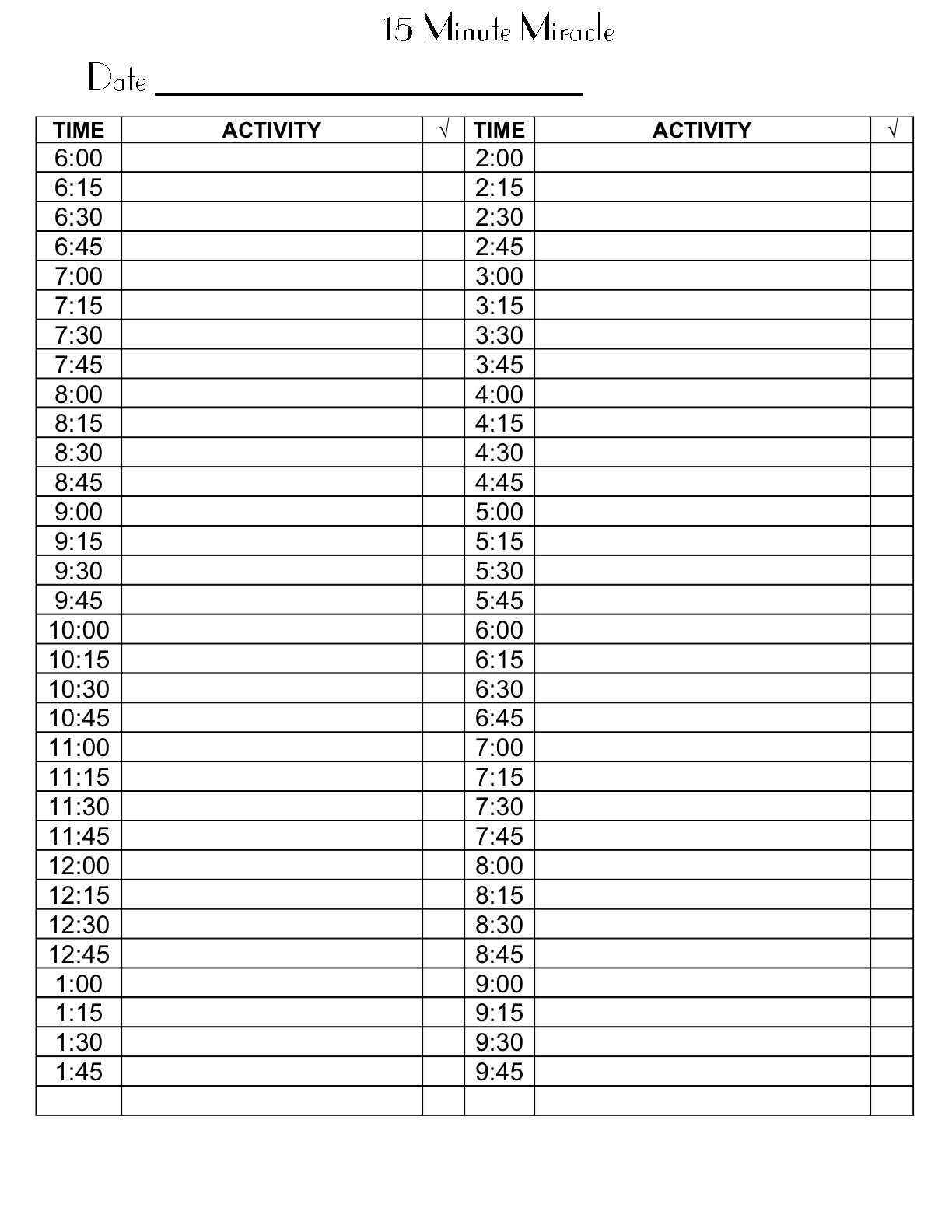
15 Minute Miracle
I lead a group of new members to the John Maxwell Team through a 90 Day Success Roadmap and one of the resources we use is called the 15 Minute Miracle. This very simple and highly powerful tool almost guarantees success – if you use it right – and will make you much more productive immediately.
All you have to do is break down your day into 15 minute increments. What? That’s it? Yes! I know what you’re thinking … it can’t be that easy. Well it’s not – it’s not because you have to actually do it and do it consistently. Give it a shot and tell me I’m wrong.
A simple but very important question for you today. Have you created the right plan to achieve your goals? Remember – set yourself up for success! When you face failure, ask yourself what is being revealed – what has contributed to the failure and how can I change it.
***********************************************************************
Click here to get a copy of my Kindle Book “The Manifesto Of An Influential Leader”
Don’t miss a single post from Building What Matters by subscribing at the top left of this page.
Help support us by clicking here and Liking our facebook page
Barry Smith 1/13/14 photo by author © Building What Matters 2014
The post Failure Won’t Ruin You, It Will Reveal You! appeared first on BUILDING WHAT MATTERS.COM.
]]>The post Isn’t It About Time You Start Living In Your Sweet Spot? appeared first on BUILDING WHAT MATTERS.COM.
]]> I posted a series on Discover Your Sweet Spot – The 7 Steps to Create a Life of Success and Significance back in October but I wanted to offer up the abridged version today and invite you to a special call this Wednesday, January 8th celebrating the official launch of the book. (click here to register for the call)
For more than two years Scott Fay has been my coach, mentor, and most importantly, my friend. When I was trying to separate who I was from what I did, and come up with a plan for the rest of my life, Scott believed in me and pushed me in the right direction.
Yes, this is another book that focuses a lot on leadership, but Scott provides 7 steps, built around the idea of Design, Build & Maintain, that will guide you along a path to success and significance in whatever lane you are travelling.
PHASE 1: DESIGN YOUR LEADERSHIP ENVIRONMENT
STEP 1 – Discover Your Sweet Spot – Design with the End in Mind
That design, when done correctly, will land in your Sweet Spot. Scott breaks down your sweet spot like this; “The convergence of three things: Purpose, Passion, and Plan.”
- Purpose is who you are designed to be.
- Passion is what you love to do.
- Plan is the strategic convergence of being and doing.
STEP 2 – Sweat the Small Stuff – The Devils are in the Design
This is a great step. Scott describes the importance of ALL the details, especially the small ones because they really represent the minor adjustments that can make a major difference. Scott gives us the infamous five that seem to show up the most often.
- Poor Drainage
- Context Confusion
- High Traffic
- Aesthetic Misfit
- Short-Sighted Plan
PHASE 2: BUILD YOUR LEADERSHIP ENVIRONMENT
STEP 3 – Tear Out, Then Build Up
He provides a great three step process to eradicate these weeds, or “excuses,” that are in the way of construction. This is crucial. If the weeds are not removed during the build phase to allow the new “roots” to take hold, you will will be focusing on pulling weeds the rest of your life.
- Identify your weeds.
- Own your weeds.
- Eradicate the weeds.
STEP 4 – Build Midcourse Corrections
Scott gives us four things to consider regarding course corrections:
- Intersect the issue.
- Correct the problem.
- Protect the goal.
- Reflect the outcome.
PHASE 3: MAINTAIN YOUR LEADERSHIP ENVIRONMENT
STEP 5 – PROTECT YOUR INVESTMENT: Poor Maintenance Costs You More In The Long Run
To maintain the success, or significance, that we have achieved will not sustain itself unless we commit to continual growth. Scott suggests asking questions to keep us on top of our game. Here are his Elite 8:
- What do I do best?
- How can I do it better?
- Who can I best serve doing it?
- Of the things I currently do, what should I do more?
- Of the things I currently do, what should I do less?
- Of the things I currently do, what should I stop?
- What should I start doing?
- What am I missing?
STEP 6 – MAINTAIN THE MAIN THING: Keep Your Vision within Sight at All Times
Scott describes the importance of vision and how, unless we keep it on the forefront, it will soon be lost. Here are his “Five Lenses of Maintaining Vision”:
- Define The Vision
- Develop the Vision
- Drill the Vision
- Distinguish the Vision
- Demonstrate the Vision
STEP 7 – GIVE WHAT YOU CAN’T KEEP: Legacies are Maintained by Investing in Others
Investing in others and believing in them is the way we can leave our fingerprint on generations to come. We can’t take anything with us, but we can clearly leave something behind. (Tweet This / Share on Facebook / Post to LinkedIn)
I have reviewed numerous books and many have had a specific topic or targeted audience. Discover Your Sweet Spot is for everyone. We all have a Sweet Spot, but very few are living in it.
Today’s challenge: Click Here and join us on a call that will help you on your way to living in your Sweet Spot
***********************************************************************
Don’t miss a single post from Building What Matters by subscribing at the top left of this page.
Help support us by clicking here and Liking our facebook page
Barry Smith 1/6/14 photo courtesy of Scott M Fay © Building What Matters 2014
The post Isn’t It About Time You Start Living In Your Sweet Spot? appeared first on BUILDING WHAT MATTERS.COM.
]]>The post Help Them Grow, Or Watch Them Go – What People Really Want appeared first on BUILDING WHAT MATTERS.COM.
]]>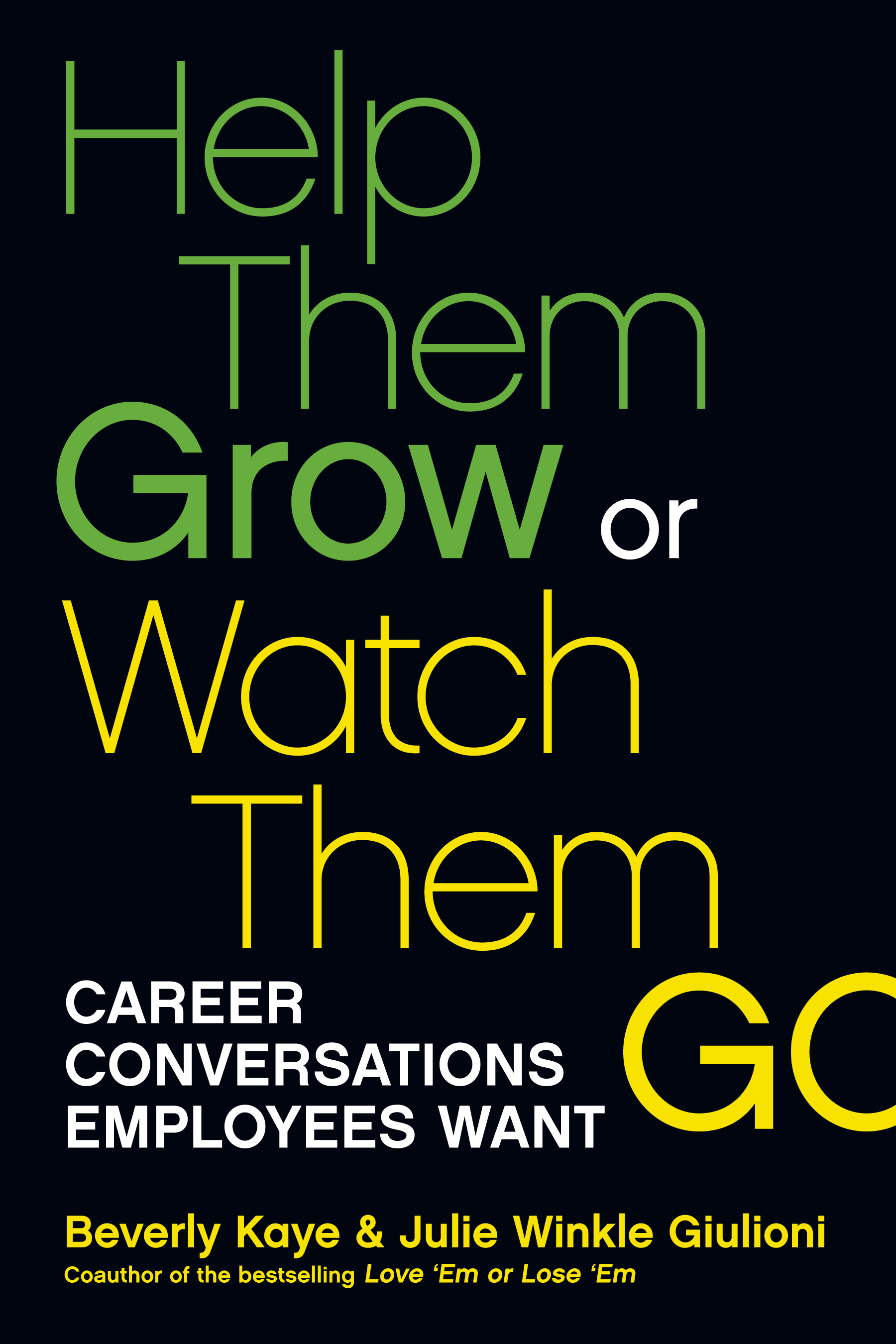 Employee engagement has been a subject that has intrigued me for quite some time. I recently finished reading Help Them Grow or Watch Them Go by Beverly Kaye and Julie Winkle Giulioni. I must say that I now have much more clarity on what employees want and why they want it.
Kaye and Giulioni are the first authors that I have seen write completely from the “coaching” perspective. The coaching philosophy I believe in suggests that results are brought about by answering the curious question. This book is full of questions, and excellent questions at that.
Kaye and Giulioni do an outstanding job of mixing quotes, questions and action items to provide a must read for any leader or manager. Below is a quick summary of the nine chapters that paint a beautiful picture of what your employees are really thinking.
1. Develop Me or I’m History
Whether they have the awareness or not, employees want to know what is next, more specifically, what is next for them. The simple fact is that without a way to grow, they will be unable to grow. Remaining in the same place, doing the same thing, with the same skills is not sustainable.
2. Can We Talk?
How often do you check in with your employees? No, I am not talking about saying hello and goodbye at either end of each day, I am talking about really checking in. How are they doing? What is going well? What needs improvement? Taking the time to sit down with the people that are generating your income tells them they are important and they are valued and that you care about their future.
3. Let Hindsight Light the Way
Looking back and evaluating what worked and what didn’t allows your employees to gain the clarity and focus needed to move forward in a positive way. This type of analysis allows them to use the past to build their future and remember, help them grow or watch them go!
4. Feed Me
I love this one. Employees want feedback. Why? Because it tells them if they are meeting up to expectations. I don’t know how many times I have heard “If only someone would have told me where I was falling short, then I could have done something about it.”
5. What’s Happening?
There is nothing more frustrating than feeling left in the dark. As an owner or employer, you don’t have to tell them everything, but how about enough to keep them engaged. Enough to keep them interested. Do they even know what they are working towards. Give them some ownership and watch them take a little more pride in what they produce.
6. If Not Up … Then What?
It used to be that everyone thought the road to success was a vertical climb. Not so much anymore. Employees are more willing, in fact I believe more wanting, of a balanced career. One that gives them time for their family and personal interests. If more pay comes with more time commitment and stress, you might rethink the job description.
7. Same Seat, New View
If someone has mastered their role, you don’t have to send them up the ladder. They may already be in their sweet spot. But don’t assume this will last forever. Allow them to be creative in their role. Give them more responsibility to use their gifts and talents. This will keep their job fresh and interesting.
8. Advancing Action
This is a big one. As the “boss,” your responsibility is to give the employee a way to grow. It will be their responsibility to do something about it, but you need to create the opportunity. Set a clear course for them moving forward and watch them navigate it successfully.
9. Grow with the Flow
Keep growth in the forefront. Providing a plan and then following up six months later is simply rolling the dice. Keep in constant contact, even if for only a few minutes. This is a way to keep everything in check and provide an opportunity to change course if needed.
As the authors put it; “Grow for it!” Simply put, career development in important. Continual communication and opportunities will result in continual growth and continual success.
A couple of questions for you today. “Have you achieved everything you want for yourself and those working for you? Maybe the more important question is; “What are you doing about it?”
***********************************************************************
Click here to get a copy of my Kindle Book “The Manifesto Of An Influential Leader”
Don’t miss a single post from Building What Matters by subscribing at the top left of this page.
Help support us by clicking here and Liking our facebook page
Barry Smith 11/14/13 photo courtesy of Amazon © Building What Matters 2013
The post Help Them Grow, Or Watch Them Go – What People Really Want appeared first on BUILDING WHAT MATTERS.COM.
]]>The post Boundaries For Leaders – Part 3: High Performance Teams appeared first on BUILDING WHAT MATTERS.COM.
]]>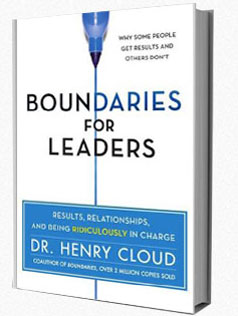 I recently finished reading Boundaries For Leaders – Results, Relationships and Being Ridiculously In Charge by Dr. Henry Cloud. Twenty years after he co-authored “Boundaries – When to Say Yes, How to Say No to Take Control of Your Life” Dr. Cloud brings a fresh look to how boundaries relate more specifically to leadership.
Dr. Cloud does an incredible job providing insight on why some people get results and others don’t. Simply stated, when we invest time beyond the boundaries “we should have” we reduce the results we achieve along the way.
Dr. Cloud has taken a complex issue and has broken it down into simple terms that every leader should be able to embrace and implement into their leadership and life style.
This will be the final of three posts exploring what it takes to lead teams, companies and cultures defined by high performance and healthy relationships.
HIGH-PERFORMANCE TEAMS
Dr. Cloud sums up the power of “high” performance teams with this statement; “Nothing drives strong teams like great performance, and what drives strong performance is a commitment to a shared vision and shared goals with behaviors and relationships aligned with reaching those goals.”
Basically he is saying that high performance teams work together on the right things at the right times. This really only comes through focusing on the things that you can control and with the clarity and focus of working on them in a strategic and specific manner. It comes down to having the right plan and working that plan.
TRUST MAKES THE TEAMS ABLE TO PERFORM
Dr. Cloud focuses this chapter on the importance of trust as related to team performance. He provides his five most important components:
Connection through Understanding – Of course it is important that we “get it” – but more important is that the other person understands and believes that we “get it.”
Motivation and Intent – We have all been there – someone offers their help or assistance but you know that their motivation is solely because they want something in return. Trust is build when there is no expectation of anything in return.
Character – There are many attributes that can describe character but in building trust, “who you are” becomes much more important that what you do or what you can provide.
Capacity and Ability – Intentions are great, but follow through is where we build, and lose trust. Part of the trust building process is being able to identify what you can actually deliver – and deliver it.
Track Record – No surprise here; what you have done in the past, in this area, is a predictor of the future. It doesn’t have to be, but that is the way it will be perceived. Perception is Reality anyone!
BOUNDARIES FOR YOURSELF
This is great – Dr. Cloud gives us a Law of Leadership: “The higher you go in leadership. the fewer external forces act upon you and dictate your focus, energy, and direction. Instead you set the terms of engagement and direct your own path, with only the reality of results to push against you.”
Read that again – remember, this book is about boundaries. As leaders, we are the only one responsible in setting our own boundaries. That being said, understanding what those boundaries will, or will not allow in is crucial. I like to think of it like this – boundaries set the perimeter, but we still need to position ourselves so we can “see over the fence” to stay aware of what is going on “outside.”
I strongly encourage any and every leader to pick up a copy of Boundaries For Leaders. Dr. Cloud provides frameworks throughout the book that can be easily applied to your leadership role.
It has been said that the greatest gap we deal with in life is “The gap between what we know and what we do.” If you want to start applying more of what you know into increasing what you do, you need to have boundaries.
My challenge today: Take a look at what is currently on your plate and make the decision to set some boundaries that will allow you to put more focus and energy into the things that you have to do that have to be done now.
***********************************************************************
Click here for a 3-Video Series from John Maxwell and Les Brown being “Authentic and Transparent”
Click here to listen in on October 30th as John Maxwell shares how to “Influence through Connecting”
Don’t miss a single post from Building What Matters by subscribing at the top left of this page.
Help support us by clicking here and Liking our facebook page
Barry Smith 10/23/13 photo courtesy of Amazon © Building What Matters 2013
The post Boundaries For Leaders – Part 3: High Performance Teams appeared first on BUILDING WHAT MATTERS.COM.
]]>The post Discover Your Sweet Spot – Part 2: The Building Phase appeared first on BUILDING WHAT MATTERS.COM.
]]> For more than two years Scott Fay has been my coach, mentor, and most importantly, my friend. When I was trying to separate who I was from what I did, and come up with a plan for the rest of my life, Scott believed in me and pushed me in the right direction.
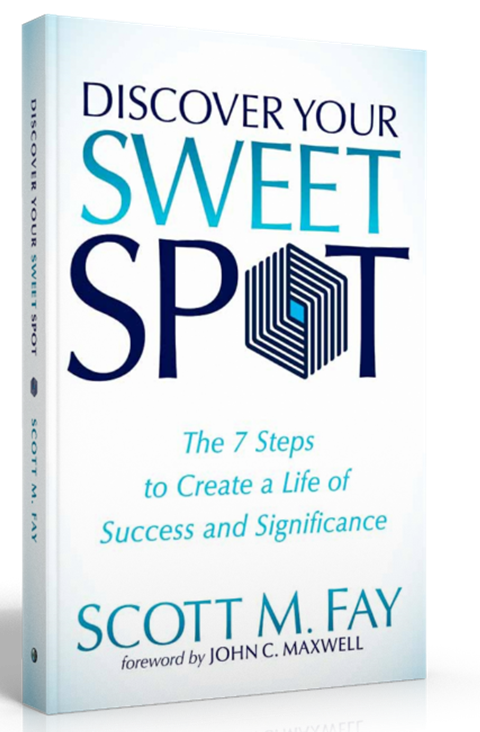
Although the official release of Scott’s first book, Discover Your Sweet Spot – The 7 Steps to Create a Life of Success and Significance, is not scheduled until the first of the year, I have had the opportunity to be included in a group to receive an early release of the book.
Yes, this is another book that focuses a lot on leadership, but Scott provides 7 steps that will guide you along a path to success and significance in whatever lane you are travelling.
Scott is the Vice President of the John Maxwell Team and one of the team mentors. A very successful businessman in the Landscaping business, Scott parallels the ideas of DESIGN, BUILD and MAINTAIN into whatever environment we find ourselves.
This will be the second of three posts taking us through the 7 steps that will teach us how to Design, Build and Maintain a life of success and significance.
PHASE 2: BUILD YOUR LEADERSHIP ENVIRONMENT
STEP 3 – Tear Out, Then Build Up
Pulling from his landscape background again, Scott creates a picture of pulling weeds when entering the building phase. He presents a very thought provoking question – “Do your excuses serve your dream?” In other words, the excuses that you use in life are the weeds preventing you from building your dream.
He provides a great three step process to eradicate these weeds, or “excuses,” that are in the way of construction. This is crucial. If the weeds are not removed during the build phase to allow the new “roots” to take hold, you will will be focusing on pulling weeds the rest of your life.
- Identify your weeds. Review your construction site, “your life,” and remove the weeds that will prevent you from building the life you desire.
- Own your weeds. You know what they are and no one is going to remove them but you. You have to own those weeds and take responsibility in making sure that they are gone as you get ready to build.
- Eradicate the weeds. You have identified them. You have owned them. Now eradicate them. Don’t settle for some or most of them. You are building your foundation and the rest of the product will only be as good as the foundation you build upon.
STEP 4 – Build Midcourse Corrections
Things happen along the way that may require course corrections. You may run into some unforseen conditions – something you could not have predicted. Or maybe you simply want to change the design because you are beginning to see the finish product and can make it better. Scott gives us four things to consider regarding course corrections:
- Intersect the issue. When the issue is identified, take aggressive moves to address it. Don’t assume that it won’t be an important piece of the final product. Remember the design devils, the small details matter.
- Correct the problem. Fix it! Evaluate your options and choose the most logical correction moving forward.
- Protect the goal. Don’t lose sight of the desired outcome. All the details are important, but if you get stuck on one thing, the schedule will suffer. Course corrections are changes in direction but still provide forward motion.
- Reflect the outcome. Certainly you desire that masterpiece when complete. The end product will be a reflection of the process. The quality of effort you put in through the process, will determine the quality of the end product.
I have reviewed numerous books and many have had a specific topic or targeted audience. Discover Your Sweet Spot is for everyone. We all have a Sweet Spot, but very few are living in it. If you want to get there, do yourself a favor and pre-order this book.
Creating an environment that is conducive to success means confronting your current one. If you want to change the design, you must first be willing to change yourself. It starts from within.
Today’s question: “What are the weeds in your life that need to be pulled?” If you are serious about building a better life, your weeds need to be pulled!
Click here to read Part 1 – The Design Phase
***********************************************************************
Don’t miss a single post from Building What Matters by subscribing at the top left of this page.
Help support us by clicking here and Liking our facebook page
Barry Smith 9/18/13 photo courtesy of Scott M Fay © Building What Matters 2013
The post Discover Your Sweet Spot – Part 2: The Building Phase appeared first on BUILDING WHAT MATTERS.COM.
]]>